App-based car insurance for new drivers: How does it work?
You can use a mobile app to monitor how you drive with app-based car insurance. For new drivers, this can help lower the cost of insurance over time if you drive responsibly.

There are options available for a new driver that can help you save on the cost of insurance. These include traditional annual policies, telematics insurance with a fitted device (black box insurance), temporary cover and app-based insurance.
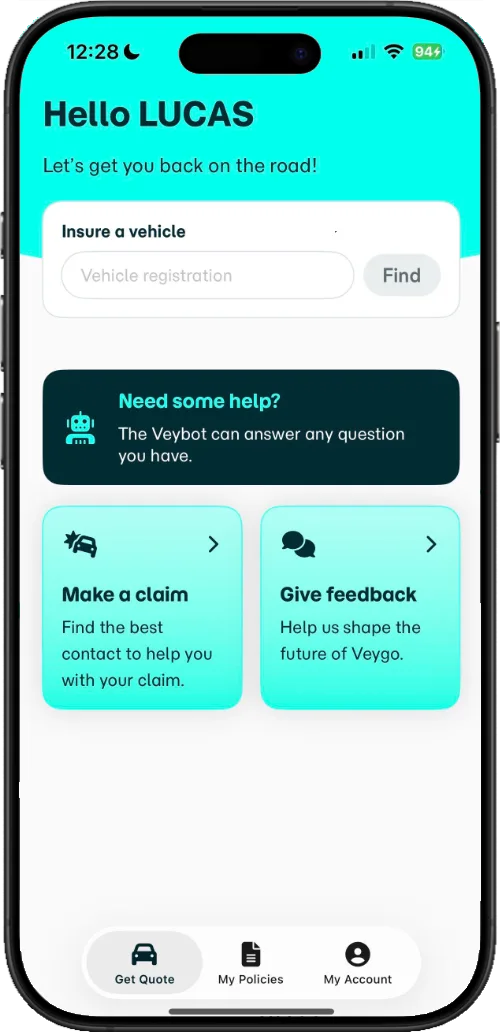
App-based car insurance is offered by providers in the UK such as Veygo, Cuvva and Zego.
If you’re a new driver, understanding how app-based car insurance works could help you decide whether flexible, on-demand cover suits the way you drive.
App-based car insurance essentially means you need an app on your phone as part of your insurance policy. This could be to buy, access or manage your car insurance. Or in some cases it means an app will be used to monitor your driving. So it’s quite a broad definition.
New drivers pay more because they crash more. Drivers aged 17–24 make up 7% of UK licence holders but are involved in 24% of fatal collisions, according to the ABI. For new drivers, the benefit of app-based car insurance is that you can demonstrate your driving behaviour to an insurer or access a policy only when you need it, for example if you have temporary cover because you only drive occasionally.
If you have an app-based telematics policy, then your phone will be used to record some parts of your driving behaviour instead of using a physical black box, which is used in traditional telematics policies.
| Type of cover | What the technology does | Is driving monitored? | Examples of providers |
|---|---|---|---|
| Traditional fitted black box | You need to get a telematics device installed in your vehicle. | Typically yes, according to the policy | Hastings Direct, RAC, Marmalade |
| App-based telematics | You can use your smartphone to monitor your driving instead of a fitted box. | Typically yes, according to the policy | Veygo, Zego |
| App-managed insurance | You use an app to buy, access or manage cover. | Not normally but depends on the provider | Veygo, Boom |
| Temporary insurance | You can purchase cover for a set period of time, which can be set up digitally. | Depends on the individual product | Cuvva, Tempcover, Veygo |
App-based products can be simpler than the traditional alternatives, especially when it comes to managing your insurance. But it does still depend on the type of product you have.
| What to compare | Why it matters | Question to ask of the policy |
|---|---|---|
| How the app works | You need to understand what the app and policy actually do. | Does it manage the policy, monitor driving or both? |
| Monitoring | This could potentially help you lower the cost of car insurance over time. | Is your driving behaviour tracked and, if so, what is measured? |
| Hardware | Some policies will require you to install a physical device. If you don’t want a physical device then look at providers like Veygo and Zego. | Do you need to install anything in the vehicle? |
| Restrictions | You don’t want to get caught out driving a car uninsured. | Are there policy-specific rules around when or how the car can be driven? |
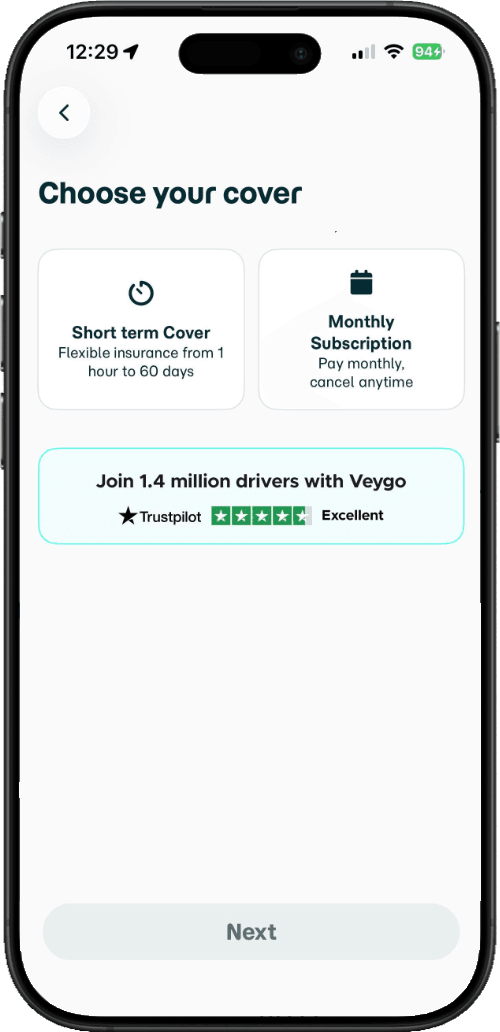
| Length of cover | You should decide this based on your needs. Providers like Veygo give you the choice between short-term cover from 1 hour to 60 days, or a monthly subscription. | Is the product annual, monthly or temporary? |
| Vehicle ownership | If you don’t own your own car then you’ll need to decide whether you want your own policy you can use on other cars or to be added to someone else’s policy. | Can it be used when borrowing somebody else’s car? |
| Eligibility | You need to make sure you’re eligible for the product you want to purchase. | Are there age, licence or vehicle requirements? |
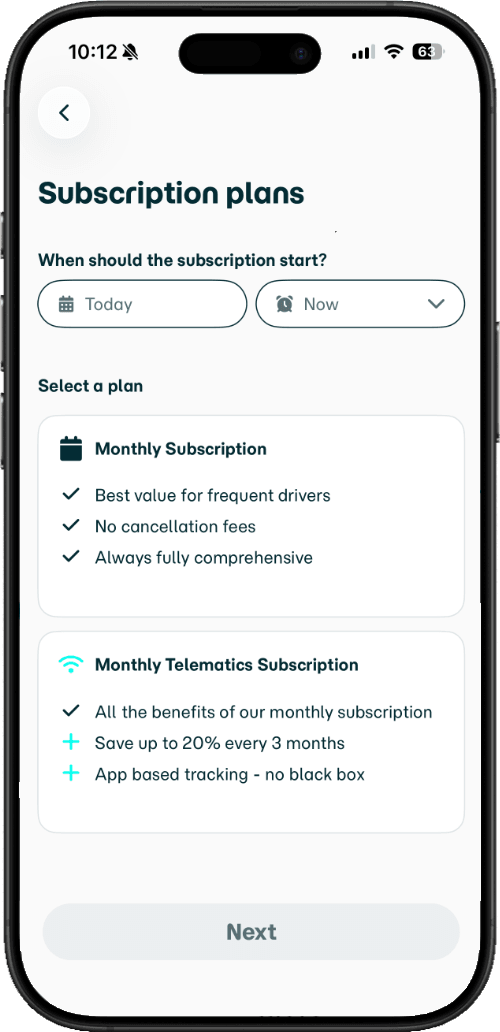
| Cost | Car insurance can be expensive for new drivers. The average UK premium was £566 in Q2 2026 (ABI), and new drivers typically pay far more. Some providers offer discounts depending on the policy/subscription, for example, Veygo’s Monthly Telematics Subscription includes savings of up to 20% every 3 months. On a £1,500 annual premium, a 20% saving would be worth up to £300 a year. | How does the total cost compare based on how frequently the driver expects to use the vehicle? |
| Customer feedback | You can see what other people think about the provider. For example, Veygo’s Trustpilot rating is 4.6/5 from almost 12,000 reviews, whilst Zego’s is 4.4/5 from over 20,000 reviews (October 2026). This gives a good indication of a provider’s service quality. | What do current independent customer ratings indicate? |
App-based insurance can be good for young and new drivers, safe drivers, occasional drivers or someone who wants a flexible car insurance option. It can also be appealing to someone who wants to set up a policy quickly.
Conversely, it might not be appropriate for you if you’re an aggressive driver, you use your phone while driving even though you shouldn’t, have privacy concerns and don’t want to have anything monitored or if you struggle with technology. If you already have a long driving record and no-claims discount then you’ll probably get a better price elsewhere anyway.
No, you don’t need to have a black box fitted as a new driver. It will depend on the policy and provider. If you want a telematics insurance policy without a physical black box then you should look at app-based insurers such as Veygo or Zego.
Some reasons you might not want a black box include:
| Question | Fitted black-box insurance | App-based telematics | Temporary insurance |
|---|---|---|---|
| Do I need a physical box installed? | This is normally required. | Not normally required. | Depends on product. |
| Is a smartphone required? | Not necessarily. | Typically yes. | Depends on provider. |
| Is driving behaviour monitored? | Typically yes. | Typically yes. | Depends on product. |
| What’s the typical cover length? | Often annual. | Often annual but can be rolling monthly. | Defined short-term period for how long you need it. |
| Are there any curfews or restrictions? | Can have penalties or strict rules for driving late at night. | Will depend on the provider, for example, Veygo’s app-based telematics policy has no driving curfew. | Generally no restrictions. |
| Does it build a no-claims discount? | Yes. You earn a no-claims discount for each claim-free year, the same as on any annual policy. | Usually, if the cover is annual or has run for 12 months without a break. Check the terms on monthly subscriptions. | No. But if you claim, it goes on your temporary policy, not the car owner’s, so the owner’s no-claims discount is safe. |
Yes, a new driver can use temporary insurance, but whether it’s a good idea will depend on your driving needs.
If you only drive occasionally then it could be a good option, but it’s likely to cost you more money than a traditional policy if you drive regularly. In that case an annual policy could be a better fit.
To check whether temporary cover is cheaper, divide your annual quote by the daily cost of temporary cover. If an annual policy costs £1,800 and a day of temporary cover costs £25, temporary cover only works out cheaper if you drive fewer than 72 days a year.
App-based car insurance is a good option for a new driver and can potentially save you money. If you need temporary insurance, are tech savvy or want to demonstrate good driving habits so you can save money down the line, then this could fit well for you.
You should compare your options and make sure you purchase a policy that matches your needs.
Yes, you can get car insurance without needing to have a black box fitted to your car. Options include non-telematics policies, some app-based products and temporary insurance.
You could look for a provider like Cuvva or Veygo, which offer temporary car insurance that can be arranged and managed digitally without committing to an annual black-box policy.
Yes, some telematics insurance products use a smartphone app to monitor driving. This differs from policies that require you to get a black box to be permanently fitted to your vehicle. You should check what information the app records, how your driving data is used and whether any restrictions apply before you sign up for a policy.
Bear in mind that not every insurance app is a telematics app and some providers use apps to buy and manage cover without using them to score driving behaviour.
No, not all app-based insurance is black box insurance. It will depend on the provider and the policy. Some apps monitor driving, while others are just used to buy, access or manage an insurance policy.
You should check whether the individual product tracks driving behaviour and not just assume that all app-based insurance is telematics insurance.
Digital providers are generally newer than the more established insurance brands, so it’s a fair question to ask if they’re trustworthy. But there are a number of things you can do to check if you’re unsure.
One is to check the provider's FCA Register entry. For the underwriter, check it is authorised by the PRA and regulated by the FCA.
You could also look at whether a digital insurer is affiliated with a larger insurance provider and how many policies it has sold. This can give you an indication of its trustworthiness.
For example, Veygo is backed by Admiral (winner of Finder's most recent Car Insurance Customer Satisfaction Awards) and has covered more than 1.4 million drivers, with more than 8 million policies sold since 2016. While still small compared to traditional brands, it is a newer market and indicates a good track record.
We’ve partnered with Veygo to bring you the smart learner’s guide to getting driving test-ready. (Paid content)
We’ve teamed up with Veygo to guide you through everything you need to know to keep your confidence up and costs down as a new driver. (Paid content)
What you need to consider when taking out car insurance if you’re self-employed, and whether you can claim car insurance as a business expense.
Find out what Rooster car insurance has to offer and the pros and cons of taking out cover.
Find out more about Darwin car insurance, including what’s covered under its comprehensive policy and how to make a claim.
Read our guide to understand why honesty is always the best policy to avoid your car insurance being voided or cancelled.
Own more than one car? Consider the benefits of insuring all your cars with a multi-car insurance policy.
Just bought or financed a car that is depreciating fast? Learn everything you need to know about gap insurance so that you don’t end up paying more than you need if your car is written off.
A detailed guide to repairing or replacing your vehicle if it is written off by your car insurer.
Find out how agreed value car insurance works and if it’s the right option for you.
