Limited company investment accounts in the UK

Find out how to get your business cash out of idle and into gear to turn your company’s sideline reserves into a serious growth engine.

Leaving your limited company’s surplus cash sitting in a traditional business current account earning zero interest isn’t just conservative – with inflation constantly lurking, it’s quietly eroding your business’s purchasing power.

Finder stats revealed that the average small SME holds around £225,000 in cash savings and the average mid-sized SME holds around £620,000. So, when you look at popular providers like Tide, which alone has 900,000 UK SMEs using the platform – you can see just how big the opportunity is for businesses to unlock more growth on idle cash.

Whether you’re holding onto cash for upcoming tax bills, building an emergency buffer, or sitting on retained earnings for future expansion, a limited company investment account can allow you to develop a proper long-term strategy.
Strategies for limited company cash

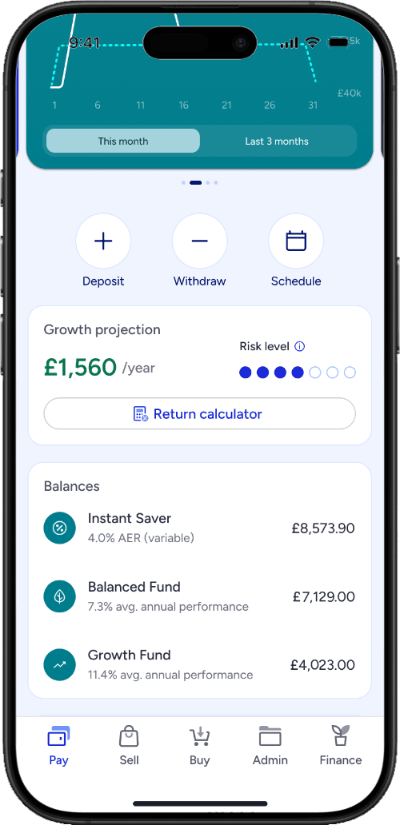
Tide business investing account screenshot showing business funds spread across instant access, a balanced fund and growth fund accounts.
Tide is an example of a business investing platform that lets businesses spread reserves across instant access (contingency) and long-term growth accounts.

Here’s everything you need to know about UK limited company investment accounts, how to balance instant-access cash with long-term growth, and how modern options stack up against each other.

1. Clear two-pot strategy for your company cash

If you run a limited company, holding surplus cash is a sign of a healthy business. But keeping all that cash in your main business bank account is convenient, but it’s not doing you any favours.

To maximize returns without putting your business finances at risk, smart operators tend to split corporate cash into two distinct pots:

Contingency pot (short-term cash)

This is money you’ll need within the next 1 to 12 months. Think things like upcoming Corporation Tax, VAT, quarterly payroll, or money set aside for emergency operational hiccups.

  • Where it goes. Instant-access business savings accounts like those offered by Tide and Monzo or high-street bank business notice accounts such as Lloyds or HSBC.
  • The goal. Capital preservation, liquidity, and keeping pace with short-term interest rates without inviting any market risk.
Long-term growth pot (3 to 5+ year horizon)

This is surplus funds that your business won’t need for a few years. For example, retained profits earmarked for long-term expansion, future capital expenditure, or simply building up a corporate wealth buffer.

  • Where it goes. A dedicated business investment account holding diversified funds or Money Market Funds (MMFs).
  • The goal. Outperforming cash returns and beating inflation over time through market growth.
PotTimelinePurposeSuitable accountsTarget goal
Contingency pot (short-term cash)1 to 12 monthsCorporation Tax & VAT
3-6 months operating buffer
Instant-access savings
(e.g. Tide Instant Saver Account or Monzo Business Instant Access Savings Pot)
Preserve capital with zero market risk
Long-term growth pot (Corporate wealth)3 to 5+ yearsRetained profits
Capital expansion
Broad, cheap and diversified funds
(e.g., Tide Investment Account or InvestEngine Business Investment Account)
Inflation-beating growth via market returns

2. Diversification: Saving vs. investing vs. stock picking

When deciding how to grow corporate reserves, directors usually weigh up three choices: cash savings, index funds, or trading individual stocks.

Dangers of stock picking

While buying company shares might sound exciting in a personal portfolio, doing it through a UK limited company is usually a headache for few reasons:

  1. Admin overheads. To trade individual stocks, along with a Legal Entity Identifier (LEI) code (which costs money to issue and renew annually), there may be additional trading costs and paperwork involved.
  2. Volatility. If a single company tanks, you’ve just wiped out corporate capital that could have funded payroll or business expansion.
  3. Complex accounting. Valuing individual equities at year-end for company accounts can turn into an accounting fee nightmare.
Why diverse funds win

Instead of betting on single stocks, business investment accounts usually focus on broad-market funds or ETFs for these key reasons:

  • Instant diversification. One fund can hold hundreds or thousands of global shares and bonds.
  • Low costs. Broad market mutual funds and ETFs pass minimal management charges on to you, keeping more profit inside your business.
  • Automated rebalancing. Multi-asset funds automatically adjust allocations as markets shift, saving you any ongoing management hassle.
Comparison of saving and investing methods
FeatureCash savingsDiversified market fundsIndividual stocks
Risk levelMinimalModerateHigh
Return potentialLow (fixed/variable interest)Market-linked growthHigh risk/reward
Admin effortMinimalLowHigher
Best forShort-term cash (e.g. tax pots)Long-term corporate reservesSmall portion of risk-on capital

FSCS Protection: How it works for limited companies

Understanding Financial Services Compensation Scheme (FSCS) protection for your limited company investment or savings account requires keeping a few key rules in mind:

  • Separate legal entity. A UK private limited company (Ltd) is legally distinct from its directors. That means your company gets its own £85,000 FSCS limit per banking license, entirely separate from your personal £85,000 coverage.
  • Bank deposits vs investments. For cash deposits in a bank or building society, FSCS covers up to £85,000 if the financial institution fails.
  • Investment protection. For investments held via an FCA-regulated investment platform for limited company funds, FSCS protection covers up to £85,000 per banking license if the platform goes bust or commits fraud.

Must read

FSCS protection covers you if the platform or provider goes bust or commits fraud. It does not cover normal market losses if the value of your investments drop. Your business capital is at risk when investing.

Tax treatment for a limited company investment account

Before moving company profits into an investment account, you need to understand how HMRC views corporate gains.

Corporation tax on investment profits

Unlike individuals, limited companies do not get a Capital Gains Tax (CGT) allowance or ISA wrappers, so there are several key taxation areas to be aware of:

  • Capital gains. When your business sells an investment or fund for a profit, that gain is subject to Corporation Tax. It’s added to your overall taxable profit for the financial year.
  • Interest income. Interest earned on company savings accounts or corporate investments falls under the Non-Trading Loan Relationship (NTLR) rules. HMRC treats this as taxable company income, meaning standard Corporation Tax rates apply.
  • Dividend income. In most cases, dividend income received by a UK limited company (whether paid by a UK or overseas business) is exempt from Corporation Tax.
  • UK Corporation Tax rates. Your total taxable profits (which include capital gains and interest, but exclude exempt dividends) are taxed at rates between 19% and 25%, depending on your limited company’s total profit thresholds.

Accounting and software integration

Tracking corporate investments can be a headache if your platform doesn’t talk to your accounting software.

  • Many businesses prefer a modern platform like Tide (used by over 2 million businesses) that integrates seamlessly with Xero, QuickBooks, FreeAgent, and Tide’s built-in Making Tax Digital (MTD)-ready software.
  • At your financial year-end, your accountant will simply need a valuation statement showing the fair market value or realized gains/losses of the investment account to update your balance sheet.

Comparison of investment platforms for a limited company

Here’s how some of the leading UK platforms compare against each other for business savings and investing:

ProviderBest ForInvestment rangePlatform FeeMinimum Investment
Tide Business Investment AccountSimplicityVanguard mutual funds (Balanced and Growth) or Instant Saver0.30% to 0.60% (based on plan)£1
InvestEngine BusinessDIY ETF portfolio building870+ ETFs£0 (DIY) or 0.25% (Managed)£100
Lightyear Business AccountMMFs6,000+ Stocks, ETFs & MMFs£0£1
AJ Bell Limited Company Dealing AccountInvestment choiceStocks, bonds, funds, investment trusts & ETFs0.25%£250 lump sum / £25 monthly
interactive investor (ii) Company AccountLarge portfoliosStocks, bonds, funds, investment trusts & ETFs£35.99/£44.99 per month£1
Wise BusinessMulti-currencyMMFs0.55% (GBP)
0.28% (USD)
0.26% (EUR)
£1

Please note the platform fees above do not include any external fund fees.
How to set up your limited company investment strategy

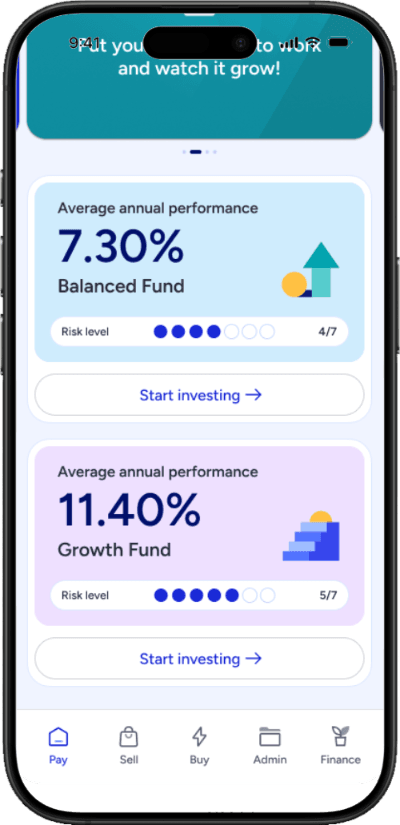
Tide business investing account screenshot showing the process for opening balanced fund and growth fund accounts.
Tide is an example of a straightforward business investing platform offering access to diversified growth funds.

Here’s how to get started investing through your limited company in 4 simple steps:

  1. Calculate your safety net. Look at your monthly run rate (expenses, salaries, tax liabilities). Keep 3 to 6 months of operating cash in your main current account or instant-access savings pot.
  2. Ringfence upcoming liabilities. Move funds earmarked for Corporation Tax or VAT due within 12 months into a high-yield savings account (like the Tide Instant Saver).
  3. Open a business investment account. Compare providers and find the best company investment account to suit your specific limited company’s needs. You’ll also likely need to set up and pay for an LEI code (some platforms can do this).
  4. Set up automated transfers. Automate monthly deposits from your main account into your growth pot to build long-term corporate wealth without thinking about it.

Frequently asked questions

Can a UK limited company open an investment account?

Yes. Any legal entity registered with Companies House in the UK can open a corporate investment account, provided the company meets the provider's eligibility criteria and verification checks.

Does a limited company get a stocks and shares ISA?

No, stocks and shares ISAs (Individual Savings Accounts) are strictly for individual taxpayers in the UK. Limited companies cannot hold ISAs. All investment gains inside a business account are taxable under the current Corporation Tax rules.

How are investment gains taxed for a limited company?

Investment profits are subject to UK Corporation Tax. Realised capital gains (when you sell investments for a profit) and interest received are reported on your company's annual CT600 return.

What is the difference between FSCS deposit and investment protection?

Cash deposits held in regulated UK banks are protected up to £120,000 against bank failure. Investment accounts are protected up to £85,000 against the failure or fraud of the platform or custodian. Neither scheme protects against stock market fluctuations or falling asset prices.

Is my money locked in with a UK limited company investment account?

Most modern providers (like Tide, Monzo, or Wise) offer flexible access without setup or exit fees, allowing you to sell investments and move money back to current accounts. However, because fund values fluctuate, long-term reserves should generally be held for 3 to 5 years minimum.

Sources

George Sweeney, DipFA's headshot
Deputy editor

George is a deputy editor at Finder. He has previously written for The Motley Fool UK, Nasdaq, Freetrade, Investing in the Web, MoneyMagpie, Online Mortgage Advisor, Wealth, and Compare Forex Brokers. He's focused on making personal finance and investing engaging for everyone. To do this he draws from previous work and his Level 4 Diploma for Financial Advisers (DipFA), sharing what he’s learnt. When he’s not geeking out about money, you’ll find him playing sports and staying active. See full bio

George's expertise
George has written 341 Finder guides across topics including:
  • Investing
  • Personal finance
  • Tax
  • Pensions
  • Mortgages
  • Cryptocurrency
Go to site