Capital.com and eToro are two of the most popular trading platforms available in the UK, but how do they compare? I tested both to find out where they differ.
CFDs and spread bets are complex instruments and come with a high risk of losing money rapidly due to leverage.Between 51%-65% of retail investor accounts lose money when trading CFDs. You should consider whether you understand how CFDs work and whether you can afford to take the high risk of losing your money.
Capital.com and eToro are two of the biggest and best-known retail trading platforms around. At a glance, they’ve got a lot in common: they both boast slick mobile apps, zero-commission headline rates, and millions of users worldwide.
But peel back the sleek interfaces, and you’ll find they actually cater to completely different types of traders. One is a social butterfly designed for the modern long-term investor, while the other is a razor-sharp tool built for active, cost-conscious intermediate-level traders.
Capital.com vs eToro: Our Verdict
First things first, they’re both excellent in their own right. It all comes down to choosing the one that best suits your trading strategy and level of experience.
eToro is the ultimate trading social club in your pocket. It’s ideal if you want to interact with other traders, or use its famous CopyTrader feature to automatically mirror the trades of seasoned pros. It makes the often-intimidating world of trading feel more familiar for beginners who don’t know their moving averages from their relative strength indices.
If you prefer a more hand-holding approach, don’t mind more fees for a simplified experience, and want to learn by watching others – you may end up leaning more towards eToro.
Capital.com, on the other hand, is a trading purist’s dream. It’s a bit more analytical and focused. There’s no social feed, but what you get instead are remarkably tight spreads, zero admin fees, and a beautiful charting setup. Crucially for UK users, it offers spread betting, meaning your potential profits are completely free from UK taxes.
If I’m clearing the decks, firing up the charts, and actively managing my own trades, Capital.com is the slicker, cheaper journey.
Finder Score
9.8Excellent
9Excellent
Tradeable assets
5,500+
6,000+
Min. initial deposit
£20
$50
Keep in mind
Capital at risk. 65% of retail CFD accounts lose money
Capital at risk. 51% of retail CFD accounts lose money
Both platforms offer zero commission trading, but how they actually make their money is a tale of two very different fee structures.
Capital.com wipes the floor here if you’re an active, cost-conscious trader. It charges zero commission, zero deposit or withdrawal fees, and has absolutely no inactivity penalty if you take a break from trading. It makes its money through the “spread” (the difference between the buy and sell price), and those spreads are highly competitive.
eToro is also commission-free when buying stocks, but it comes with a few administrative fees to be aware of. Because most of the platform operates in USD, UK traders do need to take note of the FX conversion fees. Also, eToro charges a flat $5 withdrawal fee every time you want to take money out and the minimum withdrawal amount is $30. Typically, its spreads are also noticeably wider than Capital.com’s.
Round 2: Markets and instruments
I think this round really comes down to whether you want to actually own what you’re buying.
eToro allows you to buy real, underlying stocks and ETFs along with the ability to trade CFDs. Altogether, eToro offers over 5,000 tradable instruments, which is pretty similar to Capital.com. However, the benefit is that if you want to start long-term investing rather than short-term trading, eToro can help facilitate that, whereas Capital.com doesn’t.
Capital.com doesn’t offer direct share ownership. Instead, it is a pure derivative platform, meaning you trade Contracts for Difference (CFDs) or use spread betting. While you don’t own the underlying asset, the massive advantage for UK traders is that spread betting is exempt from Capital Gains Tax (CGT) and Stamp Duty. So, if you’re looking to make short-term, tax-efficient trades on price movements, that’s what Capital.com is custom-built for.
Round 3: Tools, resources and features
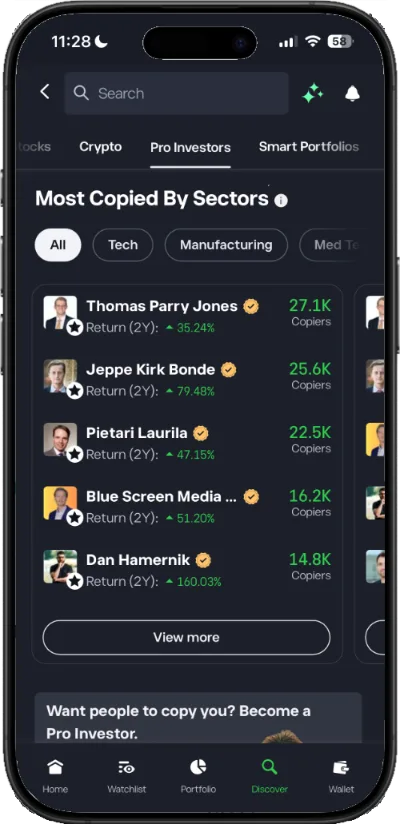
eToro’s crowning glory is CopyTrader, it was actually the first tool I ever used when I started trading and investing because I wasn’t confident enough initially making my own trades. You can literally browse a leaderboard of top-performing investors, filter by their risk score, hit copy, and your account will automatically mirror their trades in real-time.
It’s an absolute game-changer for beginners or anyone who lacks the time to stare at charts all day. They also offer Smart Portfolios, which are ready-made thematic investment baskets. Recent additions to eToro also include AI features, like Tori, your personal AI assistant.
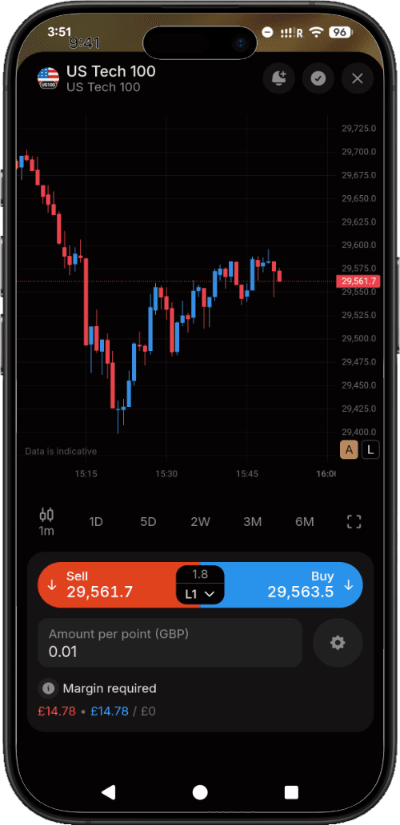
Capital.com completely ignores the social side and instead focuses heavily on top-tier technical tools. It integrates beautifully with TradingView (the gold standard for chart nerds) and MetaTrader 4.
It also features a genuinely brilliant AI trading assistant that analyses your trading behaviour and points out your own cognitive biases – like politely letting you know you have a habit of holding onto losing trades for too long.
For more tech-savvy traders, Capital.com also offers plenty of customisation opportunities, whereas with eToro you interact with the platform in the way they’ve designed it.
You can browse and access eToro’s CopyTrader and Smart Portfolios features easily from the discover tab within the app.
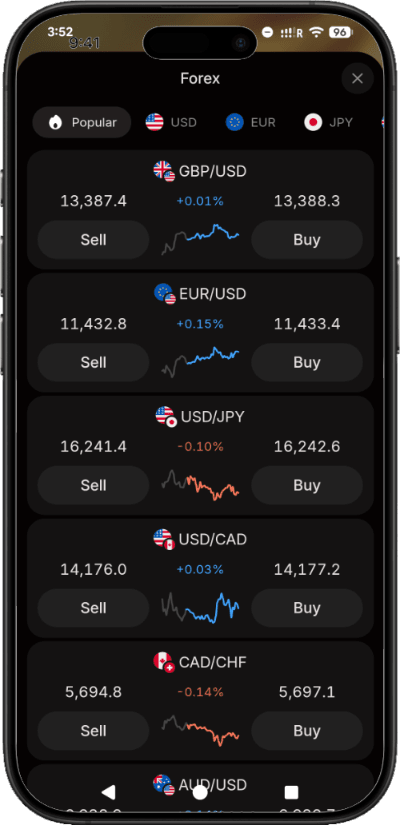
Capital.com integrates TradingView charting, so you can smoothly analyse instruments like the US Tech 100 and major forex pairs directly in the app.
Round 4: Ease of use
Legacy brokerages can feel clunky and frustrating, but both of these modern platforms are a joy to use. Everything feels very intuitive. I would say eToro is simpler straight out of the box, however this simplicity also means it lacks the flexibility of Capital.com.
eToro’s interface will feel instantly familiar to anyone who uses social media. You have a news feed, you can like and comment on other traders’ posts, and navigating your portfolio is highly intuitive. It brilliantly demystifies the trading experience.
Capital.com offers a cleaner, less cluttered experience. Because there’s no social feed distracting you, the app feels faster and entirely focused on trade execution. It manages to strike a rare balance: it is simple enough that a complete novice won’t feel overwhelmed, yet it packs enough analytical firepower under the hood to satisfy a seasoned day trader.
The bottom line
I probably felt a slightly stronger sense of community and long-term investment potential with eToro. If you’re a beginner looking to learn the ropes, or you simply want to buy real shares or copy the skills of profitable traders, eToro is a superb starting point.
For the actual mechanics of active trading, however, Capital.com was faster, slicker, and cheaper. Ultimately, it provides an unbeatable service for UK traders who want to utilise tax-efficient spread betting without being chipped away at by withdrawal fees and wide spreads.
Both are heavyweights in the retail trading space. Your choice simply comes down to whether you want a more beginner-friendly social investing hub, or a streamlined, low-cost trading terminal for proper traders.
All investing should be regarded as longer term. The value of your investments can go up and down, and you may get back less than you invest. Past performance is no guarantee of future results. If you’re not sure which investments are right for you, please seek out a financial adviser. Capital at risk.
George is a deputy editor at Finder. He has previously written for The Motley Fool UK, Nasdaq, Freetrade, Investing in the Web, MoneyMagpie, Online Mortgage Advisor, Wealth, and Compare Forex Brokers.
He's focused on making personal finance and investing engaging for everyone. To do this he draws from previous work and his Level 4 Diploma for Financial Advisers (DipFA), sharing what he’s learnt. When he’s not geeking out about money, you’ll find him playing sports and staying active.
See full bio
George's expertise
George
has written
348
Finder guides across topics including:
Capital.com offers zero-commission CFD trading and spread betting with premium TradingView chart integrations, more tools than you can shake a stick at and no platform fees. Here’s what our expert thought when testing the platform.
Vanguard and InvestEngine are both investment platforms with a lot to offer. We compare their features, fees, account types and more – side by side in InvestEngine vs Vanguard.
J.P. Morgan Personal Investing is one of the UK’s most popular digital wealth management platforms. Our review looks at whether it’s any good, how it works, the fees, and our overall verdict.
If you’re interested in investing but don’t know where to start, Moneybox might be the solution for you. We review its features, charges and ISA options.
Advertiser disclosure
Finder.com is an independent comparison platform and information service that aims to provide you with the tools you need to make better decisions. While we are independent, the offers that appear on this site are from companies from which Finder receives compensation. We may receive compensation from our partners for placement of their products or services. We may also receive compensation if you click on certain links posted on our site. While compensation arrangements may affect the order, position or placement of product information, it doesn't influence our assessment of those products. Please don't interpret the order in which products appear on our Site as any endorsement or recommendation from us. Finder compares a wide range of products, providers and services but we don't provide information on all available products, providers or services. Please appreciate that there may be other options available to you than the products, providers or services covered by our service.
We update our data regularly, but information can change between updates. Confirm details with the provider you're interested in before making a decision.