We show offers we can track - that's not every product on the market...yet. Unless we've said otherwise, products are in no particular order. The terms "best", "top", "cheap" (and variations of these) aren't ratings, though we always explain what's great about a product when we highlight it. This is subject to our terms of use. When you make major financial decisions, consider getting independent financial advice. Always consider your own circumstances when you compare products so you get what's right for you. Most of the data in Finder's comparison tables is provided by Defaqto. In other cases, Finder has sourced data directly from providers.
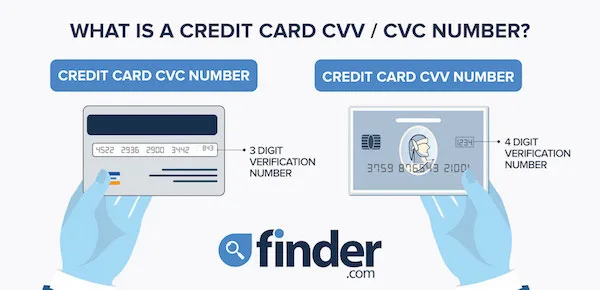
What is a CVV or CVC number?
If you’re using your credit card to make a purchase online or over the phone, you’ll usually be asked to provide the name on your card, the account number, expiry date and something called your CVV, CVC or security number or code.
Your CVV number (card verification value) or CVC (card verification code) on your credit card or debit card is a three- or four-digit number printed on your card. If you have a Visa or Mastercard credit or debit card, it’ll be a three-digit number on the back of your card. If you’re using an American Express card, the CVV will be a four-digit number on the front of your card.
The CVV is an anti-fraud measure that’s used when you make a purchase that doesn’t require you to enter a PIN or sign a receipt. This is why you’re often asked to enter your CVV number if you’re shopping online or making a purchase over the phone, as it lets the merchant or payee verify that you have the physical card and are indeed the cardholder.
As the CVV or CVC number is printed only on your card, it’s important that you keep your card safe and secure. If your card is lost or stolen, anyone could use the card to make purchases online or over the phone without your permission. If this does happen, contact your card issuer immediately to cancel the card and keep an eye on your statement to report any fraudulent transactions. The CVV or CVC number is called a Secure Socket Layer (SSL) – commonly used technology which is a digitally provided certification process.
Is a CVV or CVC number called anything else?
The credit card CVC and credit card CVV numbers are sometimes called different things depending on the credit card network or credit card company that issued it. For example, Mastercard calls the code CVC2, American Express refers to it as CID, and Visa has dubbed it CVV2, while other providers may refer to a CSC (card security code).
Despite these different names, the codes all serve the same function and are used as a standardised security measure. In the case of contactless cards there is generally a chip involved which supplies its own electronically generated series of codes. They are called “Dynamic CVV” or iCVV.
Are CVV or CVC numbers the same as my PIN?
No, your CVV or CVC number is different from the PIN code you use to make cash machine withdrawals or in-store debit or credit card transactions. Your CVC or CVV number is used for verifying online or over the phone payments when you can’t use your PIN or signature.
While the CVV or CVC number is in place to protect your credit card from fraudulent transactions, it could still be used fraudulently if you don’t use a secure site. If you spot a transaction you don’t recognise on your statement, contact your bank immediately to report the issue and protect your finances.
More resources on Finder
More guides on Finder
-
Credit card reward – terms & conditions
Finder credit card reward – Terms and conditions
-
Dragon Pass review 2026
Find out how you can book access to airport lounges across the globe with Dragon Pass.
-
NewDay, new review: Is Pulse’s exclusive card any good?
Find out how the new Pulse credit card works and who is eligible.
-
Overdraft or credit card: Which is better to borrow money?
Discover more about how credit cards and overdrafts work to see which option is best for you.
-
Credit cards for good credit 2026
Discover the best credit cards available for those with good credit.
-
Top ethical credit cards
Learn more about how ethical credit cards work and whether they are right for you.
-
Credit cards for the self-employed
It can be harder to get a credit card when you’re self-employed. But not always. Here’s how to boost your chances of being approved.
-
When is the Apple Card credit card coming to the UK?
Apple has announced its first credit card, the Apple Card, to be used with Apple Pay. Here’s how it works and what we can expect from it once released.
-
Contactless payments: The pros and cons of tap and pay
What are contactless payments? How do they work? Are they safe? Here’s what you need to know about tap and pay.
-
Compare The Co-operative Bank credit cards
Looking for a 0% balance transfer, 0% purchase or rewards card? The Co-operative Bank has a card for most typical situations. Learn more about the range and compare rates, fees, limits and eligibility requirements.