Securing the right type of funding is a critical step for a growing business. Whether you’re looking for new business loans or exploring alternative financing options, understanding the cost, speed, and eligibility criteria of different lenders ensures you find the right fit for your cash flow cycle. It doesn’t have to be a lengthy process either, for example, new business loan providers like Wayflyer allow companies to apply in less than 10 minutes.
However, whether your company needs a modern solution like Wayflyer, a more traditional provider like NatWest, or a flexible lender like iwoca – every growing business faces a fundamental tension: cash goes out before it comes back in. And counterintuitively, the faster a company grows, the tighter its cash flow becomes. Finding the right business loan for a new business often comes down to matching the financing structure to your specific stage of growth and operational needs.
Why growing UK businesses run short of cash
Cash flow gaps for businesses typically happen during these 3 common scenarios:
- Doing the work now to get paid later. Many service-led businesses, for example consulting firms, marketing agencies, and software providers often operate on net-30 or net-60 day payment terms. Meanwhile, things like payroll and rent must be paid immediately, creating a working capital gap.
- Paying upfront to deliver. Businesses in industries such as construction, manufacturing, and consumer goods must order materials, parts, or inventory upfront. Final payment or sales revenue doesn’t usually arrive until the project is completed or the stock is sold, potentially months later.
- Capacity constraints. Other types of business such as hospitality firms, personal care companies like hairdressers, and fitness centres may generate daily revenue, but growth is capped by physical space. Adding a second location or new equipment requires lumpy, expensive capital outlays before the new customer demand can rise to pay for it.
One cash gap, 5 ways to finance it: £100,000 over 6 months
When comparing new business loans, headline interest rates rarely tell the full story. Here are 5 different ways to finance a £100,000 cash gap over a 6-month term across various potential funding solutions.
High-street bank loan
- Cost for £100k over 6 months: Priced based on interest rates and applicable fees with specific quotes for loans over £50,000 provided after a formal application. And, minimum terms are usually at least 12 months.
- Speed: Typically 2 to 4 weeks to arrange, process and undergo underwriting.
- Eligibility and security: Requires filed annual accounts (usually 2+ years of audited trading history). A personal guarantee may be required, and a hard credit check is carried out.
Government Start Up Loan
- Cost for £100k over 6 months: Although it’s a 7.5% fixed interest rate, borrowing is capped at £25,000 per founder, so it cannot fulfil a £100,000 requirement by itself. The loan term is 1 to 5 years.
- Speed: Typically 2 to 3 weeks if you’re “highly prepared”, otherwise 2-3 months.
- Eligibility and security: Legally structured as a personal loan to the founder, making it suitable for early seed borrowing rather than scale-up capital for a growing business.
Business credit card or overdraft
- Cost for £100k over 6 months: Variable interest rates. Can work out to be low cost if cleared within weeks, but minimum payments can drag on for years due to compounding.
- Speed: Immediate access if credit limits are pre-approved.
- Eligibility and security: Credit limits rarely exceed £25,000 for newer businesses. A personal guarantee is required and certain suppliers may not accept credit cards or may add a surcharge.
Alternative short-term loans
- Cost for £100k over 6 months:
- Wayflyer short-term loan: £5,000 to £10,000 total cost (one fixed fee of 5% to 10% with no compounding interest). These are indicative fees for £100,000 over six months. Your fee depends on your business and could be higher or lower.
- iwoca: ~ £12,000 total cost (49% representative APR).
- Fleximize: ~ £10,400 at midpoint (no additional fees).
- Funding Circle: ~ £8,600 total cost (best case pricing).
- Uncapped: ~ £6,000 total cost (based on 1% monthly fee average). Uncapped’s fixed-term loans are for brands with £100,000+ monthly revenue, so pricing reflects larger, more established businesses.
- Speed: Ranging from as little as 24 hours (Wayflyer, iwoca, Funding Circle) to a few days.
- Eligibility and security: Wayflyer and Uncapped require no personal guarantees but iwoca and Funding Circle require personal guarantees. Wayflyer assesses eligibility with no hard credit checks, and (depending on the business) can look at sources like accounting software or ad platforms to build a more accurate offer. For Wayflyer your business needs average monthly sales of at least £10,000, plus 6 months’ trading if you sell products online or wholesale (and 1 to 2 years’ trading if you’re in software, retail, hospitality or services), and must be incorporated in a supported country. Other short-term loan providers may run hard credit checks.
- Cost for £100k over 6 months:
Merchant cash advance (MCA)
- Cost for £100k over 6 months (indicative fees):
- Wayflyer merchant cash advance. £7,000 to £11,000 total cost (one fixed fee of 7% to 11% agreed when you arrange the finance).
- YouLend and Stripe Capital. ~10% fee (£10,000) in published examples.
- 365 Finance and Capify. Costs not published publicly; Capify adds origination & processing fees.
- Speed: Typically 24 to 48 hours from application to drawdown.
- Eligibility and security: Repaid dynamically as a percentage of daily sales (e.g., 20% of daily sales on 6 months of £90k monthly sales). If sales dip, the repayment timeline stretches. Exact terms and structure differs across new business loan lenders but Wayflyer requires no personal guarantee or hard credit check, and can offer eligible businesses a repayment cap facility. This cap sets the most you’ll repay in any month. So in a busy month, repayments stop at the cap and the rest is paid in later months. You never repay more in total, because the fee is fixed.
- Cost for £100k over 6 months (indicative fees):
Comparison overview of £100,000 over 6 months
| Financing method | Typical cost for £100k over 6 Months | Speed to decision and Funding | Eligibility and security required |
|---|---|---|---|
| High-street bank loan | Priced based on variable interest rates and fees. Specific rates for £100k quoted when applying. | Usually 2 to 4 weeks to arrange. | Requires filed accounts (usually 2+ years’ trading). Personal guarantee and hard credit search typically required. |
| Government Start Up Loan | 7.5% fixed interest (loan sizes only £500 to £25,000, not suitable for £100,000). | 2 weeks to 3 months (depending on how much help from an adviser is needed). | Personal loan to the founder. Suits small, new business loans rather than growing businesses. |
| Business credit card or overdraft | Variable interest rates which can be high. Low cost if cleared quickly, but minimum payments can drag on for years. Not typically suitable for £100,000. | Immediate (if facility pre-approved). | Limits rarely exceed £25,000. Personal guarantee standard; suppliers may add surcharges. |
| Alternative short-term loan | Costs can range from £5,000 with Wayflyer on the lower end to around £12,000 with iwoca on the higher end. | As little as 24 hours (Wayflyer) or a few days (iwoca or Funding Circle). | Wayflyer and Uncapped require no personal guarantee but other options such as iwoca and Funding Circle do require this for a short-term loan. |
| Merchant cash advance (MCA) | Costs can range from £7,000 on the lower end with Wayflyer cash advance to around £10,000 with YouLend/Stripe Capital. | Typically 24 to 48 hours. | Repaid dynamically as a percentage of daily sales (e.g. 20%). |
What lenders look for in businesses with a short track record
Here’s what’s important to different types of lenders when they’re considering business loans for new businesses:
- Traditional banks. Mainstream lenders like NatWest or HSBC assess underwriting risk using historical filed accounts. For new businesses trading for under 2 years, this lack of past performance data often results in an automatic decline.
- Alternative lenders. Modern alternatives such as Wayflyer, Tide and iwoca use open banking and API integrations to underwrite based on current business performance data. By connecting platforms like Shopify, Stripe, Xero or business bank accounts, data-led lenders can assess current revenue growth, contribution margins, and cash flow patterns rather than relying on old annual filings.
"A young business needing finance isn’t necessarily a warning sign. If borrowing grows in line with sales, and those sales come with healthy margins and steady cash flow relative to their sector, it’s funding growth. If borrowing grows in line with losses, it’s funding survival. That’s one of the clearest signals we look for in the data."
Choosing the right new business loan option
Selecting the right finance for growing your business depends on your trading history, urgency, and willingness to provide a personal guarantee as security.
High-street banks
Mainstream lenders such as NatWest, Barclays, HSBC, etc., are often the cheapest route if you qualify for the strict eligibility checks. However, loans are strictly tied to historical accounts, loan sizes have lower caps, typically a 12-month minimum term, applications take weeks, and directors must usually sign a personal guarantee.
Modern alternative lenders
Data-led alternative lenders such as Wayflyer, iwoca, Funding Circle, etc. can bridge the gap for fast-growing, asset-light businesses. These lenders often use tech in clever ways to open up borrowing to more companies.
Expect fast decisions, but you may need to provide a personal guarantee. Wayflyer is an example of a lender that offers term loans and cash advances with a single fixed fee agreed upfront, decisions in as little as 24 hours (subject to status and checks), and no personal guarantees or hard credit checks.
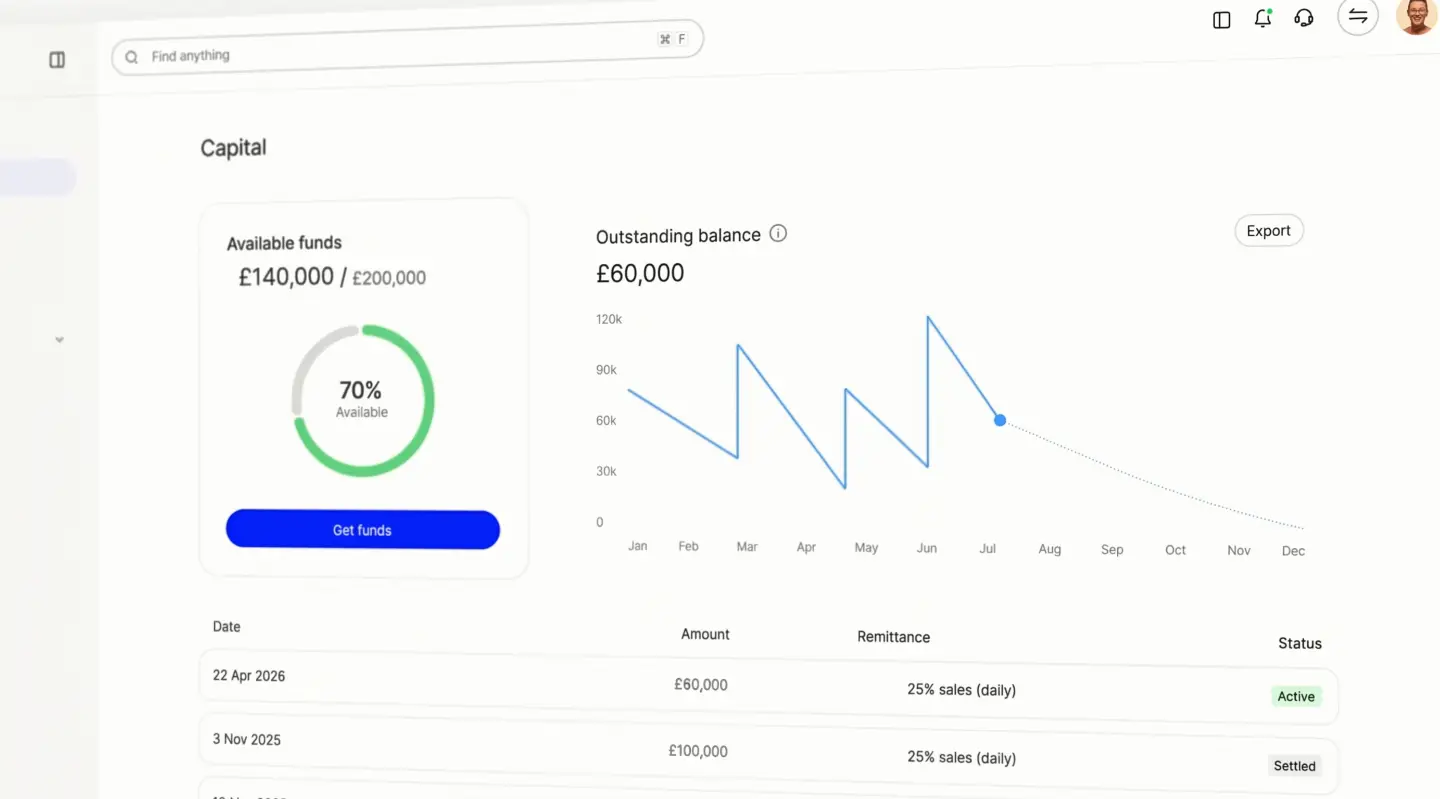
Some lenders now keep underwriting after the first advance. Wayflyer connects to a business’s performance data (payment gateways, banking, accounting, etc.) during the initial application, and – for eligible customers – uses that data to show a live balance of available funds. Customers can always see what they can access and draw from it when they need to. The limit automatically scales with the business, without them having to reapply.

Bottom line
Business loans for new business operators and companies looking for healthy growth require a careful comparison of total cost, speed, and security. While traditional bank loans may offer low interest rates, their strict lending criteria often make them unsuitable for young, fast-growing companies.
Luckily, advances in reporting technology mean alternative lenders like Wayflyer can provide the crucial speed and flexibility that most growing businesses need to reach that next level and maintain their momentum. However, not all options are the same and companies looking for a new business loan must calculate the total cost of the finance over the specific term, check for compounding interest, and see whether a personal guarantee is required.
Frequently asked questions
How does a fixed-fee business loan compare with an interest rate?
A fixed-fee model (such as those offered by Wayflyer) applies one fixed fee, agreed upfront, as a percentage of the amount (e.g., 5% to 10%). So, the total repayment amount never increases or compounds, giving businesses financial breathing room and absolute certainty over the cost of finance.
A business loan with an attached interest rate can make it harder to understand the true cost, for several reasons. Interest rates are typically quoted based on one year. Chip away at your 8% loan on a monthly basis, and it will cost you less than 8%. But if you repay over a 3-year term it'll cost you more than 8%. Take a repayment holiday, and you'll likely find yourself paying interest on interest.
The safest approach is to ask any lender for the overall projected cost of their loan upfront. But note that the overall cost of a variable-rate loan is impossible to guarantee.
Can I get a business loan without a personal guarantee in the UK?
Yes, though it is rare among traditional banks and even some alternative lenders (like iwoca or Funding Circle) who require directors to be personally liable. Wayflyer is one of the few data-led lenders that offers unsecured funding without a personal guarantee.
Can I borrow £100,000 if my business has only been trading for 6 to 12 months?
Yes, but high-street banks will likely decline the application due to a lack of filed historical annual accounts (at least 2 years normally needed). Modern, data-led lenders may be able to offer £100,000 to newer businesses by analysing live performance data (such as monthly sales) via open banking and sales platform integrations.
What's the difference between a term loan and a merchant cash advance?
A term loan involves borrowing a lump sum and repaying it via fixed weekly or monthly instalments over a set period. A merchant cash advance (MCA) provides a lump sum that's repaid as a fixed percentage of your daily sales.
An MCA is highly flexible because repayments drop if your sales dip. If you have a bumper month, you make a bumper repayment. However, some providers (like Wayflyer) offer eligible businesses an optional cap to limit repayments at a planned amount during busy periods. So in a bumper month, repayments stop at the cap and the rest is paid in later months. This doesn't affect the cost of borrowing, because it's a fixed-fee product rather than an interest-based product.
Will applying for a business loan affect my credit score?
Applying for a traditional bank loan usually involves a hard credit search, which leaves a visible mark on your credit file. Many alternative lenders use a soft credit check to assess eligibility, which does not leave a lasting footprint on your credit reports.
How quickly can I get a business loan in the UK?
High-street bank loans typically take weeks to process due to manual underwriting and document checks. In contrast, data-led alternative lenders can provide a decision in hours. For example, a Wayflyer application takes 10 minutes, with new business loans being approved in as little as 24 hours, subject to status and checks.
George is a deputy editor at Finder. He has previously written for The Motley Fool UK, Nasdaq, Freetrade, Investing in the Web, MoneyMagpie, Online Mortgage Advisor, Wealth, and Compare Forex Brokers. He's focused on making personal finance and investing engaging for everyone. To do this he draws from previous work and his Level 4 Diploma for Financial Advisers (DipFA), sharing what he’s learnt. When he’s not geeking out about money, you’ll find him playing sports and staying active. See full bio
- Investing
- Personal finance
- Tax
- Pensions
- Mortgages
- Cryptocurrency
More guides on Finder
-
Compare loans to buy a business UK
Find out how a loan could help you to buy an existing business.
-
Best business loan alternatives
Learn more about the alternatives to a traditional business loan.
-
Limited company loans
See how to get a business loan as a limited company in the UK, and how much you can borrow.
-
Sole trader loans
Find out how to get a loan if you work for yourself, including which lenders offer business loans for sole traders.
-
Peer-to-peer business lending
Peer-to-peer business loans aim to offer cheaper rates and an easier application process than more traditional lenders.
-
Compare fast business loans
Sometimes an unexpected opportunity presents itself or a piece of equipment can break. We look at what you can do if you need money for your business as soon as possible.
-
Compare asset finance
We explain the various types of asset financing available to help you choose a competitive deal for your SME.
-
Compare short term business loans
Discover how to find the best short term loan for your business.
-
HSBC business loans calculator and reviews
Information about the business loans available from HSBC.
-
Santander business loans calculator and review
An overview of the range of business loans available from Santander Bank