See loans you're likely to get
Check your chances of being accepted before you apply
It's simple, fast and free
It won't affect your credit score

Table: sorted by APR, promoted deals first
To make it even easier to compare and evaluate unsecured loans we came up with the Finder Score. Speed, features and flexibility across 60+ lenders are all weighted and scaled to produce a score out of 10. The higher the score the better the lender – simple.
Read the full methodologyPlease note: You should always refer to your loan agreement for exact repayment amounts as they may vary from our results.
Late repayments can cause you serious money problems. See our debt help guides.
A personal loan is when you borrow a fixed amount from a lender and pay it back with interest over a set time period, usually in fixed monthly repayments. They are often used for more personal purchases such as home renovations, holidays or weddings.
Lenders consider factors like your income, credit score and borrowing history when deciding whether to offer you a loan and what interest rate to charge (learn more about APR).
The main advantage of a loan is you get cash upfront, but are still able to spread the cost of a big purchase over time through paying back your loan in instalments.
There are a few key features you’ll want to consider when comparing loans. To find a better deal, ask yourself these questions:
It’s important to remember that every individual’s personal circumstances are different and lenders will assess each application based on these. To give some further guidance on which lender might be best for your circumstances, our best personal loans guide highlights lenders that are favourable for a variety of different financial circumstances and credit scores.
When choosing a personal loan, selecting a longer repayment term, say 5 or 7 years, will help to reduce your monthly repayments and make them more affordable. But it also means you’ll pay more in interest overall. It’s worth using a loan repayment calculator to see whether you could still afford the monthly repayments if you reduced the term to 2 or 3 years, for example, as you’ll save money in the long run.”
Wondering if you should just get a credit card? Potentially, yes. However, the answer depends on what you’re buying, how much you’re borrowing and your level of self-discipline!
A credit card can be a more cost-effective option for borrowing a sum under £5,000, providing you have the discipline to repay it. Unless you have a good credit score and high income, credit cards typically won’t give you a credit limit of more than £3,000 to £5,000. Above £5,000, and a personal loan could be a cheaper option.
Personal loans come in a lump sum and you have a predetermined amount of time to pay them off. By contrast, credit cards are a revolving form of credit. You borrow what you need, when you need it (subject to a card’s monthly limit) and you have to make at least a minimum monthly payment. Credit card interest rates are generally variable.
Using the wrong credit card could cost you more because credit cards tend to have higher rates than personal loans. However, a card with a promotional rate of 0% on purchases could be a smart option, if you can get approved with the credit limit that you need. Any purchases you make during the 0% purchase period don’t attract any monthly interest, so you can put a big, planned purchase on the card and then pay it off gradually each month (you’ll always have to make at least the minimum required payment). However, this type of credit card is quite often reserved for those with a good credit score and a positive borrowing history. You’ll also need to make sure you can pay off the balance before the 0% purchase period ends, otherwise you’ll be charged the credit card’s standard interest rate on any outstanding balance.
Finally, before deciding to apply for a credit card, you should consider any monthly or annual card fees, as well as any introductory offers (such as limited-time cashback) or rewards schemes (such as points to redeem on flights). And don’t forget that you’ll pay a charge each time you withdraw cash on a credit card.
| Response | % of customers that would recommend |
|---|---|
| Personal loan providers | 89.80% |
| Credit card issuers | 89.50% |
The annual percentage rate (APR) provides an annual summary of the cost of a specific loan from a specific lender. It takes into account both interest and any fees that all borrowers will have to pay. If a loan doesn’t come with a product/arrangement/application fee, then usually the interest rate and the APR will be the same (fees that you might incur, like missed payment fees or early redemption fees, aren’t taken into account).
The vast majority of lenders tailor the rates they offer to each applicant. This is known as “risk-based pricing”. If your application for a loan is successful, a lender will make you a loan offer, detailing the actual APR that you’ll receive.
The representative APR is the APR that a lender realistically expects 51% of its customers to receive. The 51% of applicants with the highest credit scores tend to be offered the representative APR, while the other 49% are likely to be offered a higher rate.
For personal loans, the representative APR is relevant but doesn’t tell the whole story. For example, if it’s very low, it probably means you need an excellent credit score to get accepted in the first place; if your credit score is less than perfect and you get approved, you’re likely to be offered a higher rate than the advertised one. Interest rates can also vary according to the amount and duration of a loan.
So despite the fact that APRs and representative APRs are designed to help consumers, they can feel like a bit of a minefield. Thankfully, most lenders offer a “soft search” or “eligibility checker” facility that you can use before applying for a loan. These facilities generally won’t impact your credit score and show you how likely you are to be accepted for a particular loan and what interest rate you might get.
Better still, services like Finder offer a free eligibility checker, that runs a soft search with multiple lenders in one go.
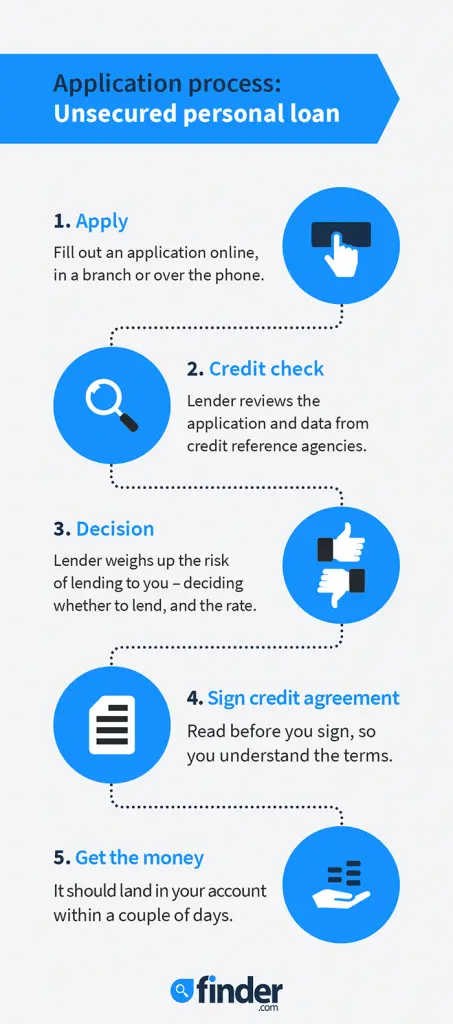
Unfortunately, there is no way to guarantee you’ll be approved for a personal loan. But, giving yourself a better chance at getting approved starts with meeting the eligibility criteria set by the lender. To better your chances of being approved, keep the following in mind:
In order to lend responsibly, lenders will need:
When you apply for a personal loan online, many lenders can verify your identity and financial information electronically through a credit reference agency (CRA) like Experian. Instead of having to produce identification documents or bank statements, you may be asked to answer some security questions that only you should know. This process typically does not impact your credit score, although the subsequent full credit check that usually takes place after you submit your application may cause a slight, short-term dip in your score.
If you choose to apply for a personal loan at a physical branch, you’ll be required to adhere to traditional guidelines. This means you’ll need to provide appropriate documents to establish your identity and address separately. You may also be asked to prove your income, typically with the last two months’ worth of payslips and/or bank statements, or, if you’re self-employed, a document from HMRC verifying your most recent tax return calculation. However, the lender will still conduct a credit check and affordability assessment using a CRA.
The documents needed to apply for a personal loan
Use our free eligibility checker to discover the loans that you are most likely to be accepted for, without hurting your credit score.
1. Tell us about yourself
Let us know how much you want to borrow, what you want the loan for and a little about yourself. Remember, this is not an application, so it will not affect your credit score.
2. We search the market for you
We search a large panel of lenders to find you the loans that you’re most likely to be accepted for.
3. See your eligibility before you apply
Sort your personalised results by your chance of approval and compare the best loan rates available to you.
As long as you bear in mind that it’s unlikely to check the whole market, but instead a sub-section of lenders with whom it has an arrangement, then a broker can take the strain out of finding a competitive personal loan deal. Brokers find the most competitive rate available to you from their panel of lenders, taking into account your individual circumstances. Normally this service is free because the broker will earn a referral fee from the lender.
Some brokers and “matching services” can now run soft searches with a range of lenders in seconds, meaning that without any impact on your credit score you’ll be able to get realistic rate quotes for loans you’re likely to be approved for. This can be a smart way to avoid disappointment, protect your credit score and focus on lenders likely to approve you.
A better question is: What can’t you use a personal loan for? This type of financing can cover almost any large expense or even consolidate your debt. Lenders will normally ask you what you need the money for, during the application process. Here are some common reasons for taking out a personal loan:
There are, however, situations when a personal loan isn’t suitable. Here are a few examples:
There’s no doubt that loan companies are getting faster. Even the big banks have had to up their game to keep up with specialist online direct lenders. But it’s still fairly normal to have to wait a day or more to drawdown your loan.
If you apply for a loan on a weekday during working hours, that usually cuts the time it takes to get the funds in your account. Similarly, if you apply for a loan from the bank you hold a current account with, there’s a good chance it would be in your account within minutes, however, you can almost always save money by comparing rates and shopping around.
Bear in mind that even if a lender offers an instant decision on a personal loan, this doesn’t mean that the money will be in your account instantly. Having said that, these lenders tend to be pretty effective at transferring the money quickly, too. It’s not uncommon for the money to be in your account on the same working day as your application if your application is approved.
Yes, it’s perfectly possible to take out more than one loan, with either your current lender or a second lender. However, different lenders have different policies, and each application for credit will be assessed on its own merit.
Alternatively you have the option of going to a second lender to apply for another loan.
If you want to borrow more from your current lender, then there’s a good chance they’ll insist that you terminate your first loan (which could involve a fee or having to pay one-to-two months’ interest beyond the date when you close the loan) and take out a new, bigger loan instead.
For example, the AA does not add on additional funds to a loan. However, if you wish to borrow more money, you can settle your existing AA loan and reapply for a new one.
Ultimately, lenders want to lend, and the more money they lend, the more money they make in interest. Naturally, they’ll want to take care not to expose themselves to undue risk (they want to be sure they’ll get their money back) and they also have a responsibility to ensure that they are lending responsibly.
Before running multiple loans concurrently, you should ask yourself if it’s the most sensible route to ultimately getting free of the debt. In some situations, a realistic debt consolidation plan or getting advice for debt that’s become overwhelming could be a smarter choice.

Find out how credit builder loans work and whether they are right for you
You can use a debt consolidation loan to make it easier to manage your existing debts and improve your credit score.
Looking to buy land but need a loan to do so? Find out if you can get a personal loan to purchase land.
Are you claiming universal credit and need to cover an unexpected expense? Find out how you can get an interest-free budgeting advance.
Clydesdale Bank offers competitive and flexible personal loans of £1,000 to £35,000 to be repaid over 1 to 7 years. Find out how other lenders compare.
Looking for platforms like Lendable? Compare example loans and terms from a selection of sites offering a comparable service.
Everything you need to know about this controversial form of lending. Learn how it works, the pros and cons, and the alternatives, so you can decide what’s right for your individual circumstances.
Learn the common reasons behind why personal loan applications are rejected and learn tips to improve your chances of being approved for a personal loan.
Arm yourself against identity theft or losing money to a scam by knowing the warning signs and how to spot a legit lender.
Find out how to apply for a loan after bankruptcy, and compare your options now.
