The average mortgage for a first-time buyer increased to £229,214 in the first quarter of 2026 according to Tembo, but the amount you can borrow will vary depending on your personal situation. So, if you’re looking to get on the property ladder, we delve into how you can work this out.
How much can I borrow as a first-time buyer?
As a very general rule, first-time buyers can typically borrow around 4.5 times their income (although some lenders will offer a higher limit of up to 5.5 or even 6 times, with numerous caveats). Quick, basic, online mortgage calculators on bank websites can also give you a rough estimate.
But ultimately the 4.5x rule and the online calculators can be too blunt and misleading. Using an impartial online mortgage broker, like Tembo or L&C, to scan deals across the market and to consider your specific situation is a sensible way to get a more accurate idea of what you can borrow.
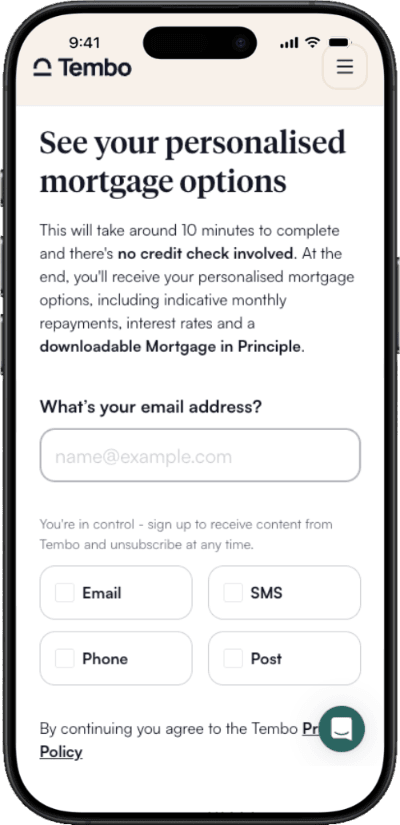
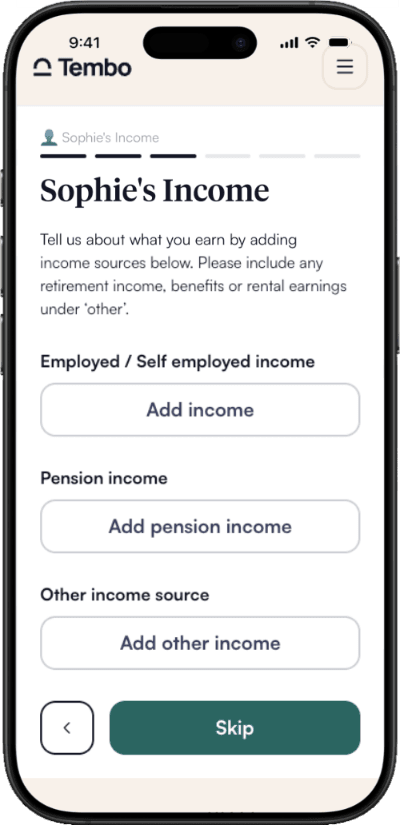
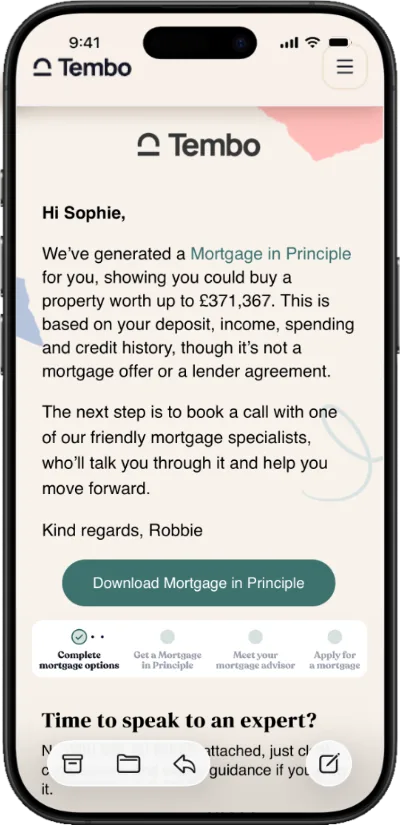
For example, when I was looking to assess my budget and affordability as a first-time buyer, I used Tembo to fill out a simple form with my key details and receive a Mortgage in Principle, which helped me understand my position. They even said they could boost the average budget by £82,000, which was reassuring to hear!


As an example, HSBC states it’ll stretch to as much as 5.5 times your income. BUT you’ll need to be putting down at least a 10% deposit, have a minimum income of £35,000 (or a joint income of £55,000 if applying with a partner) and have excellent credit in order to apply.
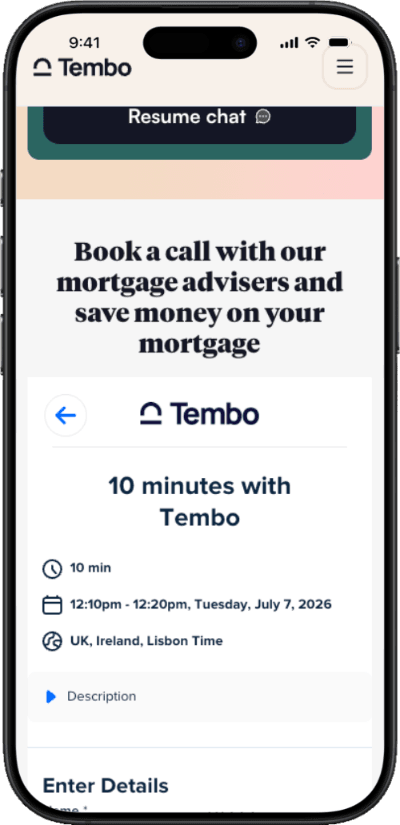
Checking each bank’s terms is an almost impossible task. There are hundreds of lenders in the UK. A digital tool like Tembo’s helps you to uncover all of these in 10 minutes. In general, good brokers will know the requirements for all the lenders on their panel.
What deposit do I need as a first-time buyer?
Statistics show that the average first-time buyer deposit is £61,090, but this will vary depending on personal circumstances. It’s possible to access a mortgage with a much lower deposit of around 5%.
However, a larger deposit means you have a lower loan-to-value ratio (LTV) – the percentage of the property covered by a mortgage. This means you borrow less and unlock better mortgage interest rates.
LTVs are usually grouped in 5% or 10% increments, with rates typically dropping once you enter a lower tier. For example, an 80% LTV would give you access to lower interest rates than an 85% LTV, but that would still give you lower interest rates than a 90% LTV.
Using the most recent average first-time buyer house price in the UK – £227,994 – here’s a breakdown of how this works for different deposits.
| Deposit % | Deposit amount | LTV | Mortgage size |
|---|---|---|---|
| 5% | £11,400 | 95% | £216,594 |
| 10% | £22,799 | 90% | £205,195 |
| 15% | £34,199 | 85% | £193,795 |
| 20% | £45,599 | 80% | £182,395 |
| 25% | £56,999 | 75% | £170,996 |
| 30% | £68,398 | 70% | £159,596 |
| 35% | £79,798 | 65% | £148,196 |
| 40% | £91,198 | 60% | £136,796 |
Mortgage affordability stress test
Mortgage lenders will generally “stress test” your finances to make sure you can afford repayments if interest rates rise.
Mandatory testing has now been removed by the Bank of England, but in most cases, lenders will still independently evaluate your income and lifestyle.
During the stress test, the lender will examine your income, household make-up and monthly outgoings and expenses to make sure you’re not taking on more debt than you can afford.
Credit history and eligibility
The mortgage options available to you as a first-time buyer will also depend on your credit history. Lenders will look at the past 6 years to assess whether you are a reliable borrower.
If you’ve recently had missed payments, defaults, CCJs or other examples of poor credit history, you may face issues with borrowing. Similarly, if you have a limited credit history, lenders may find it hard to assess your affordability.
A poor credit score won’t necessarily prevent you from getting a mortgage, but it might restrict your options or lead to higher interest rates. If you have adverse credit, using an independent online broker, like Tembo, Simply Lending or Mojo Mortgages, can help match you with specialist lenders. A broker will have a better sense of which lenders look at more than just credit scores to try to find a way forward.
How to borrow more as a first-time buyer: Dos and don’ts
There are some important actions to consider when it comes to boosting your mortgage affordability:
Do
- Clear your existing debts
- Check your credit report and fix any errors
- Save a larger deposit (if you can)
- Increase your income (if you can)
- Use a whole-of-market mortgage broker (e.g Tembo or Habito)
Don’t
- Max out your credit limits
- Change jobs immediately before applying for your mortgage
- Apply for new credit which will leave a ‘hard search’ on your file
- Feel you have to borrow the maximum amount
What mortgage schemes are available to first-time buyers?
Data from Tembo shows that first-time buyers were able to increase their borrowing potential by £82,000 through specialist schemes – they help people leverage 25+ schemes to boost affordability. Some key examples include:
Guarantor mortgages
This type of mortgage enables you to use your family’s income, savings or property to boost your deposit or borrowing power. Your guarantor may become liable for your mortgage debt, so it’s important to speak to your mortgage broker to understand the pros and cons first.
Shared ownership
Shared ownership is a part-buy, part-rent scheme which aims to make home-buying more affordable. You buy a share of the home from the landlord (typically between 25% and 75%) and then pay rent on the remaining share.
5% deposit schemes
The government’s Freedom to Buy scheme means they provide a guarantee to the lender, meaning these mortgages are available. Some high-street lenders have now started offering their own 5% deposit mortgages (95% LTV mortgages) as a result.
Lifetime ISA
With a Lifetime Individual Savings Account (LISA), you can access a 25% government bonus when you use your savings to buy a house. You can deposit up to £4,000 a year for a maximum bonus of £1,000 a year. However, a 25% penalty applies if you withdraw the funds before age 60 for anything else.
While a LISA is usually held with a separate provider to your mortgage broker, Tembo is an example of a homeownership platform that customers can use from the deposit saving stage (e.g. opening a LISA) through to the mortgage offer.
Frequently asked questions
Is it harder to get a mortgage as a single-income buyer?
It can be harder because your borrowing power is based solely on your income, rather than looking at a dual-income household. Having said that, many first-time buyers successfully purchase solo. Using a broker can help unlock affordability, for example Tembo say they can boost the average user's budget by £82,000!
How much can a self-employed first-time buyer borrow?
You should get access to the same mortgage options as everyone else. However, you will likely need to provide more evidence of your income, so it’s important to keep detailed records.
What is a mortgage debt-to-income (DTI) ratio?
This is your total monthly debt payments divided by your gross monthly income. It’s one of the benchmarks used by lenders to make sure you can afford your monthly mortgage payments. Barclays calls it out specifically as influencing the maximum income multiples it'll lend.
What credit score do I need as a first-time buyer?
There is no set minimum credit score for a first-time buyer – instead, lenders will evaluate your affordability using your entire financial history with a “stress test”. However, you’ll generally have access to more options if your score is good, very good or excellent.
How do student loans affect my borrowing as a first-time buyer?
While student loans don’t appear on your credit report, student loan repayments mean you have higher monthly outgoings, and this is factored into your affordability stress test.
Sources
More guides on Finder
-
How to get a first-time buyer mortgage with bad credit
Learn how to secure a mortgage as a first-time buyer with bad credit by mastering essential financial strategies and exploring low-deposit options.
-
11 common first-time buyer mortgage mistakes (and how to avoid them)
Discover how to sidestep common mortgage pitfalls and avoid the expensive delays that often catch first-time buyers off guard.
-
Help and advice for first-time buyers getting a mortgage
Want to know how to choose the right mortgage as a first-time buyer? Our guide will give you everything you need to know to find the help and advice you need.
-
First-time buyer definition: Who qualifies and who doesn’t?
The definition according to the UK government.