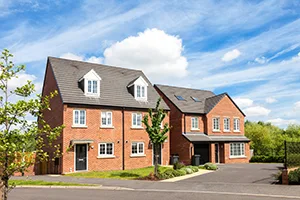
Buying a property is probably the biggest financial decision most people make in their life. It’s a complex, nerve-wracking process requiring a thousand decisions big and small along the way. But you don’t need to panic: we’ve broken down the whole experience into six clear steps to make it easy for you.
You can read the whole thing or skip to the section you need. For a lot of people, talking to a mortgage adviser may be the best course of action to navigate them through this process. Habito or L&C are reputable fee-free mortgage brokers with specialists who can offer advice.
Lifestyle check
When determining whether it’s the right time to own the roof over your head, you need to carefully consider your lifestyle needs both now and in the future. Your job security, number of dependants and lifestyle habits will influence your borrowing capacity when you submit a mortgage application, and can indicate whether you’re in a sound position to buy a home.
At this point in the process, you may choose to get some help from a broker/adviser. The main reasons for doing this are to get an accurate idea of your borrowing power and to find the best mortgage deals available to you.
Here are some key points to run over, either alone or with guidance from a mortgage adviser:
Job security
When reviewing a mortgage application, most lenders prefer that you’ve been in your current job for at least 12 months as this demonstrates you have a stable source of income that can be used to service your mortgage repayments. If you have high job security, then you represent a lower risk to the lender.
Lenders will also be interested to know about your type of employment (contract, part-time or full-time) and the prospect of your continued employment.
If your employment is secure, then you may be ready to buy.
On the other hand, if you’re a low-income earner or you’re receiving benefits, it may be more difficult to qualify for a mortgage. If this describes your situation, seek independent advice about your readiness to buy a home. While it may be possible for you to qualify for a mortgage with a specialist lender if you can prove you have a secondary income source to repay the mortgage, you need to think about whether this is a financially responsible move.
Parent-to-be borrowers
One of the biggest lifestyle changes comes with the decision to settle down and have kids.
While this can be an exhilarating time, you need to think about the cost of extending your family and how this will influence your ability to purchase a home. This is because the number of dependants you have can affect your borrowing capacity. Some lenders reduce the amount they lend to people with children by 10%, while some may go as high as nearly 20%.
Recognising the sharp rise in costs that will result from having kids, some lenders will request that you factor in the cost of childcare, education fees and unexpected medical expenses when listing your day-to-day expenses.
Even if the mortgage provider doesn’t take children into account, it’s something you should factor in when calculating how much you can borrow to make sure you can afford your mortgage repayments in addition to your other expenses.
If you plan to receive government benefits, keep in mind some lenders only consider this as a secondary source of income and you’ll need to supply supporting documentation when completing your mortgage application.
Sticking around?
Your intended length of stay in the home you purchase can help you determine whether you’re ready to buy.
Due to the significant transaction costs of servicing a mortgage and owning a home, many financial advisers believe you should only buy a home if you intend to live there for 5–10 years. This is enough time to build up equity in your property and to allow your property to appreciate in value.
Affordability
Taking out a mortgage will probably be the biggest financial decision you’ll make in your lifetime, so you should sit down with an accountant during this preliminary stage to see how much you can afford to borrow.
Even if you haven’t started looking at suburbs or properties yet, it’s a good idea to get an idea of how much you can afford to borrow as this will help fine-tune your search later on.
Existing debts
Your credit file and the amount of existing debt you have can reflect whether or not you’re ready to purchase a home. Request a copy of your credit file to review your financial health.
If you have bad credit, you may not be a good candidate for a mortgage application. However, there are lenders that specialise in borrowers with bad credit.
Deposit
Ideally, you want to come up with at least a 20% deposit.
If you don’t have at least 10–20% deposit saved, there are low-deposit mortgages available. However you may want to think about whether you’re financially prepared to buy a home.
Remember you’ll also need to factor in a contingency buffer for holding costs such as repairs and maintenance or a rise in interest rates if you take out a variable rate mortgage.
Upfront and moving costs
Here’s a round-up of some of the major upfront costs.
Mortgage application fees
Broker fees
Solicitor fees
Valuation and house surveys
Stamp duty
Find the property
Once you’ve decided you’re in a sound position to get a mortgage to purchase a home, and you have a decent idea of your budget, it’s time to start thinking about the property and its location.
How your property location fits into your lifestyle is one of the most important decisions you’ll make in the home buying process. It’s a matter of balancing your priorities and finding a suitable location that will match your needs and improve your quality of life.
After fine-tuning different locations for your future home, you now need to research different properties that are listed on the market.
Here are some things to keep in mind when deciding on property type.
House or flat?
One of the biggest choices you’ll have to make when selecting a property is whether to buy a house or a flat. While houses are typically more expensive, they have historically seen higher levels of capital growth. A detached house also offers more flexibility for renovations and additions.
Flats, meanwhile, can have enormous potential as rental properties. They also have a lower price point than detached houses, so they can be a good choice for first-time buyers.
Size
Regardless of the type of property you choose, you’ll need to have an idea of the size. How many bedrooms and bathrooms do you need? Is the amount of space you need now the same as the space you’ll need in the future? Do you want an extra bedroom for guests or potential tenants? Do you need a study if you plan to work from home?
Think about your lifestyle needs and the property size that will allow you to live comfortably. This will help you determine whether you need a 2-bedroom or 3-bedroom property, as well as whether you need additional rooms such as a living room, a baby’s room or an outdoor entertaining area.
Structural integrity
One of the most important issues to think about when evaluating different properties is the structural integrity and quality of the build. When reviewing the structural integrity of the property, make sure you enquire about plumbing, electrics, insulation, materials in the structure and any existing damage (if it’s an established property).
To help you understand whether the property is structurally sound, you should organise a house survey to pre-empt any issues that may appear further down the track, (remember that surveys should only be organised if you have a strong intention to purchase the property, as you will have to pay for each survey you request).
Compare your finance options
You may feel a sense of relief after locking in a location and property for your upcoming purchase, but there’s still work to do before you get the keys to your property. Analysing your financial situation, knowing how much you can afford to borrow and understanding the type of mortgage that will suit your homeownership goals are just some of the things that need to be ticked off your list before you apply for a mortgage.
When you’re comparing mortgages, you’ll want to consider the following factors:
Interest rate. Ideally, you want to find a mortgage that offers a competitive interest rate by market standards. A lower interest rate can go a long way in helping you maximise your savings. You should always pay attention to the comparison rate of different mortgages, as this reflects the true cost of the loan by taking fees into account.
Fees. When comparing different mortgages, you should keep an eye out for upfront fees, ongoing fees and discharge fees. Finding a mortgage with fewer fees will help you to minimise your holding mortgage costs.
Features. As mentioned previously, there are many competitive features available that can help you save money. Compare if the lender allows you to make additional repayments without penalty or if a 100% offset account is available.
Make an offer
When you’ve found a home you want to buy, the next step is to make an offer, usually through an estate agent. As a buyer you won’t have to pay any fees to the estate agent, as they are paid on commission by the seller. Learn more about the things you should know before making an offer.
Usually it’s the second or third offer that gets accepted, so you’ll typically want to go in below your maximum (or if you don’t, make sure the seller appreciates that this is you limit… but there’s no guarantee they’ll believe you).
Mortgage application process
Once you’ve decided on a property to buy, compared your financing and mortgage options and made an offer on the property, it’s time to submit your mortgage application. Your lender will need to make sure the home is worth at least what you’re paying for it – so they’ll need a valuation.
At this point in the process, you’ll also need to appoint a solicitor. This is a lawyer who will handle much of the legal paperwork involved with the purchase of the property, acting on your behalf.
Survey/valuation
There are three basic levels of survey to choose from:
Valuation. This survey is done by the lender to make sure the property is worth the price you’re paying before it approves the mortgage. It’s not an extensive survey and will not identify all the repairs or maintenance that might be needed. In rare cases, a physical visit may not even happen.
Homebuyer’s survey. This fairly standard survey inspects the property for any damages. Many buyers purchasing more modern properties are happy that this level of survey is sufficient.
Full structural survey. This is the gold standard, nuts-and-bolts job. It will almost certainly throw up a few issues (because every house has them). The cost will depend on the size of the property but you’re probably talking at least £1,000.
After a survey there may be a renegotiation – e.g. if a buyer feels they need to hold back £5,000 to cover some roof repairs. In the rare even that your mortgage lender isn’t happy with the valuation (perhaps given some damage to the property), then they may implement a “retention” – that’s when they say something like they’ll have to hold back £5,000 of the mortgage, unless the roof is fixed.
"When my wife and I were buying our first home (a tiny, grade 2 listed 2-up-2-down we had fallen in love with), HSBC weren’t happy with the survey and implemented a £10,000 retention on the mortgage. This put the brakes on the whole process. After taking advice, we commissioned a more detailed survey of the roof (one of the sticking points) and got quotes for the repairs that would be needed to sort out the worst of the issues that had led to the retention. We also spoke frankly with the sellers (cutting out the estate agent at this point) and managed to get them to agree to a £2,000 reduction in the sale price. Finally, we packaged this all up for HSBC in a long-winded letter: the renegotiated price, the more detailed roof survey (revealing less damage than initially feared) and the quotes for repairs (along with our assurances that we’d press ahead with these as soon as we were in). After a week or so, we were ecstatic when HSBC removed the retention. It had been a stressful time, but looking back, we were actually glad it had happened."
Chris
Sussex
Mortgage offer
If your mortgage lender is happy with your application and the valuation, they issue a formal “mortgage offer”. This is a key hurdle cleared! It’ll typically be valid for 6 months.
Exchange
Both solicitors will have drafted contracts. Go through the contract with your solicitor to check all the details are correct. Make sure you’re happy with what the sellers have agreed to leave in the property (white goods, etc.) and all your queries have been answered.
At this stage, you and your sellers can sign and “exchange contracts”. When that has happened you are both legally committed to the sale. If anybody pulls out now, a contract has been breached (leaving whoever breached it open to legal action).
It’s also typcally at this point that you’ll pay a deposit to the buyer. It’s usually 10%, unless both parties agreed to a different figure.
Exchange represents another major hurdle cleared. You’re not home and dry, but you are allowed to pop some fizz at this point!
Completion
Exchange and completeion can occasionally happen on the same day, but solicitors can be a bit hesitant to do this.
This is the big day! Your solicitor will arrange to draw down the mortgage and have the remaining money owed to buy the property transferred to the seller’s solicitor’s account.
Once the funds have been transferred, the estate agent is given the green light (by the sellers’ solicitors) to hand over the keys.
At this stage, it’s your solicitor’s responsibility to register the sale with the Land Registry for properties in England and Wales. In Northern Ireland it needs to be registered with Land and Property Services and in Scotland with Registers of Scotland.
You will also have to pay the rest of your solicitor’s bill.
Buyers of residential homes costing over £125,000 have 30 days from the completion date to pay Stamp Duty in England and Northern Ireland. Your solicitor will usually arrange this for you.
Don’t forget: In the evening, takeaway fish and chips on boxes or garden furniture in the lounge is non-negotiable!
First repayment
Sorry to bring this one up.
Typically you’ll complete midway through a month and then make your first mortgage payment at the end of the following month. This gives you breathing room, but means that your first payment will be larger than a typical month’s payment. Make sure the right amount of money is ready in your nominated account to cover this irregular sum. It’d be a real shame to default on your first repayment!
Think carefully before securing debts against your home. Your home may be repossessed if you do not keep up repayments on your mortgage.
Top tips for buying your first home
Buying your first home can be a bit nerve wracking.
That’s why we’ve crammed our top eight best tips for first-time buyers into this guide, so you can rest assured you’re giving yourself the best chance of success.
Know what you can afford
The most important thing to remember is to make sure you’ve calculated your sums correctly and that you haven’t over-estimated your finances.
You will need a deposit of at least 5% of the property price, but if you can save more then you’ll score yourself a lower rate on your mortgage.
You will also need money to cover the legal fees, surveys and moving costs involved as well as possible stamp duty charges.
Read up about government schemes available
Saved as much as you can muster but falling a little short? It’s always worth checking out government schemes specifically for first-time buyers. These include Shared Ownership. We have previously written a guide on schemes available for first-time buyers.
Secure a mortgage agreement in principle
Before you’ve made an offer on your dream home, you will need a mortgage in principle. This is an agreement in principle from the mortgage lender that demonstrates to sellers and real estate agents that you have the basics of a mortgage application approved, and that you’re a serious contender.
Know your location
Don’t skimp on the research either! Location should be your first port of call. You’ll need to think about how far you are from your workplace, whether there are good schools in the surrounding area, what the transport links are like and so on. Remain focussed on these points and you’ll be able to narrow down your search fairly quickly.
Know the type of property you want
Are you looking for a two bed or a four bed? Do you want a kitchen overlooking the garden or is an en suite bathroom more of a priority? Whatever you decide, make sure you have this firmly in your mind when you research houses online and attend viewings.
Meet estate agents for early advice
Building a rapport with someone face-to-face trumps phone calls and online chats every time. That’s why you should make an effort to visit estate agent’s offices to show your face and build a relationship. You never know, you may end up finding out about crucial developments in the housing market or local area before any other potential buyers do.
Research local property prices
Once you know where you’d like to live, or if you’ve found the house of your dreams, check the asking price against other homes sold in the local area, which will give you a better idea of what to offer.
Learn to negotiate
Be confident. As a first-time buyer, you have no buying chain to deal with, which means you’re in a very strong position to have your offer accepted, especially if the seller is keen to have the process over and done with quickly.
We show offers we can track - that's not every product on the market...yet. Unless we've said otherwise, products are in no particular order. The terms "best", "top", "cheap" (and variations of these) aren't ratings, though we always explain what's great about a product when we highlight it. This is subject to our terms of use. When you make major financial decisions, consider getting independent financial advice. Always consider your own circumstances when you compare products so you get what's right for you. Most of the data in Finder's comparison tables is provided by Defaqto. In other cases, Finder has sourced data directly from providers.
Matthew Boyle is a banking and mortgages publisher at Finder. He has a 7-year history of publishing helpful guides to assist consumers in making better decisions. In his spare time, you will find him walking in the Norfolk countryside admiring the local wildlife.
See full bio
Matthew's expertise
Matthew
has written
212
Finder guides across topics including:
Helping first-time buyers apply for a mortgage
Comparing bank accounts and highlighting useful features
Looking for a mortgage with TSB? Compare different rates and mortgage types, and find out how to get the right home loan for you.
Advertiser disclosure
Finder.com is an independent comparison platform and information service that aims to provide you with the tools you need to make better decisions. While we are independent, the offers that appear on this site are from companies from which Finder receives compensation. We may receive compensation from our partners for placement of their products or services. We may also receive compensation if you click on certain links posted on our site. While compensation arrangements may affect the order, position or placement of product information, it doesn't influence our assessment of those products. Please don't interpret the order in which products appear on our Site as any endorsement or recommendation from us. Finder compares a wide range of products, providers and services but we don't provide information on all available products, providers or services. Please appreciate that there may be other options available to you than the products, providers or services covered by our service.
We update our data regularly, but information can change between updates. Confirm details with the provider you're interested in before making a decision.