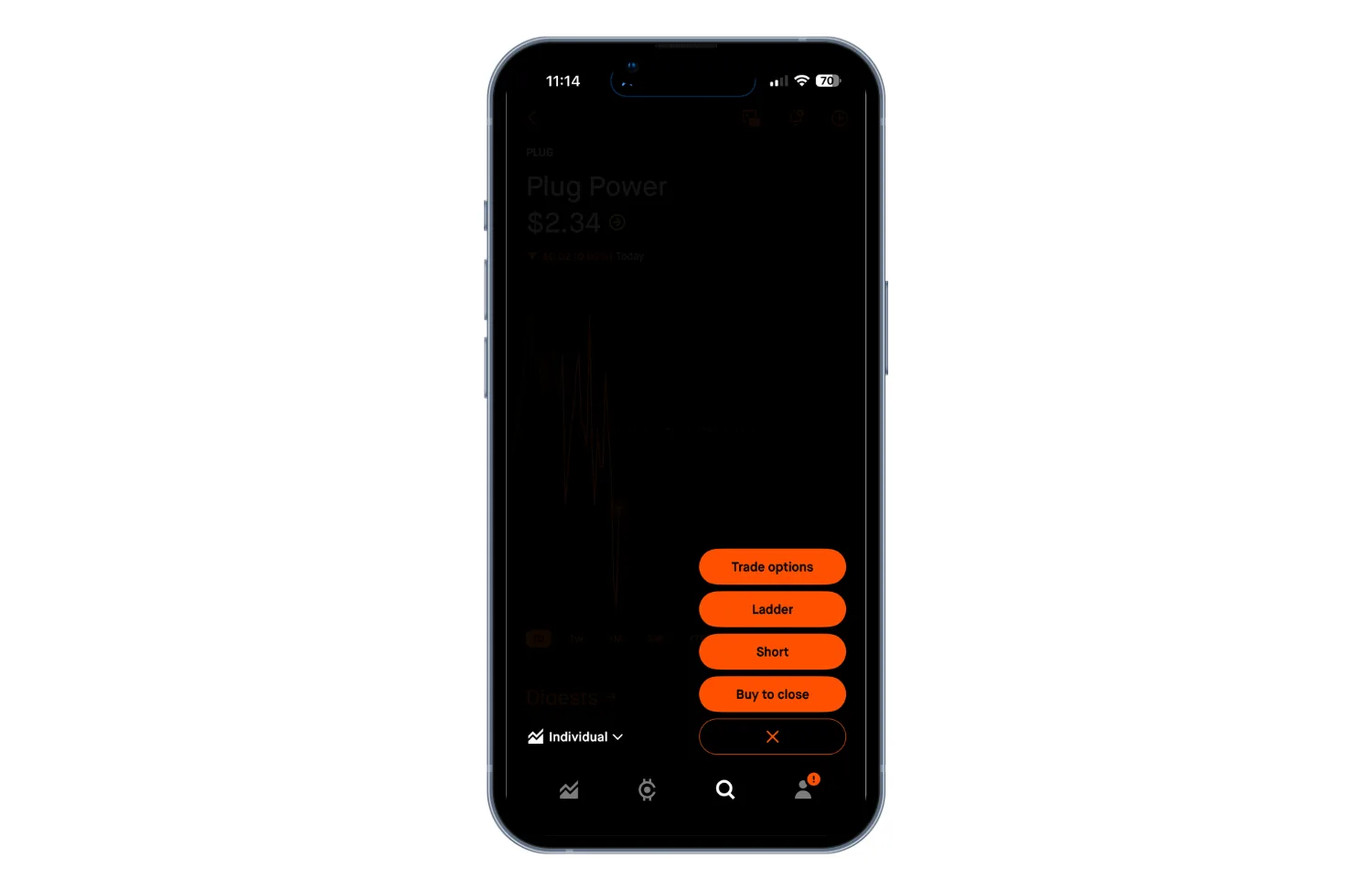
Robinhood now lets you short stocks, opening the door to strategies that benefit from price drops. Here’s how to get started safely and what you should know before placing a short sale.
How to short stocks on Robinhood
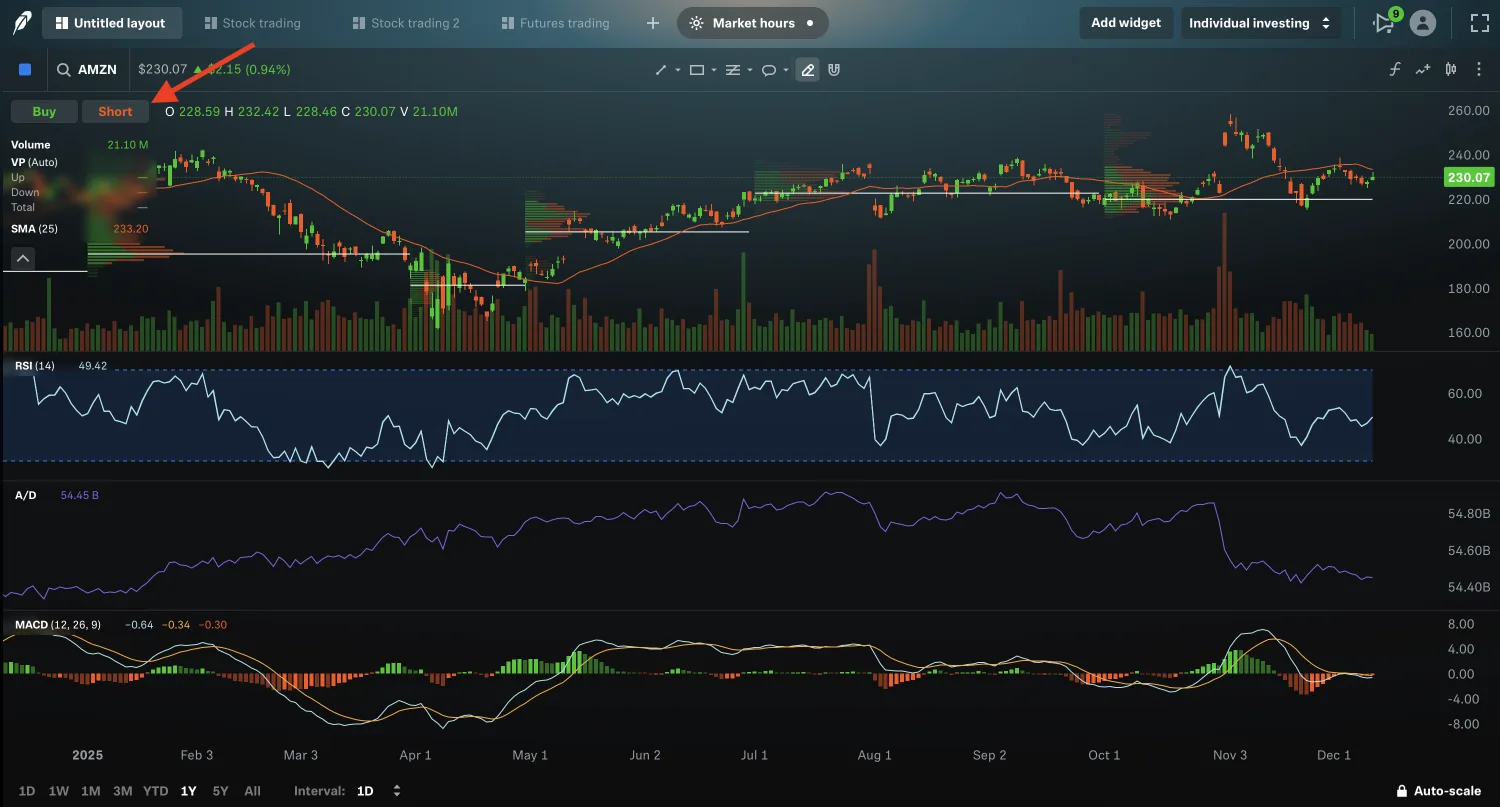
Robinhood’s shorting feature is available via web browser, mobile app and through Robinhood Legend. Robinhood Legend is an advanced trading platform designed for active traders, available via web browser and mobile app.
Robinhood’s account opening process is as simple as it gets. Follow these steps to sign up:
Go to Robinhood’s website or app and select Sign up or select the Go to site button below.
Provide your email, password, name, phone number, date of birth, address, citizenship status and Social Security number.
Answer a few questions about investing and provide details about your employment.
Review Robinhood’s agreements and link a debit card or bank account to fund your Robinhood account.
9.4
Excellent
Get free access to Robinhood's new desktop platform
All you have to do is sign up for a Robinhood account! Existing Robinhood users will automatically gain access to the platform, called Robinhood Legend. Standout features include the ability to:
Add up to eight charts in a single window.
Place orders from a watchlist, position or options chain with one click.
Trade directly from a chart.
Leverage dozens of technical indicators, drawing tools, custom intervals and chart types.
Customize your layout or choose from layout templates.
2. Enable margin trading in your account
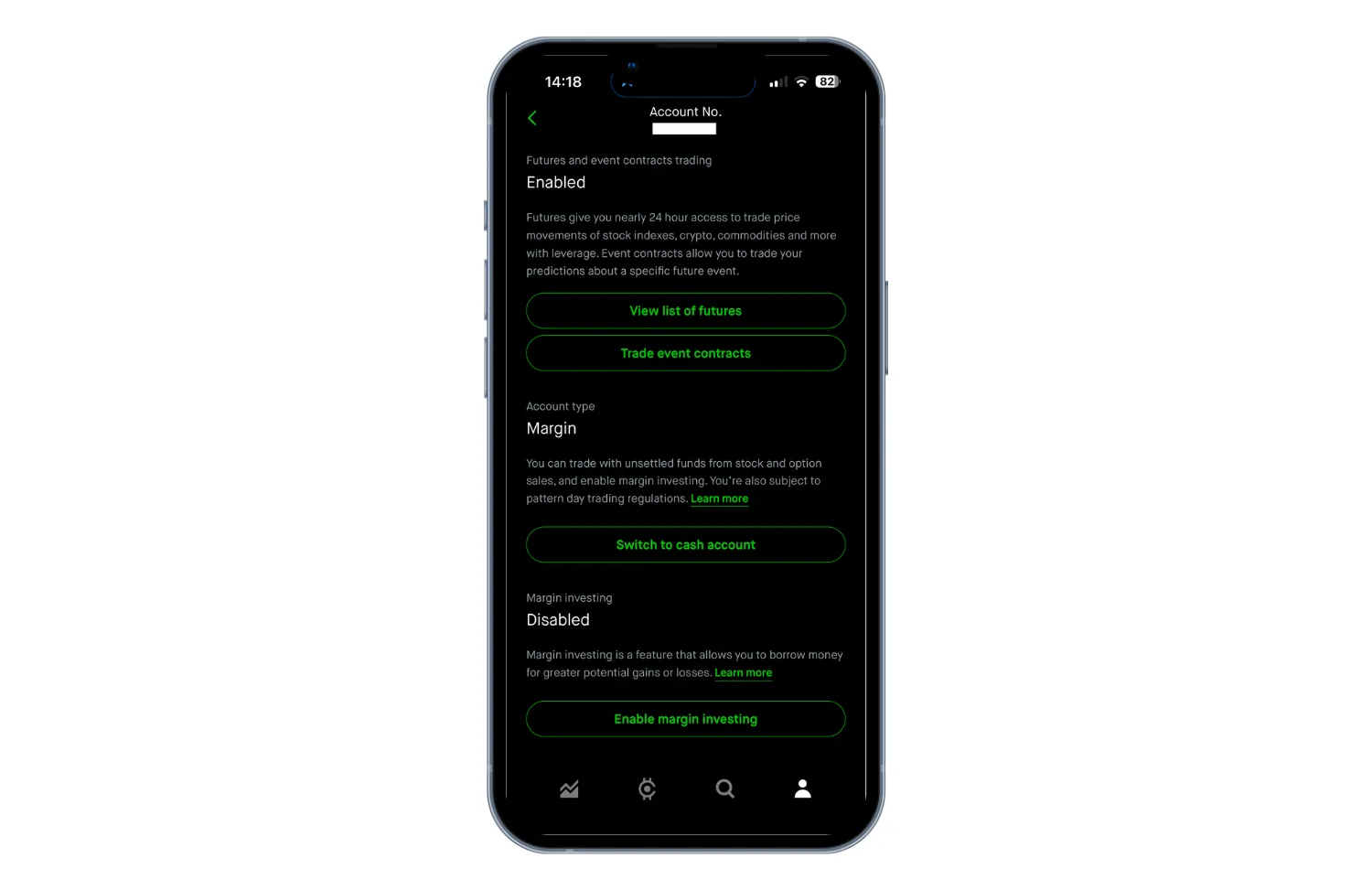
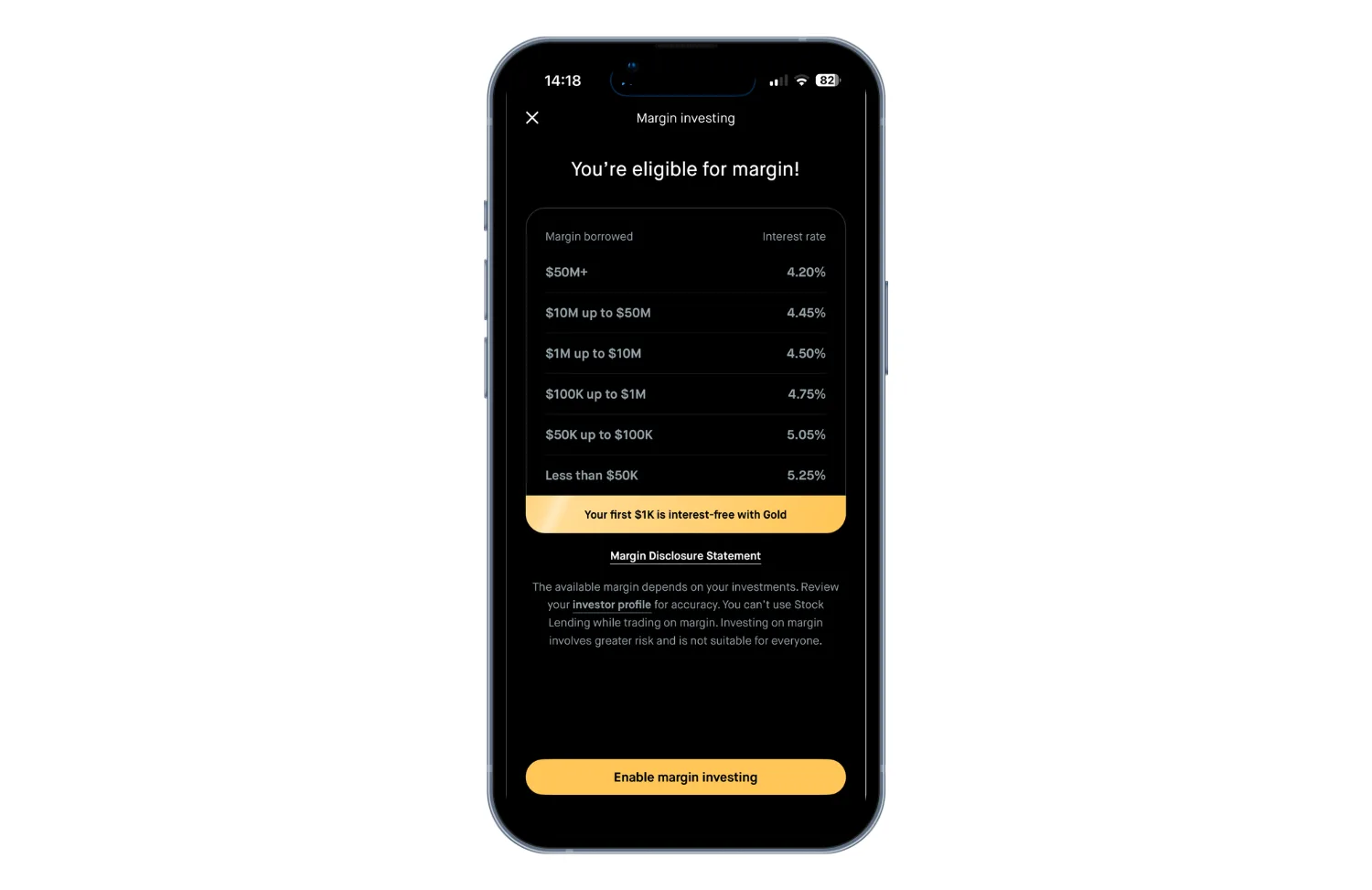
Margin is required to short stock. To enable margin investing:
Tap the silhouette icon, then tap the hamburger menu.
Select Investing, then Enable margin investing.
Tap Enable margin investing if you’re eligible.
You must meet the eligibility criteria and maintain a portfolio of at least $2,000 to invest with margin.
At the end of each 30-day billing cycle, you’ll pay interest on the margin you use.
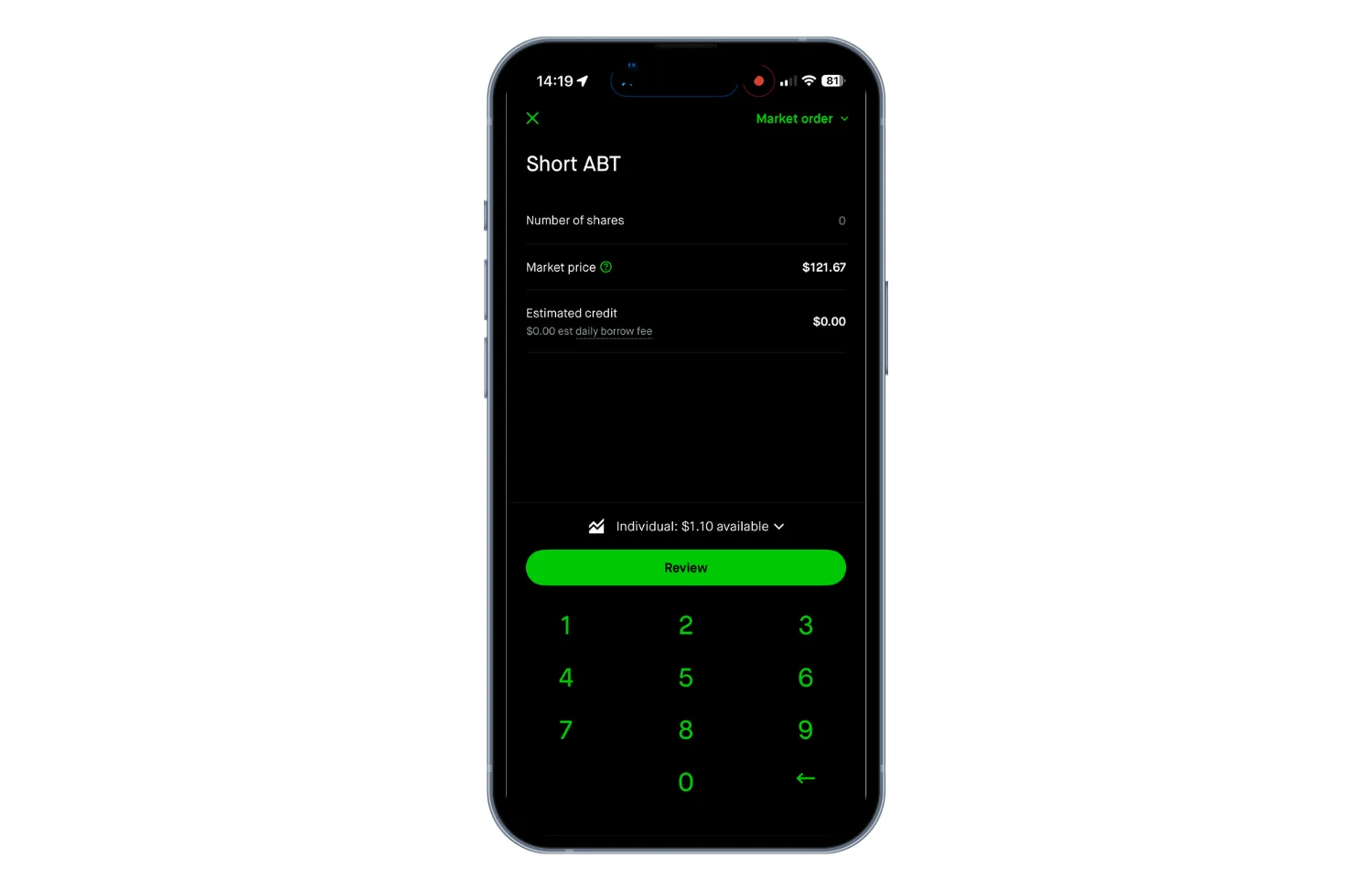
Once your short trade is open, active management is critical. You should closely watch the stock price and track your margin balance. Adjust stop-loss orders as needed to protect against rapid price swings, and be prepared to add funds or close the trade if Robinhood issues a margin call.
5. Close your trade
Closing a short trade involves buying back the shares you borrowed:
Go to your active short position.
Select Trade, and then choose Buy to close.
Enter the number of shares to close.
Place your order and confirm the trade
Requirements for short selling on Robinhood
To short stocks, Robinhood requires a margin-enabled account with at least $2,000 in your portfolio. You must meet eligibility criteria, and higher maintenance may apply for volatile stocks.
Fees and costs when shorting on Robinhood
Short selling includes several possible costs:
Margin interest. Interest accrues daily on borrowed stock until you close the position.
Hard-to-borrow fees. Some stocks cost extra to borrow due to limited share availability.
Regulatory or exchange fees. Usually small, but they still apply.
Risks of short selling on Robinhood
Shorting is inherently riskier than going long. You should understand the risks clearly.
Unlimited loss potential. A stock can only fall to zero, but it can rise infinitely.
Margin calls. Rising stocks may require additional collateral or force automatic position closure.
Short squeezes. Rapid price spikes can force shorts to cover at higher prices.
Borrow availability. You may be forced to close your short if the shares become unavailable to borrow.
Interest and fees can add up. Costs can accumulate if you hold the trade for a long time.
Best practices before shorting
Short selling can be effective, but it leaves far less room for error than traditional long positions. Before placing a short trade, it’s important to have a plan, understand your risk tolerance and use tools that help you manage volatility and margin requirements. Consider the following best practices:
Use stop-loss or stop-limit orders where appropriate.
Avoid shorting low-float or highly volatile stocks unless experienced.
Understand how maintenance margin works.
Monitor your position closely — short trades require active management.
Bottom line
Short selling on Robinhood gives you a new way to profit from declining prices or hedge your portfolio, but it carries higher risk and more complexity than traditional investing. Understand margin requirements, fees and the potential for unlimited losses before placing a short trade.
Frequently asked questions
No. You must have a margin-enabled account with at least $2,000 in your portfolio and meet Robinhood's eligibility criteria.
There's no set time limit, but interest accrues daily on borrowed shares, and Robinhood may require you to close if your margin balance falls too low.
Your losses can be unlimited. Robinhood may issue a margin call or automatically close your position to limit risk.
Most stocks are available, but some may be hard to borrow, and Robinhood may restrict certain volatile or low-float stocks.
You can consider put options or inverse exchange-traded funds (ETFs), which allow bearish strategies without borrowing shares.
Matt Miczulski is an investments editor and market analyst at Finder. With over 450 bylines, Matt dissects and reviews brokers and investing platforms to expose perks and pain points, explores investment products and concepts and covers market news, making investing more accessible and helping readers to make informed financial decisions.
Before joining Finder in 2021, Matt covered everything from finance news and banking to debt and travel for FinanceBuzz. His expertise and analysis on investing and other financial topics has been featured on Yahoo Finance, CBS, MSN, Best Company and Consolidated Credit, among others. Matt holds a BA in history from William Paterson University.
See full bio
Matt's expertise
Matt
has written
291
Finder guides across topics including:
Moomoo pays up to $600 to switch, but Fidelity charges nothing to leave. See how these two very different brokers compare on fees, IRAs, crypto access and safety in 2026.
Discover the best robo-advisors of 2026. Compare fees, account minimums and features from top platforms that automate investing for beginners and pros.
We’ve rounded up stats on some of the most popular oil stocks, along with information on how they compare and how to invest.
Advertiser disclosure
Finder.com is an independent comparison platform and information service that aims to provide you with the tools you need to make better decisions. While we are independent, the offers that appear on this site are from companies from which Finder receives compensation. We may receive compensation from our partners for placement of their products or services. We may also receive compensation if you click on certain links posted on our site. While compensation arrangements may affect the order, position or placement of product information, it doesn't influence our assessment of those products. Please don't interpret the order in which products appear on our Site as any endorsement or recommendation from us. Finder compares a wide range of products, providers and services but we don't provide information on all available products, providers or services. Please appreciate that there may be other options available to you than the products, providers or services covered by our service.
We update our data regularly, but information can change between updates. Confirm details with the provider you're interested in before making a decision.