How to choose a spread betting broker
If you’re looking for the best spread betting broker to make the most of the tax-efficient trading benefits, there are some key points to be aware of, here’s what to know before you compare platforms.

Spread betting is a uniquely British and Irish trading strategy. It’s a tax-efficient way to trade financial markets, allowing you to speculate on price movements without ever owning the underlying asset. But crucially, you pay no Stamp Duty and your profits are free from capital gains tax (CGT). Keep in mind, tax treatment depends on individual circumstances and can change.
However, choosing the best spread betting broker to use can be a challenge. Whether you’re an experienced trader looking for better tools or making the switch from a clunky legacy platform, you need a broker that actively supports your strategy rather than getting in the way.
Finder research shows that between 50% and 71% of retail investors lose money when trading CFDs and spread bets, with average losses hitting £2,200.
Because spread betting involves leverage, it magnifies both your wins and your losses. While your spread bet broker won’t guarantee profits, using a platform that provides the tools to help you make better trading decisions and supports your specific spread betting strategy can be worthwhile.
Here’s what you need to look for (and avoid) when choosing a spread betting platform.
When the markets are moving fast, you don’t have time to wait days for an automated email reply. Your broker should be there at hand when you need them most.
The financial markets move at lightning speed, and your broker’s tech needs to keep pace. Your knowledge and trading experience will also develop over time and you need a platform that can offer more as you grow.
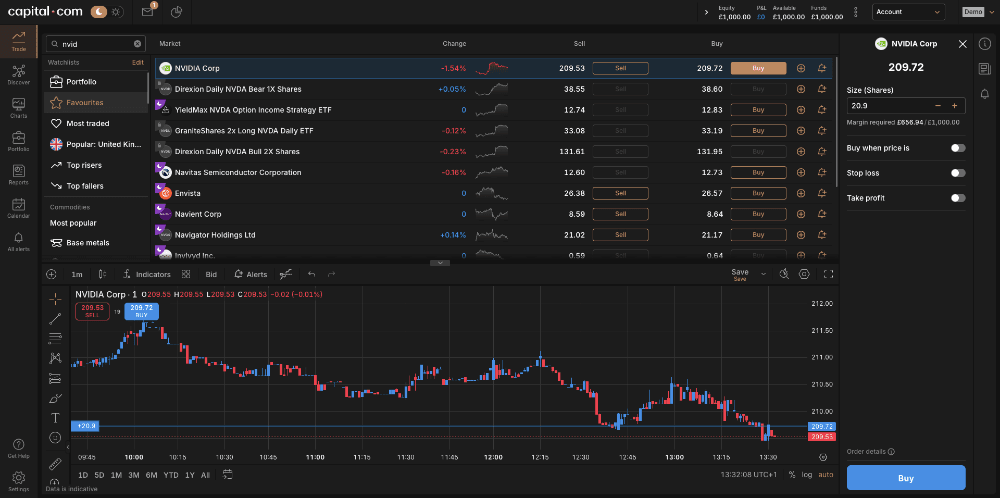
Opaque fees are the ultimate pain point for spread bettors. There’s nothing worse than executing a winning trade only to see your profits eaten by unexpected charges.
A cluttered screen is a recipe for costly mistakes. You want a platform that makes trading feel deliberate, not like you’re fumbling around and hoping for the best.
Because spread betting involves trading leveraged products, your capital is firmly at risk and top-tier regulatory oversight is an absolute non-negotiable.
| Feature | What to look for | What to avoid |
|---|---|---|
| Support | 24/7 availability and deep trading analytics. | Uncommunicative, limited hours, no behavioural insights. |
| Innovation | AI-tech, native TradingView and MT4 integration. | Outdated tech, slow to update, basic charting. |
| Fees | Transparent pricing, fee-free deposits and withdrawals. | Opaque or unpredictable funding fees. |
| Ease of Use | Calm, non-gamified experience; easy to navigate. | Cluttered interfaces pushing action over understanding. |
| Regulation | FCA-regulated with negative balance protection. | Offshore licensing, poor external customer ratings. |

Most spread betting brokers offer variable spreads, meaning the gap between the buy and sell price fluctuates dynamically based on market volatility and available liquidity.
While a few brokers may offer fixed spreads during specific hours, they often come at a premium. Always check your broker's typical spread during your preferred trading times to gauge the true cost.
IG and CMC Markets are well-known legacy competitors in the UK market. They boast massive asset ranges and deep market liquidity. However, their platforms can feel overwhelming for some traders compared to the streamlined, modern interfaces and AI-driven insights offered by newer alternatives like Capital.com.
The safest way to verify a broker is to search for their firm reference number directly on the Financial Conduct Authority (FCA) Register firm checker website. Reputable platforms operating in the UK will clearly state their FCA regulation status at the bottom of their website.
Many serious algorithmic traders rely on MT4. Thankfully, top-tier brokers recognise this. Capital.com, IG and CMC Markets for instance, offer full MT4 integration alongside native TradingView support, allowing you to use your preferred automated strategies on a regulated spread betting account.
Yes. If you're managing your risk tightly, you don't need thousands of pounds to get started. Many of the best spread betting brokers offer accessible entry points, allowing you to fund your account with a relatively low initial deposit using various payment methods.
However, remember that leverage amplifies both profits and losses, so you should only ever deposit what you can comfortably afford to lose.
To qualify as a professional client, you must typically meet two of three criteria: a financial portfolio exceeding €500,000 (roughly £430,000), a history of placing large trades frequently, or relevant professional experience in the financial sector.
The primary benefit is access to significantly higher leverage limits. The major downside is that you waive certain retail protections, such as the negative balance protection offered by the likes of Capital.com and IG, to help limit your downsides.
This guide offers plenty of spreading betting and CFD tips and strategies to sharpen your skills.
Find out the key differences with index spread betting vs CFD trading.
We’ve tested the UK’s best-known CFD and spread betting products. Find out our expert opinion on the best options for investors.
Find out what a short squeeze is and how to trade a short squeeze. We’ve detailed how they work, some examples and the risks.
Find out how to short the NASDAQ, the world’s second largest stock exchange, using inverse exchange-traded funds or derivatives.
Find out what going long and going short means when dealing with a contract for difference (CFD) and potentially increase your returns.
Trading CFDs carries a high risk, as you trade on real-time movement of the financial market. Give yourself an understanding of these risks with our guide.
Find out how to short the UK’s flagship stock market index, the FTSE 100.
