Finder makes money from featured partners, but editorial opinions are our own.
Advertiser disclosure
Frec vs. Wealthfront
Both are beginner-friendly robo-advisors, but they appeal to different investing needs and preferences.

Frec and Wealthfront are two US-based, SEC-regulated robo-advisors that offer automated investing, individual stock trading and a high-yield cash option. While Frec’s focus is on direct indexing and tax-efficient strategies, direct indexing is just one of Wealthfront’s portfolio options.
These trading apps are solid choices for hands-off investors, depending on your preferred strategy.
Here’s how they compare.
 Frec |  Wealthfront | |
| Finder Score |
|
|
| Account minimum |
|
|
| Annual fee | 0.09%–0.35% depending on chosen index |
|
| Investment options | Direct indexing, stocks, ETFs, money market funds | Direct indexing, stocks, ETFs, US Treasuries, high-yield cash account |
| Bonus offer | None | Get a $50 deposit bonus |
| Outgoing account transfer fee | $75 | $0 |
| Inactivity fee | $0 | $0 |
| Customer support | Schedule a 30-minute call with a licensed Frec team member during normal business hours or contact support via email at help@frec.com. | Contact Wealthfront customer support by phone at 844-995-8437 or email support@wealthfront.com on weekdays from 10 a.m. to 8 p.m. |
| Mobile app reviews | Apple App Store: 4.9/5 stars based on 37 reviews Google Play Store: 4.8/5 based on six reviews | Apple App Store: 4.8/5 stars based on 17,000 reviews Google Play Store: 4.9/5 stars based on 12,279 reviews |
| Learn more |
Need help choosing a stock trading app? View our best picks
Find a robo advisor that will do the work for you to maximize your investment.
| Frec | Wealthfront | |
|---|---|---|
| Individual stock trading | Yes | Yes |
| Human financial advisor | No | No |
| Fractional shares | Yes, for $5 | Yes, for $1 |
| Automatic dividend reinvestmen | Yes | Yes |
| Automatic rebalancing | Yes | Yes |
| Educational resources | Articles | Articles |
Frec and Wealthfront offer user-friendly platforms that are easy to navigate. Wealthfront is available on the web, iOS app and Android app. Frec is available on the web and iOS app.
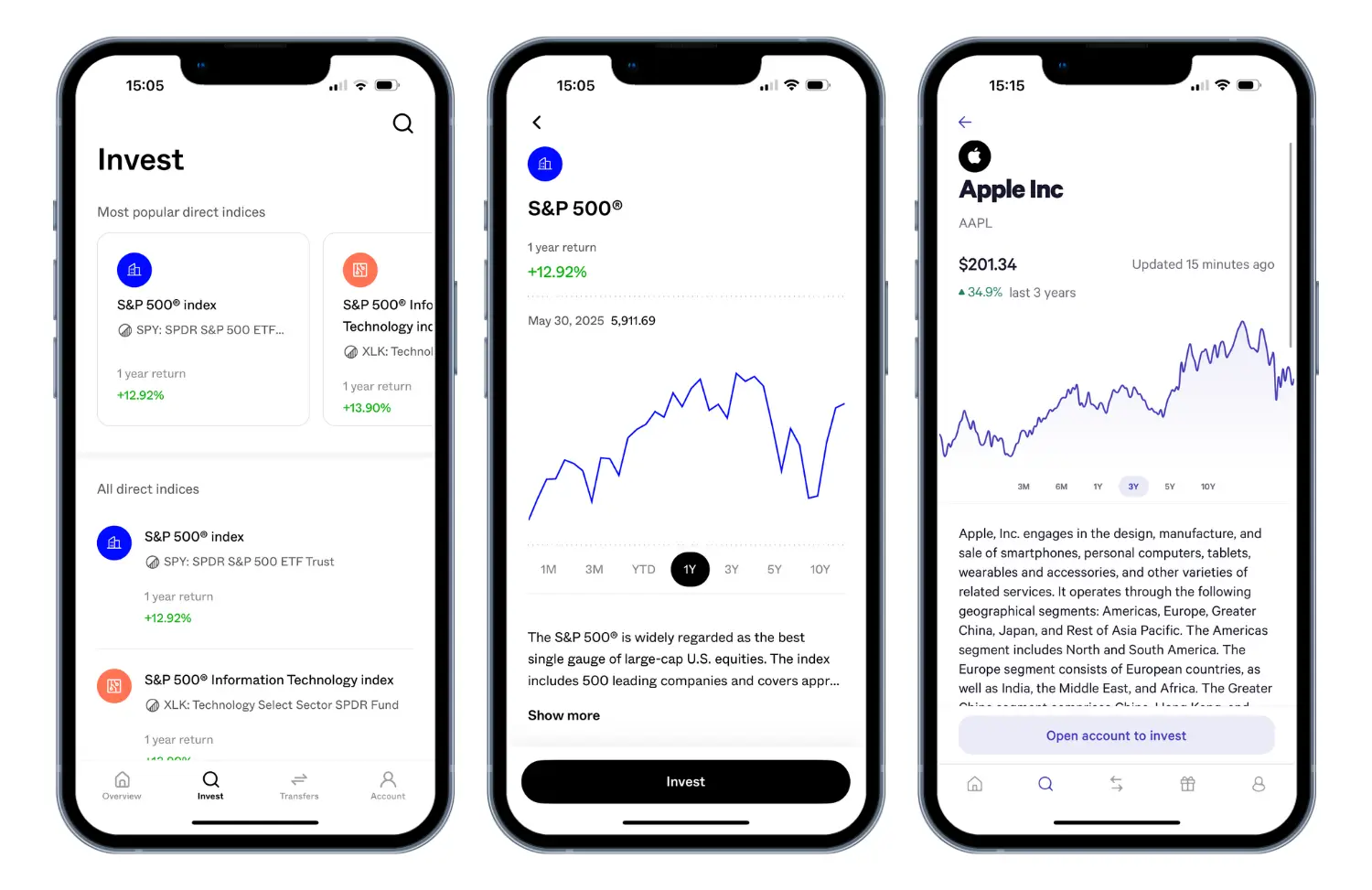
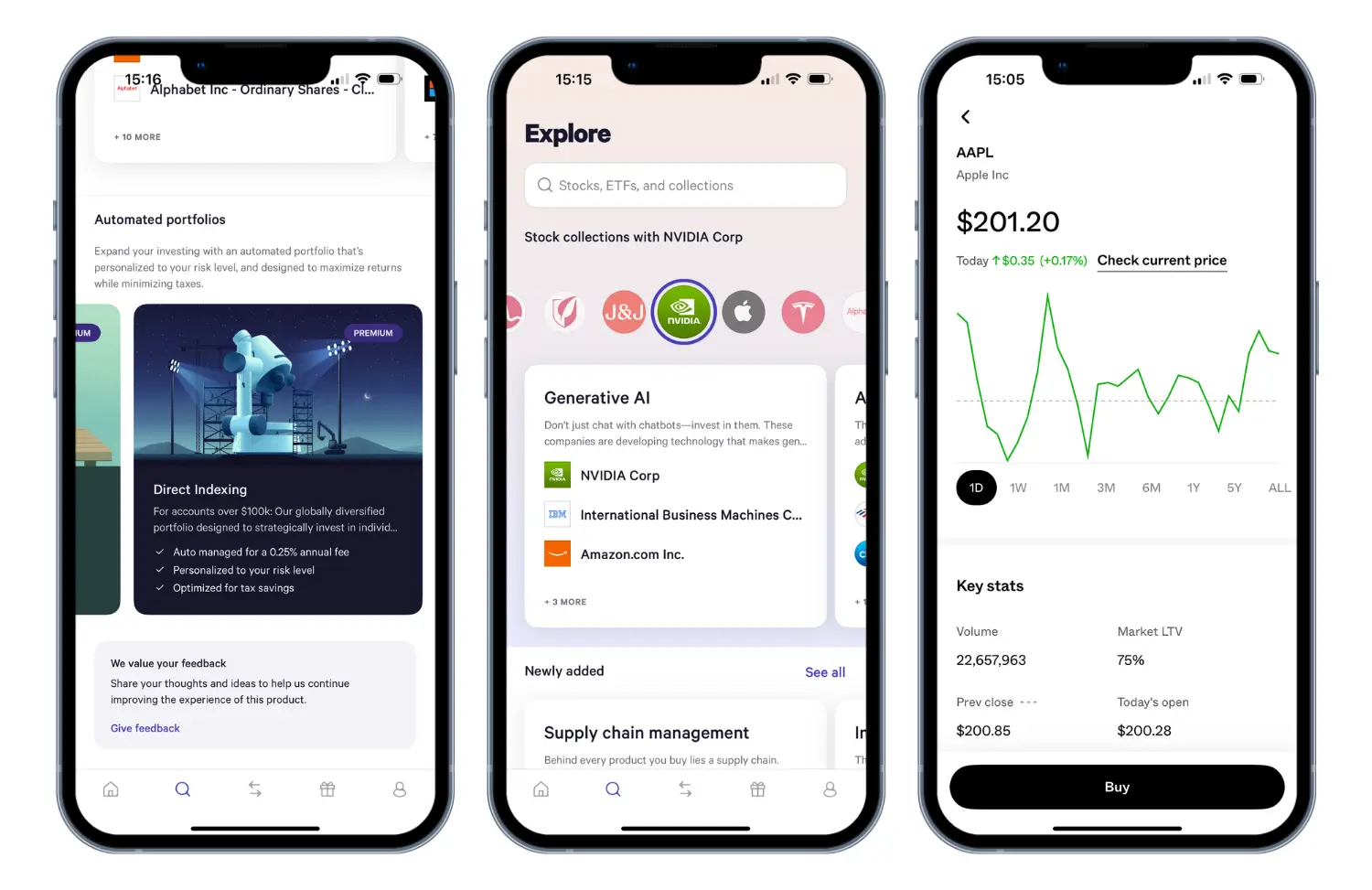
Frec and Wealthfront are robo-advisors that offer individual commission-free stock and exchange-traded fund (ETF) trading, fractional shares, high-yield cash options and educational resources to help you learn and grow as a trader and investor. Both offer S&P 500 direct indexing for 0.09% annually, as well as automatic rebalancing and automatic dividend reinvestment. Frec requires a $20,000 minimum for its S&P 500 strategy, while Wealthfront’s S&P 500 Direct has a $5,000 minimum.
Neither offers access to a human financial advisor.
Both Frec and Wealthfront are beginner-friendly robo-advisors, but they serve slightly different types of users.
Beginners who want comprehensive direct indexing at a low cost might choose Frec for its broad index availability. Beginners who want automated ETF and bond investing will find Wealthfront a better option.
Both being robo-advisors, neither Frec nor Wealthfront can serve advanced traders. While both provide individual stock and ETF trading, neither offers the tools and resources advanced traders need to be successful.
Both Frec and Wealthfront are Registered Investment Advisors regulated by the US Securities and Exchange Commission (SEC) and the Financial Industry Regulatory Authority (FINRA).
Both platforms are also considered safe and secure. Frec holds customer funds at Apex Clearing, encrypts customer information and uses 2FA for security. Wealthfront uses 2FA and partners with third-party providers that employ bank-grade security.
Frec is ideal for investors who want low-cost access to direct indexing and tax-efficient investing, especially for those who prefer more control over individual stocks. On the other hand, Wealthfront offers a truer robo-advisor experience in the traditional sense, with automated ETF and bond investing.
If you want a more comprehensive direct indexing platform, go with Frec. If you want a broader robo-advisor — one with direct indexing strategies — Wealthfront is the better pick.
Frec and Wealthfront are solid choices for beginners and hands-off investors due to their user-friendly interfaces and automated investment options. However, if you’re looking for more advanced tools to trade yourself, there are other platforms worth considering.

Finder x Webull $160 Promotion: What You Need to Know
Finder $160 Webull Invest Promotion – Terms and Conditions
Open a new eToro account through Finder and receive $200 after an eligible cash deposit of $300+. US residents. Limited time only. Terms and conditions apply.
Finder’s eToro Visa Gift Card Reward Promotion (“Promotion”)
Yieldstreet is now Willow Wealth after $208 million in disclosed real estate losses — here is what changed.
Webull’s current bonuses, including its Premium IRA match and what to know about transfer fees.
Tastytrade bonuses include a competitive referral bonus and others. See what you have to do to snag them here.
T-bills come with virtually no risk and are exempt from state and local taxes, but they don’t earn interest like CDs do.
Bonds can offer higher returns, but come with a slightly higher risk. CDs may offer smaller returns but come with minimal risk. See pros and cons here.
A beginner’s guide to bonds: Learn how fixed-income securities work, compare government and corporate bonds and see how they build steady income.
