Finder maintains full editorial independence to ensure for our readers a fair assessment of the products, brands, and services we write about. That independence helps us maintain our reader's trust, which is what keeps you coming back to our site. We uphold a rigorous editorial process that ensures what we write and publish is fair, accurate, and trustworthy — and not influenced by how we make money.
We're committed to empowering our readers to make sound and often unfamiliar financial decisions.
We break down and digest information information about a topic, product, brand or service to help our readers find what they're looking for — whether that's saving money, getting better rewards or simply learning something new — and cover any questions you might not have even thought of yet. We do this by leading with empathy, leaning on plain and conversational language that speaks directly, without speaking down.
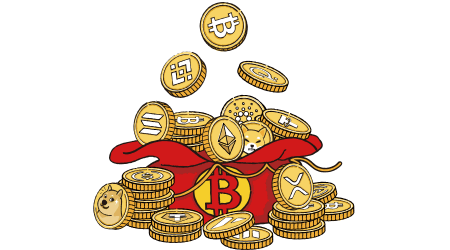
Cryptocurrency has evolved far beyond bitcoin. In just a few years, it has grown into a complex ecosystem with thousands of different coins, tokens and use cases.
As new coins and tokens continue to emerge, it’s important to know the main categories of cryptocurrency, as each type carries its own risks, purposes and underlying technology. Understanding these categories can help you assess emerging coins and evaluate where to invest — and what to avoid.
Bitcoin was the first cryptocurrency in the world and remains the largest by market cap.(1) It runs on a public ledger called the blockchain, which records every transaction and helps prevent fraud or double-spending. First emerging in 2008, it was created to provide decentralized peer-to-peer transactions without relying on intermediaries, such as banks.
Bitcoin has a fixed supply of 21 million coins, and this scarcity makes it a sort of “digital gold” — a hedge against inflation and traditional currencies. It has also become a sort of benchmark for the overall health of the broader crypto economy, and its price fluctuations tend to influence other coins.
Altcoins
Altcoins, short for “alternative coins,” are all cryptocurrencies that aren’t bitcoin. Thousands of altcoins on the market serve a wide range of functions and offer unique opportunities and risks for investors. Many power their own blockchain ecosystems, support NFT platforms or fuel decentralized finance (DeFi) projects. While they tend to be more volatile than bitcoin, some investors are drawn to them for their growth potential and innovation. Some of the more popular altcoins include ethereum (ETH), solana (SOL) and ripple (XRP).
Stablecoins
Stablecoins are cryptocurrencies designed to provide a relatively stable value, as they are typically pegged to a real-world asset. For example, USDT is pegged to the US dollar. This stability can be attractive to investors who want exposure to the crypto ecosystem without the volatility of traditional crypto assets like bitcoin or ethereum. Some of the largest stablecoins by market cap include USDT (Tether), USDC (USD Coin) and DAI.
Memecoins
Memecoins are cryptocurrencies inspired by media trends or internet hype, often created with the hope that the value will skyrocket. Their value tends to come from speculation rather than any sort of underlying utility, and these coins are among the most likely to fail in the crypto space. Still, some memecoins, such as Dogecoin, Shiba Inu and PEPE, have provided notable returns for early investors.(2) Overall, memecoins are generally considered to be high-risk, high-reward coins. They generally lack strong fundamentals but gain traction through social media and internet buzz
Tokens
Simply put, tokens are digital assets built on top of existing blockchains, most often ethereum. Unlike coins, which run on their own blockchain, tokens rely on someone else’s infrastructure to function. Tokens can represent nearly anything: access to an app, ownership of a digital item or even a share in a real-world asset.
There are three common types of tokens:
Utility tokens. Utility tokens grant holders access to specific services or features on the blockchain. They can be used to participate in governance decisions or pay for gas fees on the blockchain.
NFTs (Non-fungible tokens). NFTs represent digital ownership of items like artwork, music or collectibles available on the blockchain. In 2022, they surged in popularity, but the hype quickly faded.(3)
Security tokens. Security tokens represent real-world assets, like real estate or shares in a company. Their main purpose is to include traditional investments in the blockchain.
However, many tokens exist in a grey zone, blending utility with speculation.(4) In that sense, tokens can carry as much risk as memecoins, especially when tied to projects without a proven track record.
Where to buy cryptocurrency
You can buy crypto at numerous exchanges like Coinbase, Binance and Kraken, or via decentralized platforms such as Uniswap. To store the assets safely, you’ll also need a crypto wallet. Some exchanges provide a software wallet for convenience, but using a hardware wallet will provide you with the most security.
There are also crypto credit cards that offer rewards in digital assets, as well as programs and platforms where you can earn free bitcoin through tasks, referrals or cashback offers.
The cryptocurrency market is made up of different types of assets. Each serves a unique function, from bitcoin’s role as a store of value to stablecoins designed for low-volatility transactions.
As decentralized finance keeps growing, it’s helpful to understand how these categories fit into the bigger picture, including how they work on trading platforms, payment systems and blockchains. Compare crypto exchanges to evaluate access, asset support and functionality across the market.
Frequently asked questions
Which crypto is best to invest in?
There’s no single “best” crypto to invest in — it depends on your risk tolerance and goals. That said, the most commonly cited options with strong fundamentals are bitcoin, ethereum, solana and XRP.
These coins are frequently highlighted as the best for long-term holding because they are well-established, have strong fundamentals, large ecosystems, and growing institutional adoption.
Is it hard to get your money out of crypto?
Not particularly hard, but there are a few things to know. On major exchanges like Coinbase, you can sell and withdraw to a verified bank account. Standard transfers take one to three business days for free, or instantly for a small fee.
The main complications are fees, taxes and ID verification. Cashing out triggers capital gains tax in most countries, so keeping records of what you paid versus what you sold for is important.
Shane's career started with the US Department of Defense where he performed research for 8 years. He then studied philosophy and became fascinated by the ways in which technology and finance can consolidate to impact the world's socio-economic order. To date, he has written hundreds of articles with various insights into digital assets, trading, investing, and the ways in which technology can be used to further optimize the stock trading and settlement processes. His work has been featured in Yahoo Finance, Nasdaq, Bitcoin Magazine, Investing.com, Tokenist, and others.
See full bio
The new S&P Digital Markets 50 Index is a benchmark tracking cryptocurrencies and crypto-linked equities, designed as a performance measurement of the digital ecosystem.
Crypto.com runs two active bonuses right now — a $50 referral reward and a new-user welcome bonus worth up to 1 BTC in CRO. Here’s exactly how to qualify for each.
Impermanent loss is the hidden cost of providing liquidity in DeFi. Here’s why it happens, what it costs at different price moves and how to reduce it.
Every 3 months, Finder empanels a range of industry specialists to get a pulse on what the future holds for crypto. This is a summary of those findings.
Advertiser disclosure
Finder.com is an independent comparison platform and information service that aims to provide you with the tools you need to make better decisions. While we are independent, the offers that appear on this site are from companies from which Finder receives compensation. We may receive compensation from our partners for placement of their products or services. We may also receive compensation if you click on certain links posted on our site. While compensation arrangements may affect the order, position or placement of product information, it doesn't influence our assessment of those products. Please don't interpret the order in which products appear on our Site as any endorsement or recommendation from us. Finder compares a wide range of products, providers and services but we don't provide information on all available products, providers or services. Please appreciate that there may be other options available to you than the products, providers or services covered by our service.
We update our data regularly, but information can change between updates. Confirm details with the provider you're interested in before making a decision.