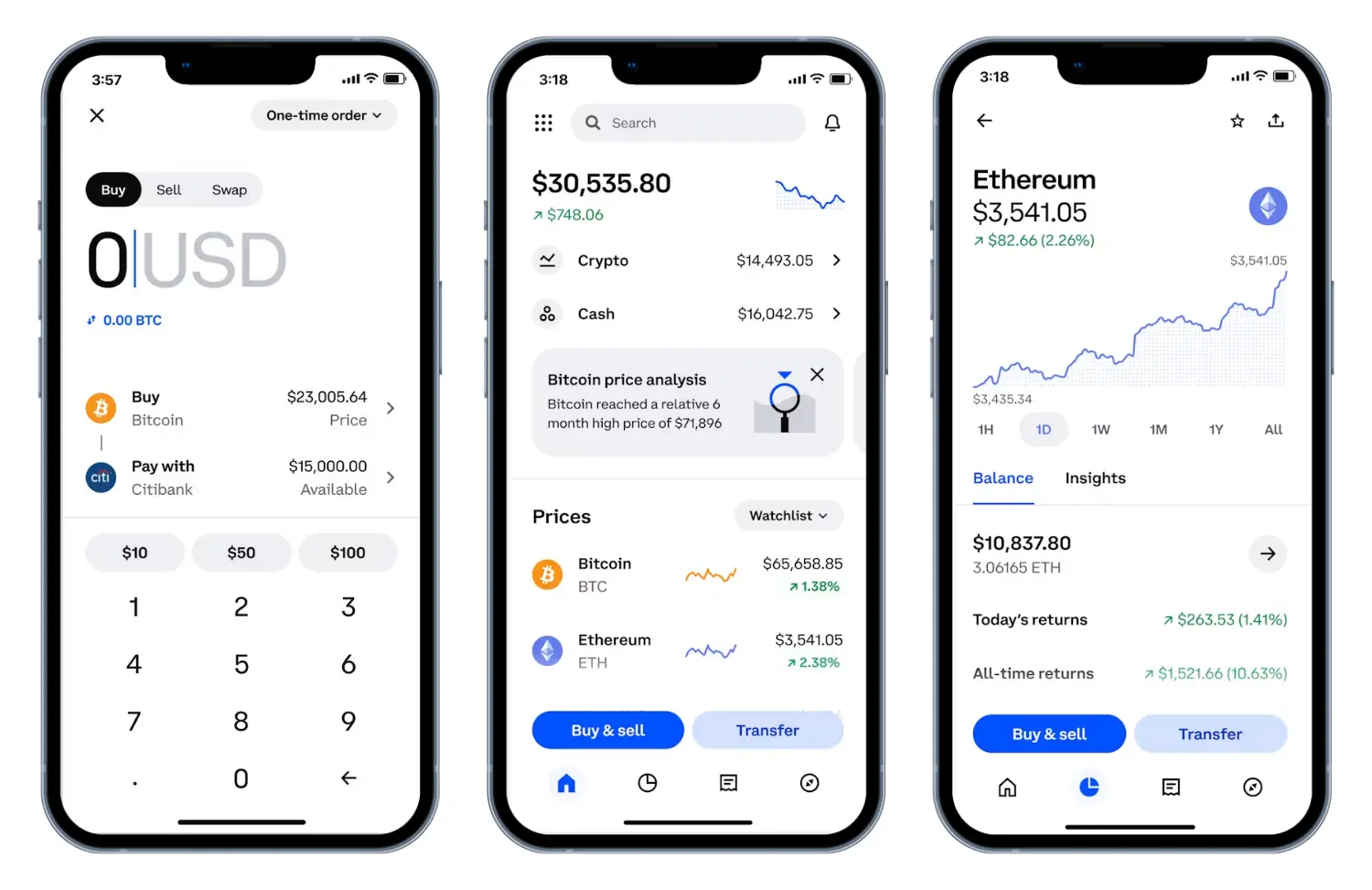
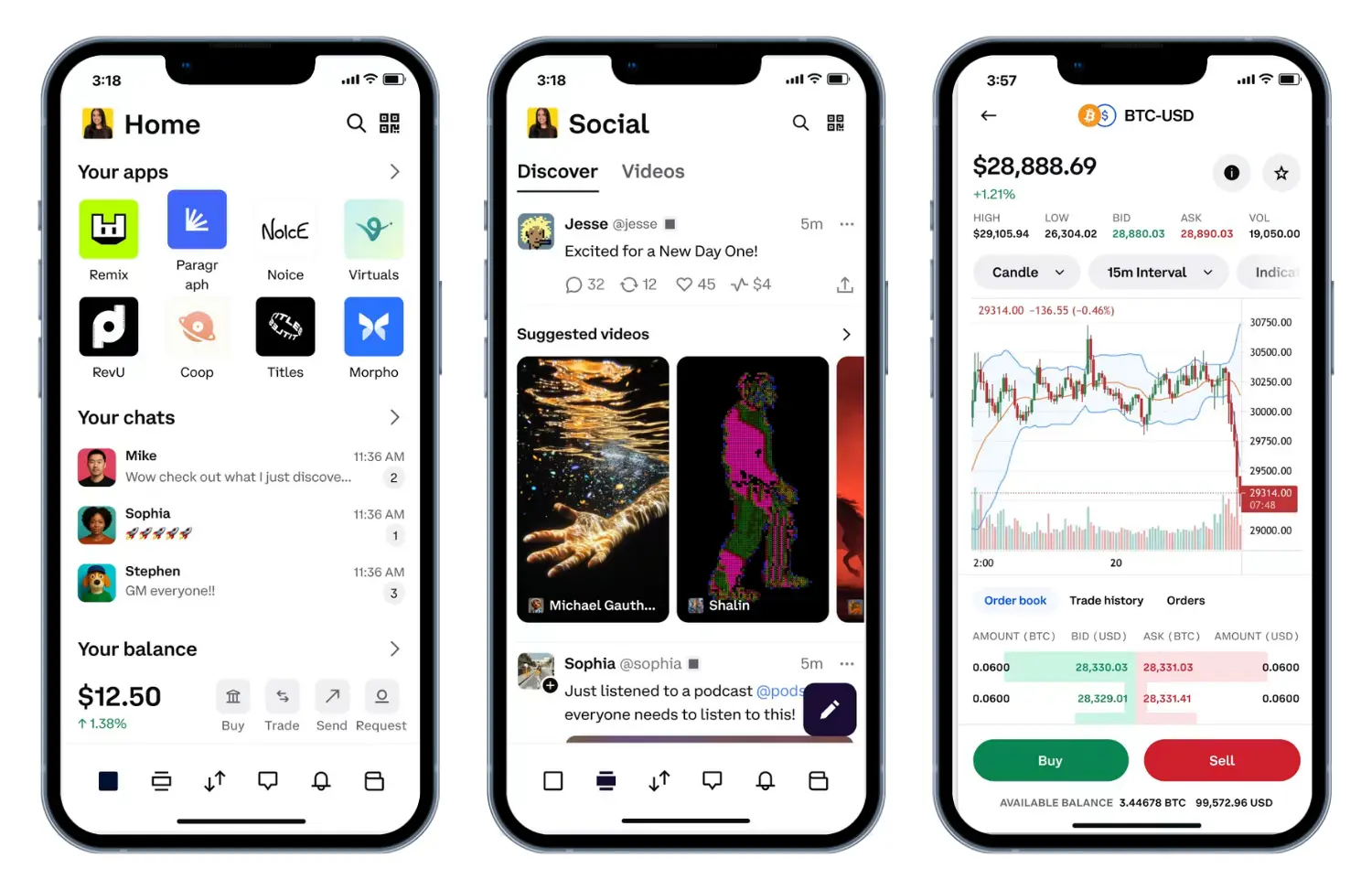
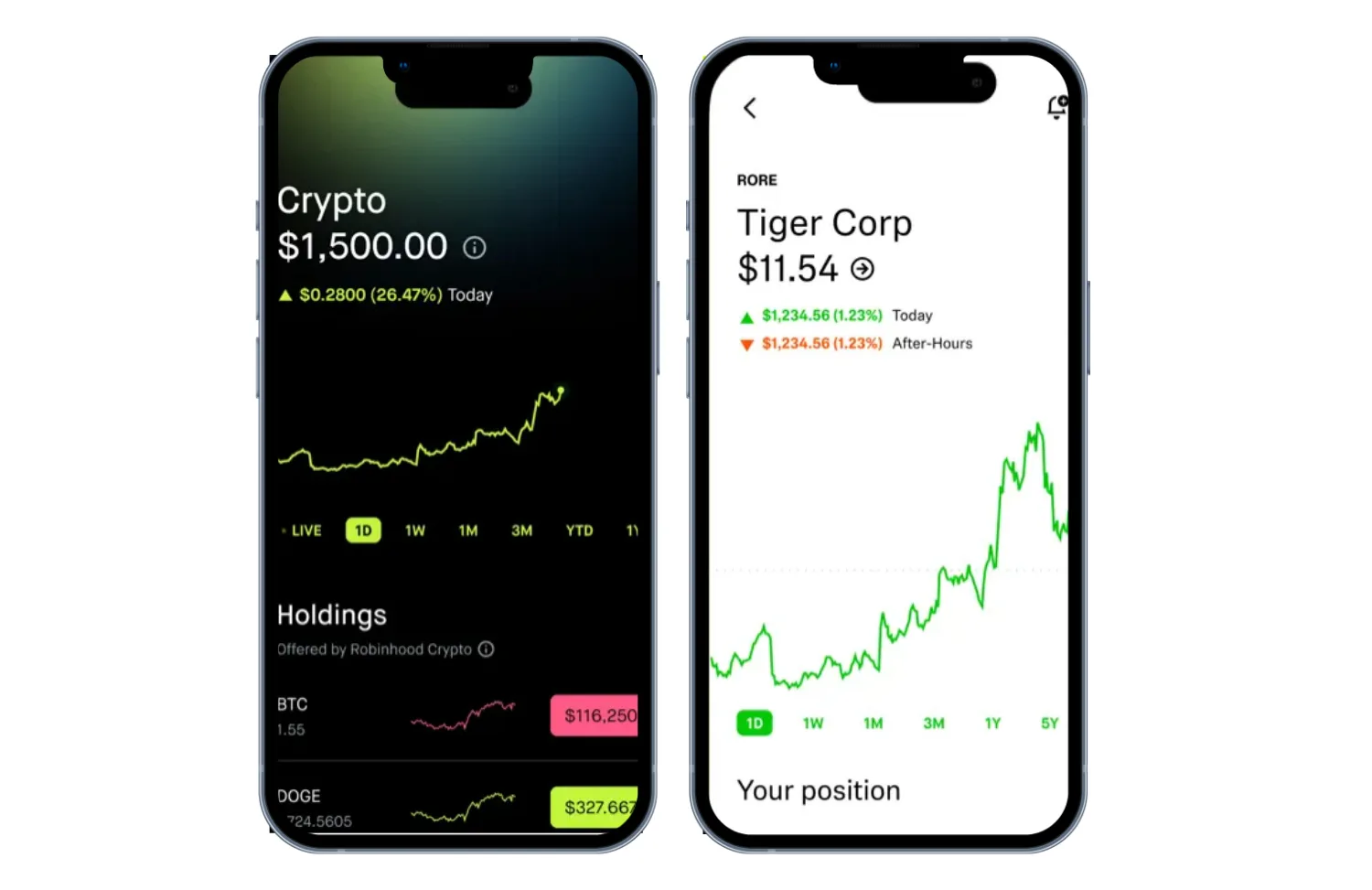
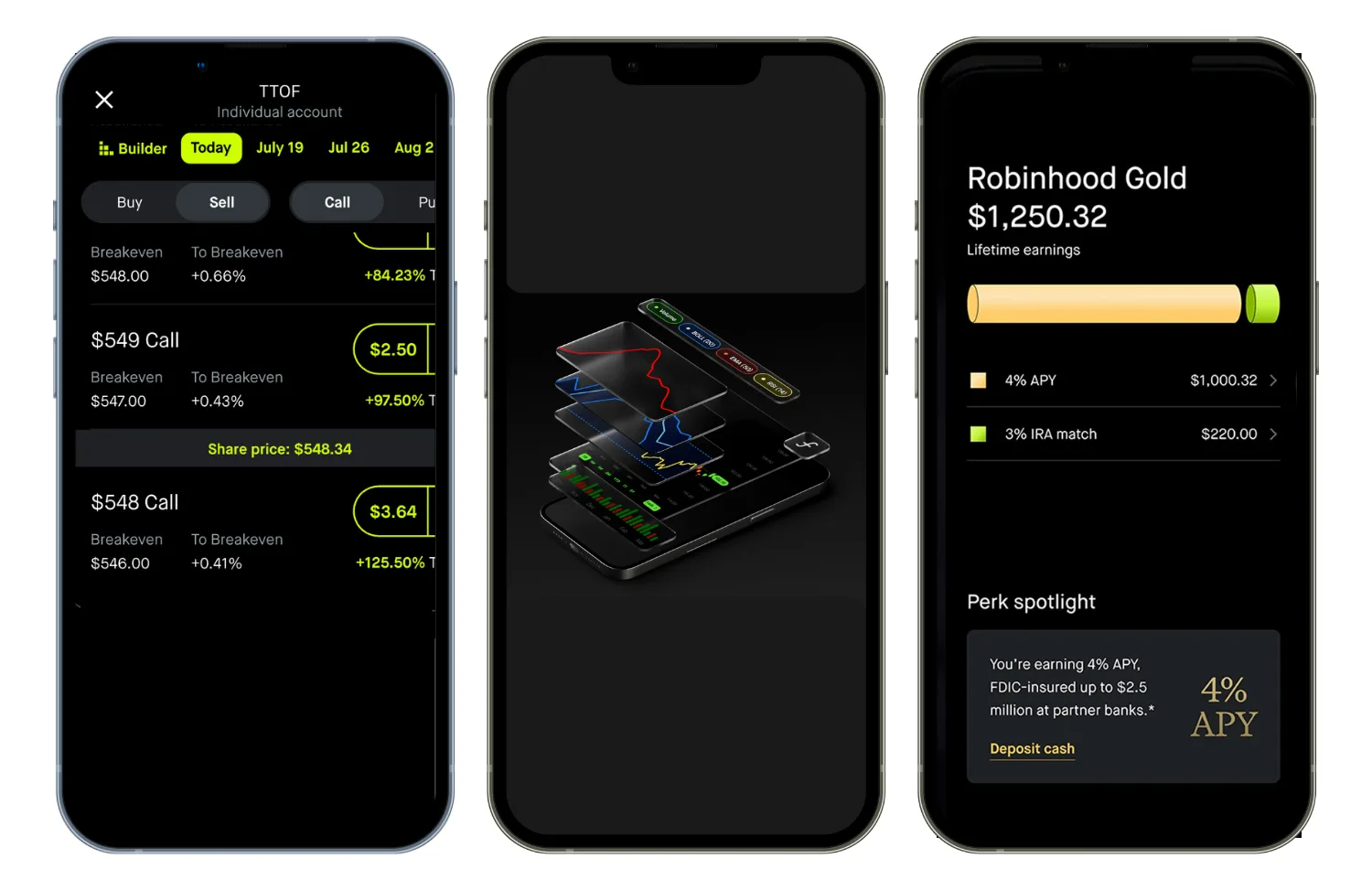
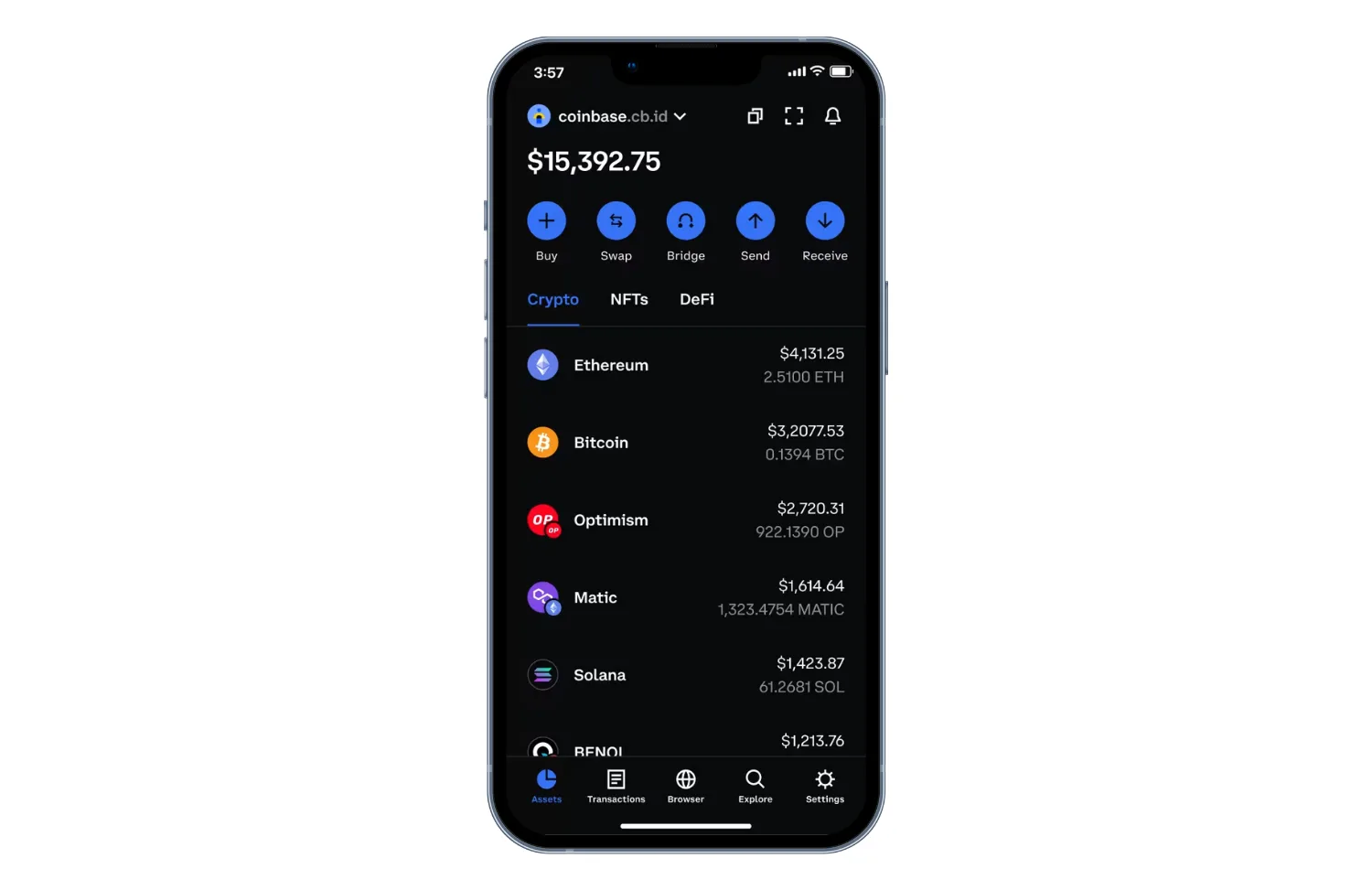
Coinbase and Robinhood are two leading cryptocurrency exchanges, featuring multiple order types, advanced features and $1 minimum staking. With availability throughout the US and 24/7 customer support, they remain top picks for crypto accounts. Still, Robinhood offers a more user-friendly platform for beginners, while Coinbase offers a generous selection of crypto and advanced resources to suit experienced investors.
Before deciding between Coinbase versus Robinhood, this is what you need to know.
Although similar in their services, there are several notable differences to consider when choosing between Coinbase versus Robinhood.
Coinbase vs. Robinhood Overview
Coinbase
Robinhood
Types of transactions supported
Market order
Stop loss order
Bracket order
Stop-limit order
Time-weighted average price (TWAP) order
Market orders
Limit orders
Stop orders
Stop limit orders
Trailing stop orders
Account funding methods
ACH
Debit cards
PayPal
Wire transfer
ACH
Debit card
Direct deposit
Instant transfer
Minimum trade amount
Varies
$1
Advanced features
TradingView advanced charting
Derivatives trading
Custom watchlists
Real-time order books
Base app (formerly Coinbase Wallet)
Coinbase One debit card
Coinbase One credit card
On-chain partner rewards
IPO access
Derivatives trading
Recurring investments
Fractional shares
AI research assistant
Robinhood Gold credit card
Private banking
Staking available
Minimum: $1
Staking fee: $0
Rewards: Up to 10% APY
Minimum: $1
Staking fee: Up to 25% APY
Unavailable in CA, MD, NJ, NY and WI
Tax forms provided
Form 1099-MISC
Form 1099-DA
Form 1099-B
Form 1042-S
Form 8949
Form 1099-B
Form 1099-R
Form 1042-S
Form 5498
Form 2439
Form 480.6 series
Educational resources
Articles, how-to guides
Level-2 market data from Nasdaq, Morningstar research, articles, how-to guides
How the platforms compare
Coinbase and Robinhood take different approaches to cryptocurrency trading. While Coinbase focuses on selection, it charges more fees, starting with a variable trading fee that can make it difficult to calculate your total trade in advance.
In comparison, Robinhood charges no trading fees at all. It also has more beginner-friendly features but limited crypto options.
With over 250 cryptocurrencies available for trading, Coinbase easily beats out Robinhood for its selection of cryptocurrencies. Investors can choose from top crypto options like solana (SOL), chainlink (LINK) and hedera (HBAR), with over 60 added fiat currencies.
Robinhood’s platform is beginner-friendly but lacks selection
Robinhood features a user-friendly interface that is easy to follow, and you can diversify your portfolio with a wide selection of investment types beyond crypto, including stocks, exchange-traded funds (ETFs), options, futures, a credit card and a retirement plan.
Robinhood ranks as one of the best low-cost brokerages with no minimums and commission-free trading, so you do not have to make a huge investment to start investing. Still, it features a limited selection of crypto — just 29 coins — and only one fiat currency is accepted, which limits your trading options, especially for more advanced traders.
The similarities
When comparing Coinbase versus Robinhood, there are many similarities that can make your decision a little tougher.
Founded just a year apart, both of these companies are popular and respected crypto exchanges in the industry. For trading, they both cover the basics, with market orders, limit orders and stop-limit orders all available. Staking requires just a $1 minimum.
Come tax time, both platforms will supply you with the necessary tax forms, whether it is Form 1099 or Form 1042-S.
For both Coinbase and Robinhood, customer service is available via chat and phone. They also receive high scores for their mobile apps, although Coinbase’s ratings are a little higher.
Which broker is better for beginners?
Robinhood beats out Coinbase with its thoughtful versatility and easy accessibility. It stands out for valuable features like advanced charting and an AI research assistant, in addition to custom price alerts and real-time data updated in sub‑second intervals, helping investors stay in tune with the market.
Which broker is better for advanced traders?
Coinbase beats Robinhood for advanced traders. While not completely isolating beginners, Coinbase takes a more sophisticated approach to investing with features that not only appeal to veteran traders but high-net-worth investors, as well.
With a more inclusive approach, Coinbase embraces the experienced investor through its Private Client membership, offering services and features like a dedicated trading desk, institutional research and dedicated account managers.
Wallets
Both Coinbase and Robinhood feature crypto wallets, but they present them in very different ways.
Coinbase wallet
Coinbase offers a USDC wallet that allows verified users the opportunity to fund their accounts with US dollars for immediate deposit.
Formerly known as Coinbase Wallet, the new Base App expands upon typical wallet functionality and instead offers a full-service platform. Play games, chat with friends and store your funds — these added features are a standout compared to Robinhood, which sticks to more traditional wallet functions.
However, the Coinbase wallet has limited availability compared to Robinhood, servicing just 22 states at the time of writing. To check if it is available in your state, a map is provided on the website for easy reference. If the service is not in your state, do not fret. Coinbase plans to expand in the future.
Robinhood wallet
As a self-custody wallet, Robinhood’s wallet gives you access to your private keys, ensuring you are the only one who can access your funds. The wallet allows access to Web3 for crypto storage, using a variety of networks, including the Ethereum, Bitcoin, Solana and Dogecoin networks. A separate service from Robinhood crypto accounts, the Robinhood wallet requires you to download a separate app for access.
Robinhood offers much wider availability to investors, serving all 50 states, Washington, DC, the US Virgin Islands and Puerto Rico. It even sometimes extends its borders to allow US military personnel stationed abroad access to its wallet.
Robinhood also simplifies the funding process, allowing you to transfer crypto from your Robinhood account. You can use a debit card, bank transfer, Robinhood Connect or Sardine. You can even transfer your wallet over from an Ethereum, Bitcoin, Solana, Dogecoin, Arbitrum, Polygon, Optimism or Base wallet.
The verdict
Coinbase beats Robinhood for its full-featured wallet packed with additional features that provide everything from education to entertainment, while Robinhood sticks to the basics.
Which is safer and more reliable?
In today’s digital world, data breaches are all too common. Both Coinbase and Robinhood have had their share of attacks, although Robinhood has experienced more disruptions and has been accused of more missteps over recent years.
Coinbase
In May 2025, Coinbase experienced a massive data breach affecting almost 70,000 customers. The breach is now under investigation by the US Department of Justice. This comes on the heels of a 2021 data breach and a 2023 SMS attack phishing campaign.
In response, Coinbase now offers a series of security protections:
Two-factor authentication
Mobile biometrics
YubiKey support
Password protection and multi-approval withdrawals in Coinbase Vault
Segregated and insured cold storage for Coinbase custody
These extra measures show Coinbase’s willingness to constantly improve its services to protect against evolving threats.
Robinhood
Robinhood has also been plagued by security issues, although they are more regulatory-based.
Just this year, Robinhood was ordered to pay $45 million in restitution for several charges, including failure to protect customer information and failure to establish appropriate security protocols. It was also accused of misleading customers while allowing them to engage in high-risk trading.
Also this year, the Financial Industry Regulatory Authority (FINRA) fined the company $70 million due to several trading outages. Again, it was accused of misleading customers while allowing them to engage in high-risk trading.
This comes on the heels of state penalties, which include a $7.5 million fine to the state of Massachusetts for alleged gamification. It also reached a $3.9 million settlement with the state of California after being accused of failure to fulfill customer account withdrawals and disclose key investing details.
Now Robinhood has adjusted its security protocols to include heightened measures.
Advanced encryption
Optional two-factor authentication
User verification for new or unfamiliar devices
Transport Layer Security (TLS) protocols
Cold storage with small amounts stored in hot storage
Robinhood has also purchased additional insurance coverage to supplement SIPC coverage, with excess losses covering up to an aggregate of $1 billion for securities and cash and a limit of $50 million in securities, including $1.9 million in uninvested cash, for the combined return per customer. However, this does not protect against market losses, so the same investing risk applies.
The verdict
Coinbase wins for security and safety, having experienced far fewer issues than Robinhood. While both have suffered data breaches, Robinhood has been accused of more serious charges, such as enabling high-risk trading and failure to fulfill customer account withdrawals.
What does Reddit have to say?
What do people on Reddit say?
On Reddit, users think Coinbase is far from perfect. It has had a lot of trouble with data breaches, which is a common theme in reviews. Customers warn of phishing attempts via text as recently as August 2025, as well as many other types of data breaches that have resulted in the loss of investors’ entire balances.
Other reviews mention problems with customer service, including difficulty reaching a representative and a lack of follow-up from representatives. Customers also complain about fees and the inability to perform transfers and add funds to their accounts.
Robinhood fares better overall. On Reddit, many posts are from new Robinhood users seeking investment advice. Other posts appreciate its user-friendly platform, efficient trading model, low barrier to entry and modest fees. A few posts recommend other platforms, such as Fidelity, but most tend to be satisfied.
Coinbase vs. Robinhood: Which one is better?
Coinbase is the winner in the matchup of Coinbase versus Robinhood for crypto.
It offers a greater selection of crypto choices — over 250, compared to Robinhood’s 29 — with more transaction types, additional financial products, no staking fees and added staking rewards.
It may not be as beginner-friendly a platform as Robinhood, and its wallet currently has limited availability, but Coinbase has faced far fewer security issues and regulatory charges than Robinhood.
Alternatives to Coinbase and Robinhood
Although Coinbase and Robinhood remain popular choices, there are many other top crypto exchanges you can use to diversify your portfolio.
Kraken. With Kraken, you receive access to 477 currencies, plus commission-free trading for over 11,000 stocks and ETFs. It sweetens the pot with weekly rewards to boost your earnings.
Gemini. Gemini is more limited in its crypto selection, offering around 17. However, it offers two trading interfaces based on your experience and comfort level, combined with a recurring buys feature and a staking APR of 4.65% for solana (SOL) and 2.13% for ether (ETH). There is also a crypto credit card to use for easy spending.
Crypto.com. With over 150 million users, Crypto.com offers an impressive selection, giving you access to over 380 cryptocurrencies and staking on over 30 of them. Users also have access to stock trading, a crypto credit card and sports event trading.
Before choosing an exchange, be sure to compare services and fees. Also, take the time to read some customer reviews to get a feel for the experience of other users.
Lena Borrelli is an experienced finance writer with a deep understanding of personal finance, investing and consumer banking. Her work has been featured in top-tier publications such as Forbes, TIME, Bankrate, Moneywise and Annuity.org, where she provides expert insights on financial trends, smart money management and emerging fintech solutions. With a background in personal finance and content strategy, Lena specializes in breaking down complex financial topics into clear, actionable advice for readers. When she is not writing or scanning the news for the latest headlines, she is happiest spending time in the Florida sunshine with her husband and two pups.
See full bio
Kraken is one of the best exchanges for advanced traders, offering a wide range of useful features and gaining many positive user reviews.
Advertiser disclosure
Finder.com is an independent comparison platform and information service that aims to provide you with the tools you need to make better decisions. While we are independent, the offers that appear on this site are from companies from which Finder receives compensation. We may receive compensation from our partners for placement of their products or services. We may also receive compensation if you click on certain links posted on our site. While compensation arrangements may affect the order, position or placement of product information, it doesn't influence our assessment of those products. Please don't interpret the order in which products appear on our Site as any endorsement or recommendation from us. Finder compares a wide range of products, providers and services but we don't provide information on all available products, providers or services. Please appreciate that there may be other options available to you than the products, providers or services covered by our service.
We update our data regularly, but information can change between updates. Confirm details with the provider you're interested in before making a decision.