
An e-commerce platform is software that can help your business get an online store up and running. Depending on the platform, it can handle everything from product listings and order management, to payment processing and customer service.
Because of this, it pays to take your time and compare e-commerce platforms carefully to find the right fit for your business. Here, we take a closer look at some of the options.
Best ecommerce platforms in the UK 2026
Shopify: Best all-rounder for scalability and growth
Wix: Best for complete visual design freedom with no coding
Square Online: Best for brick-and-mortar stores needing easy physical POS syncing
Ecwid by Lightspeed: Best for adding a shopping cart to an existing website or blog
ShopWired: Best platform for fast loading speeds and local support
WooCommerce: Best for WordPress users wanting total control and flexibility
EKM: Best for UK businesses wanting a fully managed, “done-for-you” setup
GoDaddy: Best for beginners needing a basic store launched quickly
Adobe Commerce: Best for enterprise-level brands with massive product catalogs
Shift4Shop: Best for an all-in-one setup with deep built-in features without extra apps
Squarespace: Best for design-focused creatives and visually stunning storefronts
Shopify
Why we like it
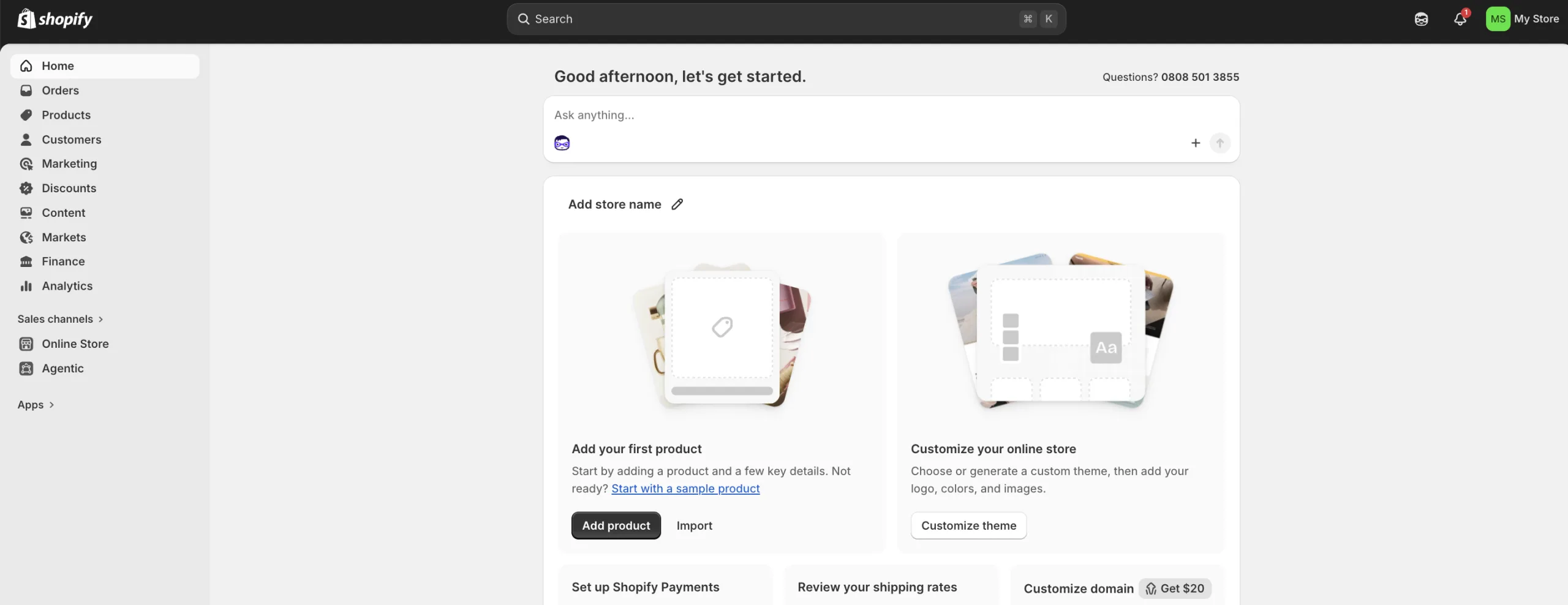
Shopify is a hosted platform which means it takes care of the technical side of managing an online store, so you don’t have to. It’s pretty quick to set up and offers a range of customisable templates for your shopfront and a variety of payment methods. However, as it’s subscription based, you’ll need to pay a monthly fee.
Pros and cons of Shopify
Pros
- Quick to set up
- No technical skills required
- Secure checkout, with range of payment methods
- Built-in tools and integrations
Cons
- Monthly fee and transaction charges
- Limited to Shopify templates
- Many features require paid third-party apps
Wix
Why we like it
A great option for beginners, Wix makes it easy to get your website up and running without the need for technical experience. It offers a wide variety of templates, plus AI tools to keep your website looking fresh. It’s also a hosted platform so will take care of tasks such as security, updates and web hosting.
Pros and cons of Wix
Pros
- Good option for those with little technical knowledge
- Hosting included
- Fast setup with AI tools to help
- Choose from more than 2,000 templates
Cons
- Limited flexibility
- You'll need to pay more for advanced features
- Difficult to swap templates once site is built
Square Online
Why we like it
Square Online is an all-in-one e-commerce website builder that uses customisable digital storefronts and lets you sync inventory directly with Square Point of Sale (POS) for easy sales. It’s a fully hosted platform and you can get started for free as its most basic plan only charges transaction fees. If you want access to more features, you’ll need to pay a monthly subscription charge.Pros
Cons
Ecwid by Lightspeed
Why we like it
Ecwid by Lightspeed is a cloud-based e-commerce platform that allows businesses to create an online store and sell products across multiple channels such as social media and online marketplaces. No technical skills are required to set up, and it includes a built-in code-free website builder called Instant Site. Monthly subscription fees apply.
Pros and cons of Ecwid by Lightspeed
Pros
- Easy set up
- Instant Site option is ideal for beginners
- Multi-platform selling
- No transaction fees
Cons
- Monthly subscription fee
- Basic SEO and marketing tools
- Youll need to pay more for advanced features
ShopWired
Why we like it
You can build, design and manage your online store with ShopWired without the need for any coding knowledge. It offers a drag-and-drop build system with a range of templates, and supports several payment gateways as well as offering its own secure payment system, ShopWired Payments. It is fully hosted and has a monthly subscription model.
Pros and cons of ShopWired
Pros
- No technical knowledge required
- Fully hosted e-commerce platform
- No transaction fees on external gateways
- Wide range of free templates
Cons
- Monthly subscription fee applies
- Rigid customisation
- Limited in terms of integrations
WooCommerce
Why we like it
WooCommerce allows you to add an online store to a WordPress website. The core plugin is free to install and enables you to control how you want your site to look and what you want to sell. Add-ons are available at an extra cost. However, as it’s a self-hosted solution, you’ll need to manage hosting, updates and security yourself.
Pros and cons of WooCommerce
Pros
- No subscription fees
- Flexible and customisable
- Full ownership and control
- You can add extra features as your business grows
Cons
- You'll need to be using WordPress to use WooCommerce
- Security is your responsibility
- Many essential features depend on plugins
EKM
Why we like it
With e-commerce platform EKM, you can build an online shop with no need for web design or coding experience. As it’s fully hosted, it handles all platform updates and security monitoring for you. It also includes built-in payment systems and you can connect to payment gateways like PayPal. Its Evolution Mode makes continuous updates to your shop too.
Pros
- No technical knowledge required
- Evolution Mode makes regular updates to shop
- Fully hosted platform
- Many built-in features
Cons
- High subscription fees
- Limited customisation
- Limited app integration
Adobe Commerce
Why we like it
Adobe Commerce allows businesses to customise their websites, manage products and inventory, process payments and sell across multiple channels, including websites and marketplaces. It also includes tools for marketing, customer insights and personalised shopping experiences. It’s best suited to larger or fast-growing businesses.
Pros and cons of Adobe Commerce
Pros
- Highly customisable
- Can support multiple storefronts
- Includes advanced tools for customer personalisation
- Integrates with third-party apps
Cons
- Can be expensive
- Often requires technical expertise
- More complex than some of its competitors
Shift4Shop
Why we like it
Shift4Shop allows you to build, manage and grow your online store with ease. It handles everything from website design and inventory management to payment processing and shipping. However, it is heavily geared towards the US market, meaning some features, integrations and support options may be less suited to UK businesses.
Pros and cons of Shift4Shop
Pros
- Includes range of built-in features
- Supports SEO
- Comes with strong inventory management and product customisation tools
Cons
- Heavily focused on US market
- Setup may require more technical knowledge
- Limited third-party and app integrations
Squarespace
Why we like it
Squarespace is a hosted website builder renowned for its design-led, visually stunning templates, making it an excellent choice for creatives, artisans, and boutique brands. It takes care of all the technical heavy lifting, including web hosting, software updates, and security. While it offers a highly intuitive drag-and-drop editor to customize your shopfront, you will need to subscribe to one of its higher-tier monthly plans to unlock full e-commerce functionality.
Pros and cons of Squarespace
Pros
- Visually stunning, award-winning design templates
- Fully hosted platform with security and updates included
- Excellent built-in marketing, blogging, and SEO tools
- Easy-to-use visual editor ideal for beginners
Cons
- Monthly subscription fee applies (plus transaction fees on basic plans)
- E-commerce features are less powerful than dedicated platforms like Shopify
- Limited flexibility for complex or massive product inventories
How to choose the best e-commerce platform
To choose an e-commerce platform you’ll need to consider the following points:
There are pros and cons to all platforms and it’s up to you to decide what’s most important to you when comparing your options.
E-commerce platforms vs marketplaces
An e-commerce platform is software that a business uses to create and run its own online store, while a marketplace is a website where multiple sellers offer products to customers in one place. Examples of e-commerce platforms include Shopify and WooCommerce, while Amazon and eBay are marketplaces.
A key difference is that with an e-commerce platform, you own the branding, customer experience and customer data, but you are responsible for driving traffic to the site. By contrast, marketplaces provide built-in audiences and easier access to customers, but businesses face higher competition and fees and less control over branding.
Choosing a marketplace as an alternative
Marketplaces provide an established infrastructure to list and sell products efficiently. They offer access to a broad consumer base and integrated tools without the need for a standalone website. While independent e-commerce platforms allow for greater brand customisation, marketplaces leverage existing consumer trust to facilitate business growth.
Ebay
eBay is an online marketplace that enables users to sell items through both auction-style and fixed-price listings. It accommodates a diverse inventory, including new, used, and refurbished consumer goods across multiple categories. Sellers are responsible for creating product descriptions, managing shipping logistics, and facilitating buyer communications. The platform provides a Global Shipping Programme to assist with international transactions and offers seller protection policies for eligible sales. It functions as a versatile platform for testing market demand for various products without the requirement of a standalone website.
Pros
- Selling Formats: Choice between auction-style bidding or "Buy It Now" fixed prices.
- Logistics Management: Sellers are generally responsible for all shipping and handling.
- Versatility: Fewer restrictions on the types of products that can be listed for sale.
Cons
- Interface Design: The platform's layout is often considered less modern than competitors.
- Global Reach: Integrated tools are available to facilitate sales to international buyers.
- Buyer Interactions: Requires more direct management of customer queries and disputes.
Amazon
Amazon provides an international marketplace that allows third-party sellers to list products alongside Amazon’s own inventory. It offers a large, established customer base and various logistics solutions, including Fulfillment by Amazon (FBA), where the platform handles storage, packaging, and delivery. Sellers can choose between individual and professional plans depending on their sales volume. The platform supports a wide range of categories, from mass-produced goods to specialized brand items. It is designed for businesses seeking to scale operations and utilise a global distribution network.
Pros
- Market Reach: Access to one of the largest global consumer bases in e-commerce.
- Fulfillment Services: Option to outsource logistics and customer service through FBA.
- Consumer Trust: Benefits from the platform's established reputation for delivery and returns.
Cons
- High Competition: Sellers often compete directly with Amazon's own product lines.
- Complex Fee System: Referral fees and storage costs can be high and vary by category.
- Strict Requirements: High standards for seller performance and account health.
Etsy
Etsy is an e-commerce platform specifically designed for the sale of handmade items, vintage goods, and craft supplies. It allows entrepreneurs to establish a digital storefront and reach a demographic of consumers who are specifically seeking unique or artisanal products. The platform requires sellers to manage their own inventory, shipping, and customer service. Sellers are charged a fixed fee for each listing and a percentage-based transaction fee upon the completion of a sale. This platform serves as a structured alternative for individuals transitioning from informal sales on social media to a dedicated marketplace.
Pros
- Niche audiences: Access to consumers specifically looking for handmade and unique products.
- User interface: The platform provides a straightforward setup process for new sellers.
- Seller tools: Includes integrated analytics and basic marketing tools to track shop performance.
Cons
- Fee structure: Listing fees and transaction commissions are applied to every sale.
- Category restrictions: Items must meet strict handmade or vintage criteria to be listed.
- Limited branding: Customisation options for storefronts are restricted to platform templates.
TikTok
TikTok Shop enables direct sales within the TikTok app through video content and live broadcasts. It is specifically designed for digital natives transitioning from informal social selling to a structured e-commerce environment.
Pros
- Direct Integration: Allows for a seamless in-app checkout process, reducing friction during the purchasing journey.
- Viral Potential: The platform's algorithm can provide significant organic reach for products featured in high-performing content.
- Affiliate Programme: Provides access to a network of creators who can promote products in exchange for a commission.
Cons
- Content Requirements: Requires consistent production of high-quality video content to maintain visibility and drive sales.
- Shipping Standards: Sellers must adhere to strict dispatch and delivery timelines to maintain account health.
- Commission Fees: The platform applies transaction fees and commissions that vary based on the product category.
Bottom line
An e-commerce platform can be a relatively quick and easy way to build an online store, with many platforms taking care of the hosting, security and updates on your behalf. When comparing options, be sure to check what features and tools are available, how quickly you can get your online shop up and running, and exactly what you need to pay for.
More guides on Finder
-
Easiest e-commerce platforms for beginners selling from home in the UK
Kick-start your side hustle from the comfort of your home with these beginner-friendly e-commerce platforms.
-
Shopify vs WooCommerce
Sizing up the key differences between Shopify and WooCommerce.
-
Shopify vs Squarespace
Compare Shopify and Squarespace side by side.
-
Wix website builder review
Find out how Wix could help you build your online business website.
-
Shopify e-commerce platform review
Discover the pros and cons of using Shopify to start an online business.
-
WooCommerce review
We explain how e-commerce plugin WooCommerce works so you can decide if it’s right for you.
-
How to build your online store in a weekend
Ever wanted to build your own online store? Discover how to set one up over the weekend.
-
Best software to start an e-commerce business
Discover which types of software are best for an e-commerce business.
-
Best customer support software for online stores
Benefit from increased customer satisfaction and higher productivity with the right customer support software.

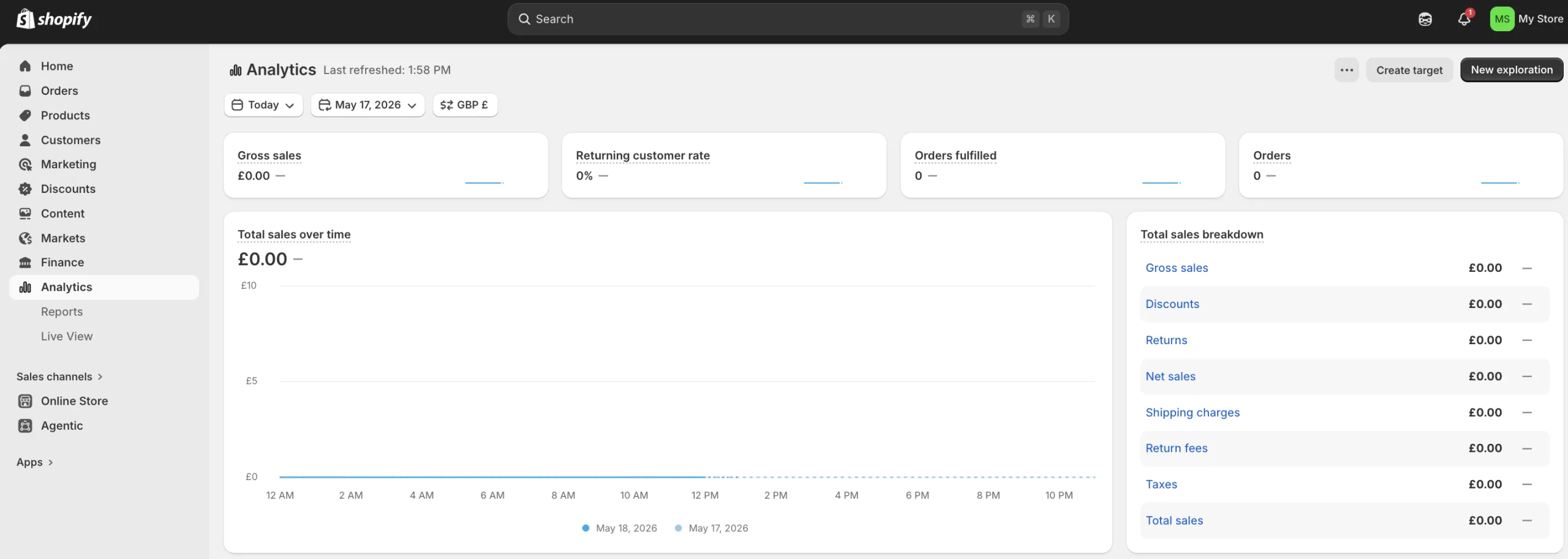
I had a look around the dashboard and was impressed with the analytics setup. Having run my own websites before, I know you can gain a lot of knowledge from data and reporting, so it was nice to see this already built out for me without any extra work.
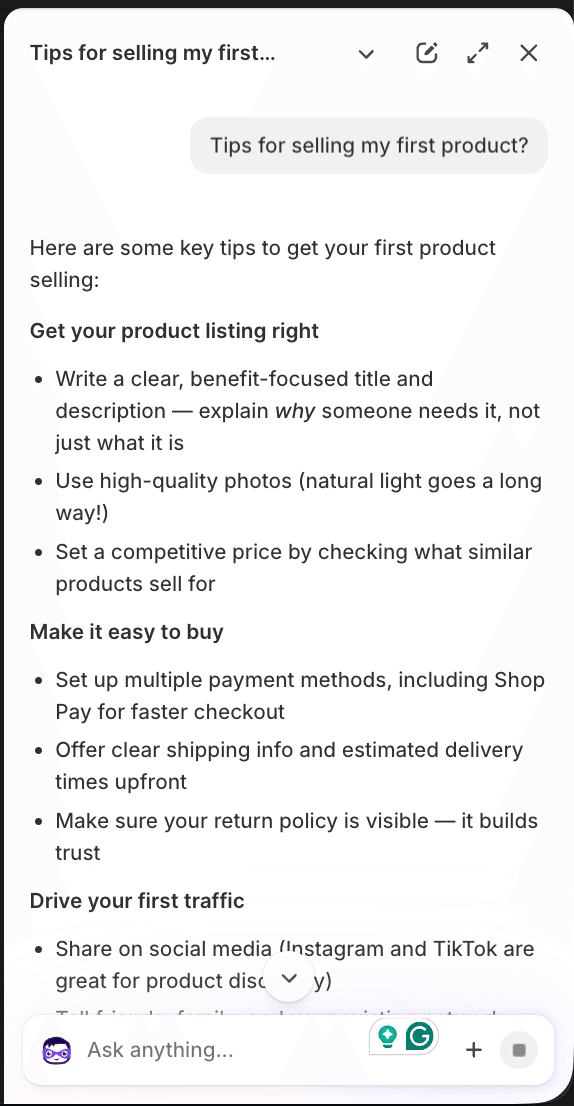
I liked the new AI feature called Sidekick. I started up a quick conversation and had a bit of back and forth, and it seemed capable of directing me to the right place. I can imagine this is a big win for people who don't have the resources to hire their own developers or designers. "