
Give your child the head start you wish you’d had, with their own smart money app and card. Get 2 months free plus £20 pocket money with code AFFFDR220.
Get started
Paid for by:

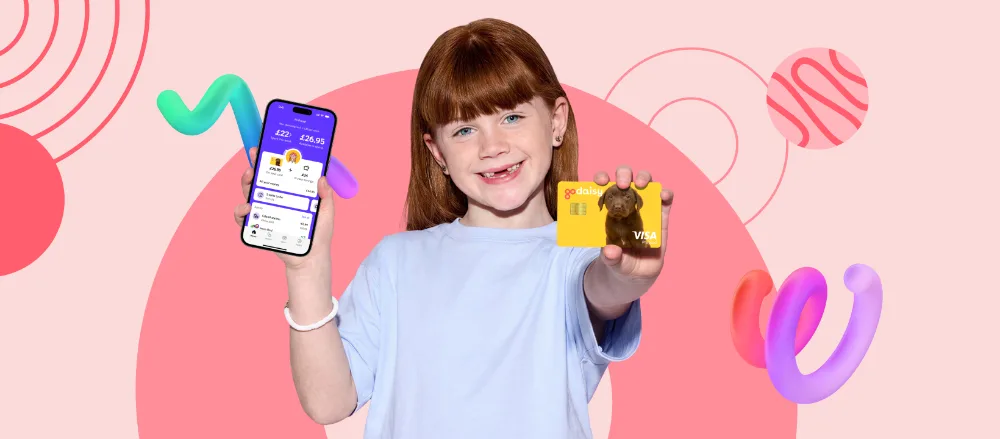
Your kids aren’t asking you about paper cheques and bank branches. Instead, they want to know how to make contactless payments, whether gaming currency is real money, and how they can keep their cash safe online. We’re teamed up with GoHenry to answer your child’s curiosity and turn these financial concepts into real-world money skills.
Give your child the head start you wish you’d had, with their own smart money app and card. Get 2 months free plus £20 pocket money with code AFFFDR220.
Get started How does contactless actually work?
Your child will have seen you tap your card or phone to a terminal and probably have been curious about how that actually pays for something. While it may look like magic, this is a real money transaction – and one that’s important they understand.
Here’s how to simply explain how contactless payments work:
 Are gaming currencies real money?
Kids today operate in a digital world, including buying virtual items inside games. It can be hard for them to comprehend that when they spend Robux or V-Bucks, these are real-world pounds.
Here’s how to tackle whether gaming currencies are real money or not.
The main message to get across is that gaming currency is a one-way ticket. Once you have the gaming currency, you can’t then change it back to real-world money. And the items that they’ve bought in the game hold no value outside of the game.
Give your child the head start you wish you’d had, with their own smart money app and card. Get 2 months free plus £20 pocket money with code AFFFDR220.
Get started How can I keep my money safe online?
Just like teaching your kids to look both ways before crossing the street, modern parenting means you also need to teach them how to keep their money safe. Here are some practical tools to help them spot red flags and protect their digital balances.
 How can I earn money?
Understanding the relationship between effort and financial rewards is a key lesson to teach kids – and one they’re certainly motivated to learn! While a regular allowance helps them to practice their budgeting and saving skills, introducing opportunities to earn some extra cash helps make that connection.

GoHenry: where kids go to learn money
Kids learn to earn, save, spend and invest with pocket money, custom savings goals, gifted money from family and friends, gamified lessons and more. Give your child the head start you wish you’d had, with their own smart money app and card. Get 2 months free plus £20 pocket money with code AFFFDR220.
Join today!*T&Cs apply. GoHenry Interest Savings is provided by Bondsmith Savings Ltd, authorised by the Financial Conduct Authority. The GoHenry card is issued by IDT Financial Services Limited, a principal member of VISA Europe.
Learn more about the pros and cons of prepaid debit cards for kids.
We’ve partnered with NatWest Adapt to help teens master their digital money goals. (Paid content)
This summer, we’ve teamed up with GoHenry to help you challenge your kids to earn and save for their own back-to-school upgrades. (Paid content)
In this guide we walkthrough 5 fun, safe and practical “side hustles” your kids can start this summer to supercharge their pocket money. (Paid content)
We’ve partnered with GoHenry for your ultimate guide to typical pocket money by age. (Paid content)
We’ve partnered with GoHenry to help you boost your child’s money confidence, whatever age or stage they’re at. (Paid content)
New to NatWest Rooster Money? See if you can keep some more money in your pocket with our promo codes and special offers.
Learn more about the Halifax Expresscash account to see if it’s right for your child.
If you’re tired of using cash for your kids’ pocket money or want to put money aside for when they’ll go to uni, NatWest has dedicated account options for both cases.
This guide looks at how Halifax’s child accounts work, whether they make a good choice to teach kids about personal finance, and and how to open one.
