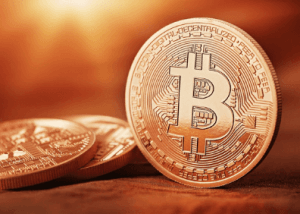
Finder makes money from featured partners, but editorial opinions are our own. Advertiser disclosure

What Is Cryptocurrency?

Crypto Finder's™ beginner's guide to getting started with crypto.

Uphold - Digital Asset Platform

Uphold - Digital Asset Platform logo
  • Buy, sell and trade 273 cryptos.
  • Instant deposits and withdrawals.
  • Refer a friend to earn US$20 — $10 for you and $10 for the person you refer. T&Cs apply.

You might have heard about Bitcoin, but there’s so much more to cryptocurrency than that. Our guides make learning about cryptocurrency easy – allowing you to buy, trade, hold and earn crypto in less time than it takes to set up a new bank account.

Start investing today with our picks for the best crypto exchanges in the US or learn more about individual coins and where to buy them . Don’t forget to check out our best crypto wallets guide to learn how to keep your crypto safe.

Disclaimer: This page is not financial advice or an endorsement of digital assets, providers or services. Digital assets are volatile and risky, and past performance is no guarantee of future results. Potential regulations or policies can affect their availability and services provided. Talk with a financial professional before making a decision. Finder or the author may own cryptocurrency discussed on this page.

What is cryptocurrency?

Cryptocurrencies are digital assets that have a value, just like a $10 note is a physical token with 10 dollars of value assigned to it.

The difference is that digital currencies are electronic – they only live on the internet. In order for a cryptocurrency to have value, its coin needs to be unique, verifiable and unreplicable. The Bitcoin blockchain was the innovation that made this possible.

Crucial to crypto is the principle of decentralization. There is no single authority or business (such as a bank or government) that controls cryptocurrencies. This idea of sovereignty over your assets and removing reliance on any sort of intermediary is something you’ll hear about a lot.

Decentralization also makes crypto a powerful medium of exchange because it minimizes the costs and processing times of transactions.

Thanks to these innovations, legacy companies like Visa, PayPal and several banks have also begun adopting cryptocurrency and blockchain technologies.

Picture not described

Crypto quick start

Skip ahead to one of our guides

How does cryptocurrency work?

Cryptocurrency uses cryptographic technology to secure individual assets on a database called a “blockchain”. A blockchain records transactions on a network in a way that cannot be altered.

You can think of a blockchain as hundreds of connected computers sharing information with one another. This builds a ledger of data that can be used to validate that each crypto transaction is legitimate and secure.

Some blockchains use a variation of proof-of-work or proof-of-stake consensus algorithms to execute transactions. Proof of work is where the term “Bitcoin miners” comes from.

Miners operate powerful computers that solve complex mathematical problems, which helps secure the blockchain.

6:46
Proof of stake is a bit different. This algorithm uses staking – the process of locking up cryptocurrency on a specified blockchain wallet in exchange for a reward. Staking protocols use “nodes” – small copies of the blockchain being run on thousands of different computers.

Understanding how a crypto’s algorithm works in detail isn’t essential – or easy – but it can help explain movements in price.

What are the most traded cryptocurrencies?

The most traded cryptocurrencies are the ones with the highest daily trading volume, meaning they’re bought and sold the most across exchanges. These tend to be large, well-known assets with strong liquidity, making them easier to enter and exit without major price swings.

Commonly most traded cryptocurrencies include:

  • Bitcoin (BTC). The largest crypto by market cap and the most actively traded overall.
  • Ethereum (ETH). Popular for both investing and use in DeFi and NFTs.
  • Tether (USDT). A stablecoin widely used as a trading pair on exchanges.
  • USD Coin (USDC). Another major stablecoin used for liquidity and transfers.
  • Binance Coin (BNB). Frequently traded on Binance and used for fee discounts.
  • XRP (XRP). Frequently traded for payments, cross-border use cases and high exchange activity.

Why these are traded the most:

  • High liquidity. Large volumes mean tighter spreads and easier execution.
  • Exchange pairing. Many altcoins are priced against BTC, ETH or stablecoins.
  • Market confidence. Established assets attract more traders.
  • Utility. Some are used for fees, staking or smart contracts, not just speculation.

What “most traded” actually means:
Trading volume can change daily based on market conditions. Stablecoins like USDT often rank at the top because they’re used to move in and out of trades, not because people are speculating on their price.

How to buy cryptocurrency

  1. Compare crypto exchanges
    The easiest way to purchase cryptocurrency is through an exchange or trading platform. Features to look out for are low fees, supported coins, and deposit methods. Registering an account with a US-based exchange will require you to provide a form of government identification.
  2. Deposit funds
    To deposit US dollars to your exchange account, first, you’ll need to verify your identity in a process known as KYC. Most exchanges accept instant transfers from a bank account, while others also support credit card purchases and sometimes even cash.
  3. Choose a cryptocurrency
    There are thousands of cryptos to choose from. Thoroughly research any you’re interested in, check what’s trending, and keep on top of the latest crypto news before investing any money.
  4. Build your crypto portfolio
    Most exchanges allow you to instantly buy cryptocurrency with the funds deposited to your account. Some platforms also have advanced market options and trading pairs which may be useful for more experienced traders.
  5. Store your crypto
    You can choose to leave your assets in your exchange wallet, but this does come with some added risks. It’s generally recommended that you transfer your crypto to a non-custodial or hardware wallet for increased security.

Where to buy, sell and store crypto in the US

Investors can now choose from a number of established and feature-rich crypto exchanges. If you’re just starting out, look for exchanges registered with the Financial Crimes Enforcement Network (FinCEN) that offer US dollar deposits with your preferred payment method.

Click the Go to Site button when you’re ready to create an account with any of the providers.

10 of 16 results
Finder Score Fiat currencies Cryptocurrencies Deposit methods Disclaimer
42
342
Bank transfer, Credit card, Debit card, Neteller, Fedwire, ACH online banking
US residents: Restricted in the following states - NY, CT, NM, WA, HI, AL, VT, FL, AK, NV.
Go to site

Capital at risk

More info
Compare product selection
1
181
Bank transfer (ACH), Debit card, Wire transfer, Apple Pay, Google Pay, Plaid
Get up to $400 in BTC.
1. Trade $200, get $100 in BTC
2. Deposit $10,000, get an additional $300 in BTC. T&Cs apply.
Go to site

Capital at risk

More info
Compare product selection
7
491
Bank transfer, Credit card, Cryptocurrency, Debit card, PayPal, SEPA, Instant SEPA, Apple Pay, Google Pay, SWIFT, ACH online banking
Not available in Japan
Go to site

Capital at risk

More info
Compare product selection
eToro logo
26
105
Bank transfer, Debit card, PayPal, Wire transfer
Crypto Trading is offered via eToro USA LLC (NMLS ID: 1769299). This entity is not a registered broker-dealer or FINRA member and your cryptocurrency holdings are not FDIC or SIPC insured. Investments are subject to market risk, including the possible loss of principal.
ENDS SOON!
$100
$100
VISA CARD SIGNUP BONUS
1
Join Finder
2
Sign up to eToro and make a $200 deposit
3
Get a digital Visa gift card from Finder
Important information
Cryptocurrency is offered by eToro USA LLC (“the MSB”) (NMLS: 1769299) and is not FDIC or SIPC insured. Investing involves risk, and content is provided for educational purposes only, does not imply a recommendation, and is not a guarantee of future performance. [website domain name] is not an affiliate and may be compensated if you access certain products or services offered by the MSB.
Go to site

Capital at risk

More info
Compare product selection
SoFi logo
1
25
External bank transfer (ACH), Inbound wire transfer, ATM deposit
Get a 1% match on crypto buys through March 30, 2026. Terms and Conditions apply.
CRYPTOCURRENCY AND OTHER DIGITAL ASSETS ARE NOT FDIC INSURED • ARE NOT BANK GUARANTEED • MAY LOSE VALUE SoFi Crypto products and services are offered by SoFi Bank, N.A., a national bank regulated by the Office of the Comptroller of the Currency.
Important information
CRYPTOCURRENCY AND OTHER DIGITAL ASSETS ARE NOT FDIC INSURED • ARE NOT BANK GUARANTEED • MAY LOSE VALUE Cryptocurrency and other digital assets are highly speculative, involve significant risk, and may result in the complete loss of value. Cryptocurrency and other digital assets are not deposits, are not insured by the FDIC or SIPC, are not bank guaranteed, and may lose value. All cryptocurrency transactions, once submitted to the blockchain, are final and irreversible. SoFi is not responsible for any failure or delay in processing a transaction resulting from factors beyond its reasonable control, including blockchain network congestion, protocol or network operations, or incorrect address information. Availability of specific digital assets, features, and services is subject to change and may be limited by applicable law and regulation. SoFi Crypto products and services are offered by SoFi Bank, N.A., a national bank regulated by the Office of the Comptroller of the Currency. SoFi Bank does not provide investment, tax, or legal advice. Please refer to the SoFi Crypto account agreement for additional terms and conditions. 1% Crypto Match Promo ● Runs 2/12/2026 - 3/30/2026 ● Promo Details: All members can earn a 1% Crypto match, no SoFi Plus requirement ● “Get a 1% match on crypto buys through 3/30/26.*” ● Required disclosure: *Earn a 1% match, in stablecoin or a cash equivalent, on net funded crypto buys (up to 250K volume) made from 2/12/26 - 3/30/26. Assets must be held on the platform through 12/31/26. Withdrawals before 12/31/26 will reduce the match amount. SoFi Crypto products and services are offered by SoFi Bank, N.A., a national bank regulated by the Office of the Comptroller of the Currency. SoFi reserves the right to change or terminate this promotion at any time without notice. See terms and limitations http://www.sofi.com/crypto/1percentmatch Weekly $100k in BTC Promo ● Runs Weekly, Mon-Sun, starting 2/16 - 3/31 ● Promo Details: New Crypto members each week, for 6 weeks, will equally split a weekly prize pool of $100k in BTC ● “When you open a SoFi Crypto account this week, you’ll split $100k in Bitcoin with all our other new members this week.” ● “SoFi is giving away $100K in Bitcoin every week through March 31, 2026” ● “Get your share of $100,000 in Bitcoin this week.” ● Required disclosure: Must be a net-new SoFi Crypto member to qualify. Prize is an equal share of a weekly $100,000 pool, payable in Bitcoin (BTC), calculated based on the number of new accounts opened each week. BTC credited within 10-15 business days following the Weekly Prize Period. Cryptocurrency is NOT FDIC insured, NOT bank guaranteed, and MAY lose value. See terms and conditions at https://www.sofi.com/crypto/100K
Go to site

Capital at risk

More info
Compare product selection
Robinhood logo
1
60
Bank transfer (ACH), Debit card, Instant transfer, Direct Bank Deposit
Go to site

Capital at risk

More info
Compare product selection
Figure Markets logo
1
7
Bank transfer (ACH), Wire transfer
Go to site

Capital at risk

More info
Compare product selection
Crypto.com logo
31
442
Bank transfer, Credit card, Debit card, PayPal, Wire transfer, Fedwire, Apple Pay, Google Pay, SWIFT
Go to site

Capital at risk

More info
Compare product selection
Fold logo
Not scored yet
Fold
Not scored yet
1
1
Bank transfer (ACH)
†Offer valid only to new Fold users who sign up through the website, with referral code FINDER. BitGo and Fortress Trust provide Bitcoin services. See BitGo Terms of Use here, and Fortress Terms of Use here.
Important information
†Offer valid only to new Fold users who sign up through the website, with referral code FINDER. BitGo and Fortress Trust provide Bitcoin services. See BitGo Terms of Use here, and Fortress Terms of Use here.
Go to site

Capital at risk

More info
Compare product selection
Bitget logo
Bitget
141
753
Bank transfer, Credit card, Cryptocurrency, Debit card, Apple Pay, Google Pay
Not available for US citizens
Go to site

Capital at risk

More info
Compare product selection
loading
Showing 10 of 16 results
5 of 53 results
Disclaimer Wallet type Supported assets Price (USD) Disclaimer

Hardware

5,000+

$54.90

Go to siteView details
Compare product selection
Bitget logo
Bitget Wallet

Mobile, Desktop

500,000+

Free download

Not available to US citizens
Go to siteView details
Compare product selection
Zengo logo

Mobile

380+

Free download

Go to siteView details
Compare product selection
NGRAVE logo

Hardware

2,700+

$398

Go to siteView details
Compare product selection
Ledger logo

Hardware

5,500+

$149

BLACK FRIDAY: Get 50% OFF all Ledger Nano X™ colors. T&Cs apply.
Go to siteView details
Compare product selection
loading
Showing 5 of 53 results

Is cryptocurrency safe?

There are a number of risks associated with buying, storing and using digital currencies. Before jumping in, do plenty of research and make sure you understand how to keep your crypto safe. Some key risks to be aware of include:

  • Volatile prices. Crypto is much more unpredictable than traditional markets and massive price fluctuations within a short window are not uncommon. Because of this, your investment can quickly lose its value.
  • Vulnerable to hacking. Several million dollars have been lost to successful hacks of crypto exchanges, wallets and blockchains. It’s important to understand that without appropriate security measures like using a hardware wallet, securing your private key and enabling 2-factor authentication, your funds could be stolen.
  • Steep technical learning curve. Grasping the complex technical foundations of potential crypto investments can quickly become confusing. You’ll also need to fully understand concepts like gas fees and wallet addresses before interacting with a blockchain, or else risk total loss of funds.
  • Scams. As crypto has become popular, so too have crypto scams. Be extremely wary of deals that seem too good to be true, thoroughly research all platforms or projects before putting your money in, and never disclose your private key.

Frequently Asked Questions

Get started with crypto

If you’re just starting out in the world of crypto, it can feel overwhelming. Use our simple guides to research and compare different coins or take a look at our curated list of the best crypto exchanges and wallets to buy and secure your chosen assets.

Learn how to buy Bitcoin, Ethereum and other cryptos

There are now well over 10,000 cryptocurrencies and tokens, with new coins launching all the time. We’ve cut through the noise and written guides on how to buy some of the most traded cryptos, like Bitcoin and Ethereum, as well as hundreds of others.

Compare crypto exchanges in the US

Compare dozens of major exchanges on features, fees, selection of cryptos and more in our comprehensive platform reviews.

Find the best crypto wallets to store your cryptos

Hardware, mobile, hot, cold… it’s tricky knowing where to start with crypto storage. Our guides explain what’s in a wallet to help you find your best options for convenience and security.

Get familiar with crypto trading

For more advanced investors, crypto could be a way to diversify your portfolio. Read our range of trading guides to get your bearings first.

Learn how to earn crypto returns

Crypto earning products are still in their infancy right now. Make sure you’ve got everything you need to make an informed decision.

Dive deeper into DeFi

From staking to smart contracts, our guides demystify DeFi and help you get your head around the new frontier of finance.

Cryptocurrency stats and predictions

Get expert insights and analysis across the crypto sector or use our forecasting tools to help predict where a coin’s price might move.

Crypto research and tools

Crypto evolves at breakneck speeds, with new concepts, coins and technologies emerging all the time. Keep on top of the latest trends with our industry data, consumer research and handy tools.

Sources

Disclaimer: Cryptocurrencies are speculative, complex and involve significant risks – they are highly volatile and sensitive to secondary activity. Performance is unpredictable and past performance is no guarantee of future performance. Consider your own circumstances, and obtain your own advice, before relying on this information. You should also verify the nature of any product or service (including its legal status and relevant regulatory requirements) and consult the relevant Regulators' websites before making any decision. Finder, or the author, may have holdings in the cryptocurrencies discussed.

Holly Jennings's headshot
Written by

Deputy Crypto Editor

Holly Jennings is the deputy crypto editor and updates writer at Finder, working with writers across all niches to deliver quality content to readers. She’s edited hundreds of financial articles ranging from credit cards to investments. With empathy at heart, she especially enjoys content that breaks down complex financial situations into easy-to-understand information. Prior to her role at Finder, she collaborated with dozens of small businesses to maximize the reach and impact of their blog posts, website copy and other content. In her spare time, she is an award-winning author for Penguin Random House, writing about virtual reality worlds, magical girls and lasers that go pew-pew. See full bio

Holly's expertise
Holly has written 41 Finder guides across topics including:
  • Cryptocurrency
  • Digital assets
  • Investments
  • Personal Banking

More guides on Finder

Go to site