
Give your child the head start you wish you’d had, with their own smart money app and card. Get 2 months free plus £20 pocket money with code AFFFDR220.
Get started
Paid for by:

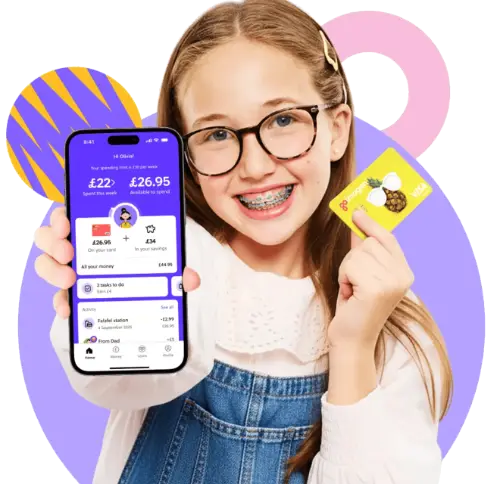
Money confidence looks different at every age – from a child’s first encounter with coins and what they can buy, to a teenager weighing up how to grow their money and avoid financial pitfalls. As parents, the support we provide needs to evolve with them. That’s why we’ve partnered with GoHenry, whose smart money app and card help kids build lasting money skills from 6-18.
Give your child the head start you wish you’d had, with their own smart money app and card. Get 2 months free plus £20 pocket money with code AFFFDR220.
Get startedFor primary school-aged children, the goal is to make money real to them. At this age, it’s about encouraging them to understand how it can be used and what choices they can make.
Here are a few activities you can do with your kids to increase their confidence in making decisions about money.
Setting a savings goal is a great way to teach younger children about delayed gratification. The more visual this is, the better. That’s why it helps to have a smart money app like GoHenry, as kids can create their own personalised savings goal. Here, they can select the photo they want, the amount they’re saving up and then track their progress.
Seeing their progress bar grow is a great motivator for them to stay on track and achieve their target amount.
It can be hard to get younger children to understand the value of money, so why not put them in charge of the budget?
Load their GoHenry card with £10 and head to the supermarket with a simple shopping list – think ingredients for a cake or a family meal. As you walk the aisles, discuss how to spot the best value: why the own-brand option might be just as good, or how buying in bulk can save money in the long run. They’ll need to make real choices to stay within budget, which is the aim of this task.
Teaching your kids how to do household chores is a great way for them to learn responsibility. You can also use it as an opportunity for them to earn some money and get satisfaction from a job well done.
It’s important to set age-appropriate chores. For example, 6-year-olds can help with simple tasks like tidying their toys away or setting the table, whereas 11-year-olds can empty the dishwasher or put the laundry away.
Within GoHenry’s app, you can set tasks for your child and assign how much they’ll get paid for each chore. Once they’ve completed the job, tick it off in the app, and the amount they’ve earned will automatically be added to their weekly allowance.
Playing money games at home is a low-stakes way of increasing your child’s money confidence. This can be done with board games like Monopoly or through shop role play, where they can sort coins and give change.
This type of activity helps to build familiarity without fear, as there’s no chance of getting it wrong.
For kids of today, learning is digital. So if your child is more comfortable learning about money through an app, GoHenry’s Money Missions are a great place to start
These are gamified money lessons that teach children the basics of money and finance. Delivered as bite-sized lessons with short explanatory videos and quizzes, younger kids can complete Level 1 modules, which cover topics such as savings habits, spending wisely and money safety – giving them a solid foundation in the essential money basics.
Give your child the head start you wish you’d had, with their own smart money app and card. Get 2 months free plus £20 pocket money with code AFFFDR220.
Get startedAs kids get older, they’re ready for more financial responsibility. Earning and budgeting independently are key skills which will follow them into adulthood.
Try these activities with your pre-teens and teens to help them grow confidence in handling their own money.
Earning outside of a weekly allowance is one of the biggest boosts to a child’s money confidence. It builds pride and gives them a fresh perspective on what money is actually worth.
Encourage your teen to explore a few ways to bring in some extra cash: babysitting, tutoring younger kids, washing cars, walking dogs, selling unwanted items, or even watering a neighbour’s plants while they’re away. No idea is too small; it’s the habit of earning independently that matters.
This is the age to hand over a real budget. Not as a one-off exercise, but as a genuine, ongoing responsibility. Pick an area for them to take ownership of – whether that’s a monthly clothing allowance or their own transport costs – and let them run it.
You’ll get real-time notifications of their spending in your GoHenry parent app so you can keep an eye on things. It’s a great way to have oversight without the micromanagement. And if they make the odd mistake? That’s part of it. Having full ownership of a budget, missteps included, is one of the most effective ways to build lasting money confidence.
By this stage, your child hopefully has a savings habit in place. Now it’s about deepening that understanding, helping them see not just that saving is good, but why starting early is such an advantage.
This is where compound interest comes in. With GoHenry’s Plus plan, your child can earn 2.63% AER (interest is variable) on their savings. Encourage them to check how much interest they’ve earned that month, then talk through what that looks like over time. Run a scenario together: if they saved £20 a month from age 13 to 17, how much would they have once compound interest is factored in? Seeing those numbers laid out has a way of making longer-term goals – like driving lessons, a first car, or university expenses – feel genuinely within reach.
Now is the time to really up their money smarts and teach them how to spend their money wisely. A few simple challenges throughout the month can go a long way.
Start with price comparison. If they’ve got their eye on a new pair of trainers, encourage them to shop around before buying. Then introduce the wants vs needs conversation in a way that feels relevant to them: yes, they need the bus fare, but can they also stretch to the McDonald’s they want this week? Finally, talk through impulse buying, particularly online, where it’s all too easy to get swept up in the latest trend.
Long-term saving isn’t always exciting, so bring it closer to home. Ask them if there’s something they’re genuinely excited about, like festival tickets or a new piece of tech, and make that the goal.
A 3 to 6 month horizon is short enough to feel motivating, but long enough to require real commitment. Encourage them to use their GoHenry app, to set a target date and automate their savings to keep things on track. And when they get there? They can enjoy the feeling of having saved for something they wanted all by themselves.

GoHenry: where kids go to learn money
Kids learn to earn, save, spend and invest with pocket money, custom savings goals, gifted money from family and friends, gamified lessons and more. Give your child the head start you wish you’d had, with their own smart money app and card. Get 2 months free plus £20 pocket money with code AFFFDR220.
Join today!*T&Cs apply. GoHenry Interest Savings is provided by Bondsmith Savings Ltd, authorised by the Financial Conduct Authority. The GoHenry card is issued by IDT Financial Services Limited, a principal member of VISA Europe.
We’ve partnered with NatWest Adapt to help teens master their digital money goals. (Paid content)
This summer, we’ve teamed up with GoHenry to help you challenge your kids to earn and save for their own back-to-school upgrades. (Paid content)
In this guide we walkthrough 5 fun, safe and practical “side hustles” your kids can start this summer to supercharge their pocket money. (Paid content)
We’ve partnered with GoHenry for your ultimate guide to typical pocket money by age. (Paid content)
New to NatWest Rooster Money? See if you can keep some more money in your pocket with our promo codes and special offers.
Learn more about the Halifax Expresscash account to see if it’s right for your child.
If you’re tired of using cash for your kids’ pocket money or want to put money aside for when they’ll go to uni, NatWest has dedicated account options for both cases.
This guide looks at how Halifax’s child accounts work, whether they make a good choice to teach kids about personal finance, and and how to open one.
Digital challenger bank Starling has a children’s debit card and app for Under 16s, which comes with parental controls. We check it out.