Press Release
For immediate release
The rise of AI scams: less than 4% of Brits can identify real videos vs deepfake ones
- Just 57% of Brits were able to identify more than half of the videos correctly
- 1 in 5 Brits have been targeted by deepfake or AI scams before and 3.4 million (6.4%) have fallen victim to one
- A deepfake video of Tom Cruise saw 7 in 10 respondents incorrectly guess that it was real
2 September, 2025, LONDON –
When shown a series of 8 short video clips featuring both real and deepfake celebrities, only 3.7% of Brits were able to correctly identify them all.
This latest research from personal finance comparison site Finder highlights the danger posed by the rise in deepfake scams in the UK.
Participants were shown a series of 5-second video clips of influential people, including Dua Lipa, Elon Musk, Jeff Bezos and Kim Kardashian. The results were startling, with over 96% of 2,000 participants unable to correctly identify all 8 video clips.
Just 57% of participants were able to correctly identify more than half of the video clips, and less than a fifth (18%) were able to score more than 6 out of 8. Across all respondents, the average score was 4.8 out of 8 videos guessed correctly.
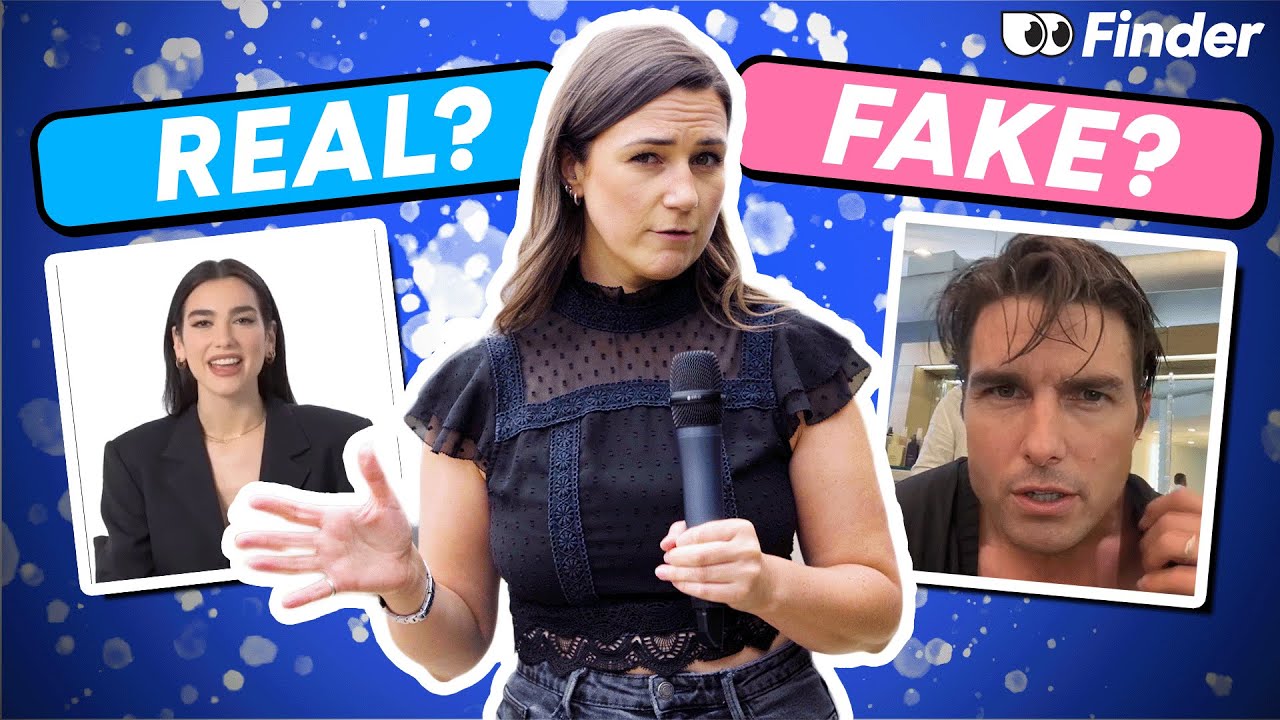
By far the most convincing deepfake was one of Tom Cruise. An incredible 7 in 10 (69%) of respondents thought this was real, despite it actually being fake. The video that caused the second most amount of confusion was one of Dua Lipa. Over 4 in 10 Brits (43%) thought this real video was a deepfake.
See members of the public struggling to identify videos in this new video that accompanies the research:
1 in 5 have been targeted by some form of deepfake scam
Finder also asked Brits if they have personally encountered a deepfake or AI-related scam and 1 in 5 (20%) said they have. Around a third of these people have fallen for the scam – 6.4% of the UK adult population, equalling 3.4 million people.
The younger generations seem to be more exposed to deepfakes or AI scams. A third of millennials (aged 29 to 44) have been targeted by one, with 12% falling for it. Gen Z (aged 18 to 28) are also prone to falling for it, with 9% of them doing so and 28% being targeted.
Baby boomers (aged 61-79) are the least likely to be targeted. Just 7% of them believe they have been targeted and 2% have fallen victim to a scam.
Over twice as many men have experienced AI fraud than women, with 8.6% having done so vs 4.2% of women. A further 18% of men have been unsuccessfully targeted with this type of fraud compared to 9.1% of women.
Younger generations were the most likely to identify deepfakes correctly
Perhaps linked to the amount of AI scams they see, younger generations found it easier to detect real and fake videos in this quiz. Gen Z led the way, getting an average of 5.7 out of 8 correct. Three quarters (74%) correctly guessed more than half of the videos.
They were followed by millennials, who got 4.9 out of 8 correct. Both baby boomers and the silent generation (anyone over the age of 61) fared equally badly, guessing 4.2 out of 8 correctly. Only 44% of baby boomers got more than half correct.
See how many you can guess correctly here on our quiz page.
Commenting on the findings, Louise Bastock, personal finance expert at Finder, said:
“Deepfake and AI fraud is here to stay. 6.4% of the population falling prey to it is already a significant amount, and it will only continue to grow.
“The public were generally able to guess some of the videos correctly in our quiz but virtually nobody got them all correct, and this is the danger. You only need to be caught out once and it can have devastating consequences.
“Fortunately, there are a few things you can do to protect yourself:
- Think through the request and the video. Is it usual for a friend or family member to send you a voice note or video asking for something or telling you to do something? It goes without saying that it isn’t usual for a celebrity to be doing this.
- Do your own independent research. A quick Google search should be able to reveal whether the video is real or not. You should also check with a respected news source to see whether there are reports backing up what the person has said, or reports of an AI scam involving them. A few minutes of research should be enough to help you avoid being scammed.
- Study the video and audio in detail. For example, are their eye movements natural? Is their mouth moving in sync with their words? Does their voice match the exact tone and dialect of the actual person? Are they using odd words or sentence structures? If any of these don’t seem right, it’s best to assume it’s fake.
- Money changing hands should be the ultimate red flag. Legitimate banks or financial institutions will never call or text you out of the blue asking for personal details. If you’re unsure, hang up and call your provider directly. Similarly, don’t click any links sent to you. Instead, open a new browser, search your provider’s website and use the chat function or context info there.
Methodology:
Finder sourced a range of real and deepfake videos (see sources on the page) and then showed short clips of these to the British public. Finder then commissioned Censuswide to carry out a nationally representative survey of adults aged 18+ who had to guess if the videos were real or fake. A total of 2,000 people were questioned throughout Great Britain between 28 July and 30 July 2025, with representative quotas for gender, age and region.
###
For further press information
- Sophie Barber
- UK PR Manager
- T: +44 20 3828 1338
- sophie.barber@finder.com
Disclaimer
The information in this release is accurate as of the date published, but rates, fees and other product features may have changed. Please see updated product information on finder.com's review pages for the current correct values.
About finder.com
finder.com is a personal finance website, which helps consumers compare products online so they can make better informed decisions. Consumers can visit the website to compare utilities, mortgages, credit cards, insurance products, shopping voucher codes, and so much more before choosing the option that best suits their needs.
Best of all, finder.com is completely free to use. We’re not a bank or insurer, nor are we owned by one, and we are not a product issuer or a credit provider. We’re not affiliated with any one institution or outlet, so it’s genuine advice from a team of experts who care about helping you find better.
finder.com launched in the UK in February 2017 and is privately owned and self-funded by two Australian entrepreneurs – Fred Schebesta and Frank Restuccia – who successfully grew finder.com.au to be Australia's most visited personal finance website (Source: Experian Hitwise).