Step Card Review: Credit-Building Without APR


- Fee
- $0 per month
- APY
- 3.00%
- Minimum deposit to open
- $0
Our verdict
A secured card that works like a debit card with credit-building and savings perks.
Step stands out as a free app and Visa secured card with no monthly fees, overdraft or opening deposit. It could help you build credit history without the risk of overdrafts or racking up credit card interest. The basic Step card has no age requirements, just requiring an adult sponsor for minors, and making it a great option for families with teens. If you want cashback and savings rewards, you'll need the Step Black card. It offers many more perks, mainly cashback and up to 3% savings rewards. To unlock Step Black, you need to either receive at least $300 in qualifying direct deposits, or make $500+ in card spend each month.
Best for: Young adults who want to build credit and earn rewards.
Pros
-
$0 monthly fees
-
No credit check, deposit or interest charges
-
3% savings reward with Step Black
-
Cashback rewards with Step Black
-
Optional investing platform
Cons
-
No physical branches
-
Step Black has deposit or spending requirements
How the Step card works
The Step Visa Card and Step Black Card aren’t traditional credit cards. Each time you use the card to make a purchase, Step removes that amount from your Step deposit account — kind of like a regular debit card. Once a month, Step uses your deposit account balance to pay off your card balance without any interest charges. It’s considered a secured card, but instead of being secured by a security deposit, it’s backed by the Step deposit account.
Step also reports to all three credit bureaus: Experian, Equifax and TransUnion. Step’s site boasts that users in their 20s raise their score by an average of 57 points in one year, based on a TransUnion analysis of 594 users ages 21 to 27.
Step plans and cost
You can choose between the free Step Visa Card or unlock Step Black at no cost with qualifying monthly activity.
| Card | Cost | Age requirement | Features |
|---|---|---|---|
| Step Visa | $0 | None |
|
| Step Black | $0 with $300 in monthly direct deposits or $500 in monthly card spend | 13+ | Everything with Step Visa, plus:
|
What we like about Step
Step offers free and paid card options, and you gotta love a free option. With either option, there are no interest charges, opening or security deposit, no credit check and no overdraft fees.
By going with the free plan, you’ll still get a ton of features like credit-building opportunities, savings goals, and an optional investing platform. There are extra perks if you set up direct deposit.
Earn cashback rewards with Step Black
Step Black members earn cashback rewards you’d normally find with a credit card:
- Unlimited 1% cash back on purchases
- 3% savings rewards on your balance
On top of cashback, there are other ways to earn and save:
- Referrals. You and a referred friend can each get $1 with a successful referral. It’s not a huge incentive but still a way to earn extra.
- Savings goals. Set goals and track your progress, and use round-ups to round each purchase up to the nearest dollar and build savings faster.
Credit building with Smart Pay
Step is a secured card, so with each purchase, Step removes that amount from the Step deposit account. While this sounds like a regular debit card, this can actually build credit thanks to Step’s feature called Smart Pay.
With Smart Pay, purchases are automatically paid off every month using the funds in your deposit account and those payments are reported to Equifax, TransUnion and Experian. For those under 18, up to two years of payment history will be reported at age 18 after opting in.
Investing platform
In the Step app, you can open a stock account to start investing in stocks. You’ll also pay nothing in commission fees or monthly subscriptions. There are over 1,000 popular stocks to browse, and Step will recommend investments based on your volatility tolerance. The stock account is insured by the Securities Investor Protection Corporation (SIPC) for up to $500,000.
Step Black card has more perks
Step Black has more perks
If you want to step up your Step experience, there’s also Step Black. It’s an earned status that’s free to unlock. You just need $300 in qualifying direct deposits or $500 in card spend each month.
It works similar to the traditional Step card and other debit-credit cards, but comes with extra perks:
- Unlimited 1% cashback on purchases
- 3% savings rewards on your balance
- Up to $1 million in FDIC insurance coverage for eligible users
- No credit history requirement
Step can be great for kids, too
There are no age requirements for the regular Step card, as it only requires that users under 18 have an adult sponsor the account. Parents can also create a parent-managed Step account for their kids. With strong parental controls, spending limits, and no monthly fees, it can be a great first debit card for kids.
Teens can also get payments reported. Once they turn 18, they can opt to send their Step transaction history to the three credit bureaus from the last two years, effectively helping teens build their credit scores before adulthood.
Kids under 18 need their parent’s approval to start investing, and parents can limit the amount that kids invest up to $1,200. And unlike competitors like Greenlight, kids don’t need a parent’s approval before each trade.
For financial literacy, Step offers a Money 101 course in over 100 US high schools to help students learn the basics of bank accounts, budgeting, loans and investing. Students of participating schools can access the online course through the app. Plus, they can earn money for getting high quiz scores or improving their scores.
What could be better
The only real downside with Step is the lack of physical branches. You’ll need to be comfortable communicating with the company solely online, or over the phone. Customers have also complained about its long two- to three-week wait for getting your Step card in the mail after signing up.
Step reviews and complaints
| BBB accredited | No |
|---|---|
| BBB rating | F |
| BBB customer reviews | 1 out of 5 stars, based on 5 customer reviews |
| Trustpilot score | 3.8 out of 5 stars, based on 1,285 customer reviews |
| Customer reviews verified as of | 14 October 2026 |
Step Banking isn’t accredited by the Better Business Bureau (BBB), and currently has a poor BBB rating. Compared to other online banking options, Step has barely any complaints — under 60 at the time of writing. We normally see thousands for digital banking companies, so we’ll consider that a good sign.
Step does hold an immaculate rating on Trustpilot with over one thousand reviews. Happy customers report helpful and fast customer support, parents like the card for their kids, say the app is easy to use and many call out the rewards program. Many who have experienced problems often say that any issues were resolved quickly, reporting no long hold times and quick responses.
Among negative reviews, some report receiving generic responses to their requests for help, another customer says Step didn’t disclose their fees and few say their account was closed unexpectedly. However, Step does respond to over 70% of negative reviews in attempts to resolve issues.
Compare Step app with other similar accounts
See how Step compares to other credit-building options to see which could be best for you.
What is the Finder Score?
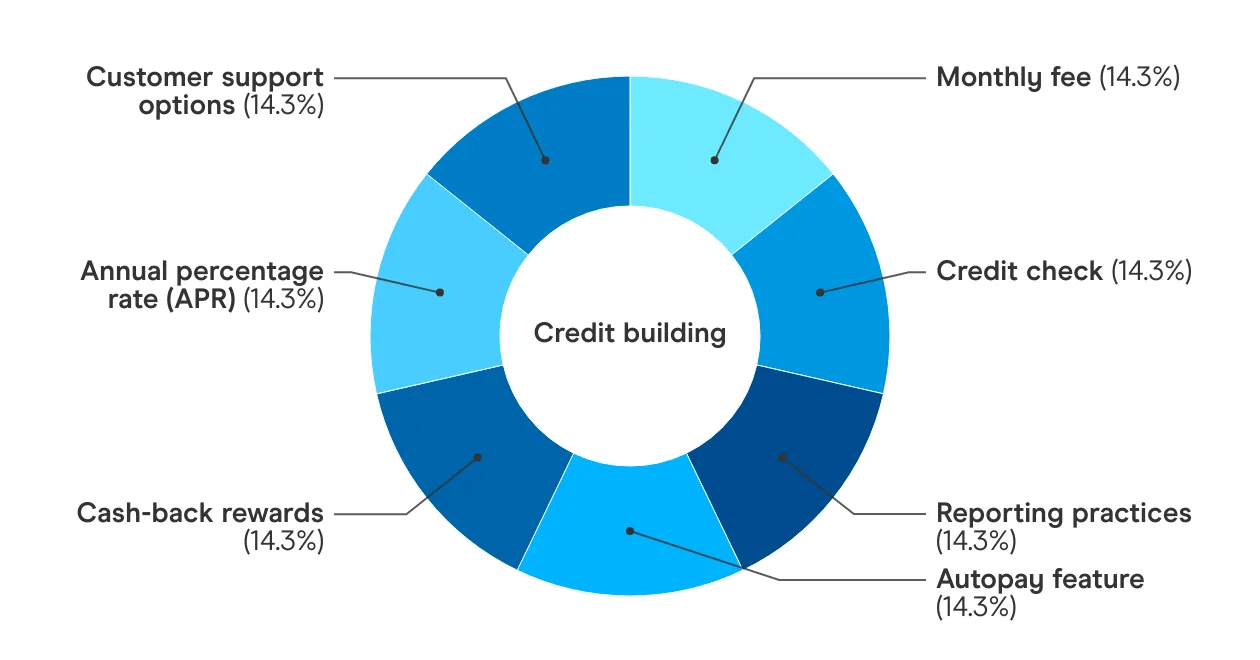
The Finder Score crunches over 30 credit-building cards and products from dozens of financial institutions and fintech companies. It takes into account the product's monthly fees, reporting practices, eligibility requirements, rewards programs, APR and features — this gives you a simple score out of 10. To provide a Score, Finder’s banking experts only consider credit-building cards that report to the major credit bureaus as “credit-building cards.” If a card that claims it can build credit does not have any reporting practices, it is not considered a credit-building card and isn’t scored.
Credit building card ratings
★★★★★ — Excellent
★★★★★ — Good
★★★★★ — Average
★★★★★ — Subpar
★★★★★ — Poor
Frequently asked questions
Your reviews

Bethany Finder
Banking editor
You are about to post a question on finder.com:
- Do not enter personal information (eg. surname, phone number, bank details) as your question will be made public
- finder.com is a financial comparison and information service, not a bank or product provider
- We cannot provide you with personal advice or recommendations
- Your answer might already be waiting – check previous questions below to see if yours has already been asked
Finder only provides general advice and factual information, so consider your own circumstances, or seek advice before you decide to act on our content. By submitting a question, you're accepting our finder.com Terms of Use and Privacy and Cookies Policy.
This site is protected by reCAPTCHA and the Privacy Policy and Terms of Service apply.