We’ve scoured the market to find the best non-custodial wallet in Canada, reviewing products for safety, functionality, cost and supported digital assets—including coins, tokens and NFTs. The safest non-custodial wallets are hardware wallets, but we’ve included a range of self-custodial options to help you decide which is best for your needs.
To find the best non-custodial wallet in Canada, we compared 10+ cold storage and hardware wallets on a range of criteria, including:
Supported cryptos and blockchains. Is the wallet compatible with a wide variety of coins, tokens and blockchains?
User experience. Is there a steep learning curve to use the wallet, or is it suitable for beginners?
Security. How is the recovery phrase stored, and what backup options are available?
Value. What are the wallet’s upfront or ongoing costs, and how does it compare to similar wallets?
Extra features. Are there features like in-app crypto trading, staking and NFT storage?
Mobile management. Can you manage your portfolio via smartphone?
Web3 accessibility. Can you access Web3 and decentralized applications (dApps) from the wallet?
“Best for” picks are those we’ve chosen as the best for certain features or categories. If we show a “Promoted” pick, it’s been chosen from among our commercial partners based on factors like special features, offers and the commission we receive.
Our picks for the best non-custodial wallet in Canada are just suggestions and don’t reflect every self-custody wallet on the market. The best crypto wallet for you depends on your individual needs.
This is not an endorsement of cryptocurrency or any specific provider, service or offering. It is not a recommendation to trade or use any services.
Also known as a self-custodial wallet, a non-custodial wallet is a digital or physical device used to store the private keys to your crypto or other digital assets. If you lose the wallet, you can recover your private keys using a 12- to 24-word seed phrase (recovery phrase).
A common misconception is that digital assets are stored in non-custodial wallets. In fact, digital assets are stored on blockchains, and a wallet stores your private keys to these assets.
Some non-custodial wallets are software wallets, which remain connected to the internet at all times. Examples of non-custodial software wallets include Exodus and MetaMask.
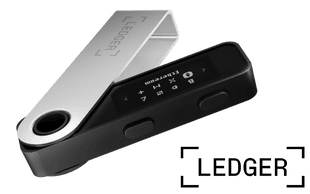
Other non-custodial wallets are hardware wallets, which are disconnected from the internet (offline) when not in use. Examples include wallets made by Trezor, Ledger and COLDCARD. Storing private keys offline is sometimes referred to as cold storage.
Why are non-custodial wallets important?
When you leave your crypto in the custody of a centralized exchange like Coinbase or Kraken, you don’t technically own it. Instead, you own an IOU for it, and that IOU is only as good as the solvency of the exchange that holds it for you.
Crypto has a chequered history when it comes to insolvent exchanges, including high profile cases like FTX and BlockFi. While security has improved over time, there will always be a risk associated with leaving your crypto on an exchange.
To actually take ownership of the digital assets you’ve purchased, you have to move the assets from the custody of an exchange to a non-custodial wallet, which lets you hold the private keys to your assets.
If the best non-custodial wallet you’ve found is a software wallet, it’s good practice to pair it with a hardware wallet for added security and to use multisig protection if possible.
🔑 What is a private key?
Sometimes referred to as secret keys, private keys are long, randomly generated strings of letters and numbers that cannot easily be guessed. When paired with a specific public key, a private key is used to access cryptographically encoded information.
Private keys should be stored securely in secret locations.
Custodial vs. non-custodial wallet
Here are the key differences between a custodial and non-custodial wallet.
Custodial wallet
Private keys are held by a third party like a crypto exchange
Third party custodian may be considered the true owner of your crypto, even though you bought it. If the third party fails, you may lose your crypto.
Usually connected to the internet (“hot wallet”)
Access digital assets via custodian. No need to keep track of a seed recovery phrase.
Non-custodial wallet
You hold the private keys to your digital assets. Therefore, you’re the true owner.
Disconnected from the internet most of the time (“cold storage wallet”)
You must write down a 12- to 24-word seed recovery phrase
How do I know if I’m using a non-custodial wallet?
You know you’re using a non-custodial wallet if you had to write down a 12- to 24-word seed phrase—sometimes called a recovery phrase—when you set up the wallet. If you weren’t prompted to write down such a phrase, then you’re using a custodial wallet and the private keys to your digital assets aren’t in your control.
Non-custodial wallet pros and cons
Pros
You have true ownership of your digital assets
You’re don’t rely on the solvency of a third-party custodian like a centralized exchange
You can use your digital assets in decentralized applications
Cons
You’re fully responsible for managing the private keys to your digital assets
There may be an upfront cost if you decide to purchase a hardware wallet
How to choose the best non-custodial wallet
There are a number of factors to consider when choosing the best non-custodial wallet for your needs.
Software vs. hardware. Custodial software wallets are always connected to the internet and are therefore less secure. Non-custodial hardware wallets remain mostly disconnected from the internet and are therefore more secure.
Price. Non-custodial software wallets are often free to download, while you have to purchase a non-custodial hardware wallet.
Features. Consider if you want to do more than just hold the private keys to your digital assets in your own custody. Some non-custodial wallets let you stake your digital assets or access dApps.
User interface (UI). You might want to test out a few non-custodial wallets or watch a few YouTube tutorials before deciding which is best designed for you.
Risks of using a non-custodial wallet
Consider the following risks of using a non-custodial wallet:
Personal responsibility. You bear the responsibility of writing down and securely storing your 12- to 24-word seed phrase.
Sending assets to the wrong address. You run the risk of accidentally transferring your assets to the wrong address.
Inputting the wrong passcode. It’s possible to get locked out of a hardware wallet if you enter the wrong passcode enough times. In this case, you’d have to purchase a new hardware wallet and regain access to the private keys for your digital assets using your 12- to 24-word seed phrase.
Internet connectivity. Software wallets are always connected to the internet and more easily hacked. Plus, if a software wallet uses closed-source code, you’re trusting the creator of that wallet to not extract your private keys and gain access to your digital assets.
Software vulnerabilities. Hardware wallets are usually (sometimes always) offline when not in use and are generally more secure than software wallets. But if the wallet has software issues, your private keys could possibly be extracted. If available, enable multisig security, so two or more wallet keys must sign transactions before your crypto can be accessed.
Bottom line
Taking self-custody of the private keys to your digital assets can be empowering, but it comes with responsibility. It’s important to do your research to choose the bets non-custodial wallet for your needs. Consider cost, supported cryptos, additional features and whether you’d like a software or hardware wallet.
By building a deeper understanding of secure digital asset storage and comparing a number of the best crypto wallets on the market, you’ll be in a better position to keep your crypto investments safe.
Frequntly asked questions
Yes, non-custodial wallets can be hacked. Like any other online apps, software wallets are susceptible to common attacks like phishing scams. Hardware wallets are unlikely to be hacked, but research has proven that there are hackable flaws in the designs of some earlier iterations of hardware wallets.
The safest non-custodial wallets tend to be hardware wallets, as these remain mostly disconnected from the internet. The NGRAVE ZERO is our top pick for the safest non-custodial crypto wallet, as it has a high EAL7 security rating and is fully air-gapped, meaning that it operates completely offline.
Coinbase offers both custodial and non-custodial wallets in Canada. When you purchase digital assets via the Coinbase exchange, you're automatically provided a custodial wallet.
The Coinbase non-custodial wallet is a browser extension product called Coinbase Wallet. Unlike the exchange-based wallet, you'll be prompted to write down a 12- to 24-word seed phrase when you start using Coinbase Wallet.
Sources
Disclaimer: Cryptocurrencies are speculative, complex and involve significant risks – they are highly volatile and sensitive to secondary activity. Performance is unpredictable and past performance is no guarantee of future performance. Consider your own circumstances, and obtain your own advice, before relying on this information. You should also verify the nature of any product or service (including its legal status and relevant regulatory requirements) and consult the relevant Regulators' websites before making any decision. Finder, or the author, may have holdings in the cryptocurrencies discussed.
Frank Corva is business-to-business (B2B) correspondent for Bitcoin Magazine and formerly the cryptocurrency writer and analyst for digital assets at Finder. Frank has turned his hobby of studying and writing about crypto into a career with a mission of educating the world about this burgeoning sector of finance. He worked in Ghana and Venezuela before earning a degree in applied linguistics at Teachers College, Columbia University. He also taught writing and entertainment business courses in Japan and worked with UNICEF in Namibia before returning to the US to teach at universities in New York City. Earlier in his career, he spent years working as a publicist and graphic designer for record labels like Warner Music Group and Triple Crown Records. During that time, he was also a music journalist whose writing and photography was in published in Alternative Press, Spin and other outlets.
See full bio
Stacie Hurst is an editor at Finder, specializing in loans, banking, investing and money transfers. She has a Bachelor of Arts in Psychology and Writing, and she has completed FP Canada Institute's Financial Management Course. Before working in the publishing industry, Stacie completed one year of law school in the United States. When not working, she can usually be found watching K-dramas or playing games with her friends and family.
See full bio
Stacie's expertise
Stacie
has written
235
Finder guides across topics including:
We compare Trezor vs Ledger side-by-side to find the best crypto hardware wallets. Learn about Ledger and Trezor wallet security, features and ease of use.
Compare the security, features and capabilities of some of the best crypto cold wallets on the market.
Advertiser disclosure
Finder.com is an independent comparison platform and information service that aims to provide you with the tools you need to make better decisions. While we are independent, the offers that appear on this site are from companies from which Finder receives compensation. We may receive compensation from our partners for placement of their products or services. We may also receive compensation if you click on certain links posted on our site. While compensation arrangements may affect the order, position or placement of product information, it doesn't influence our assessment of those products. Please don't interpret the order in which products appear on our Site as any endorsement or recommendation from us. Finder compares a wide range of products, providers and services but we don't provide information on all available products, providers or services. Please appreciate that there may be other options available to you than the products, providers or services covered by our service.
We update our data regularly, but information can change between updates. Confirm details with the provider you're interested in before making a decision.