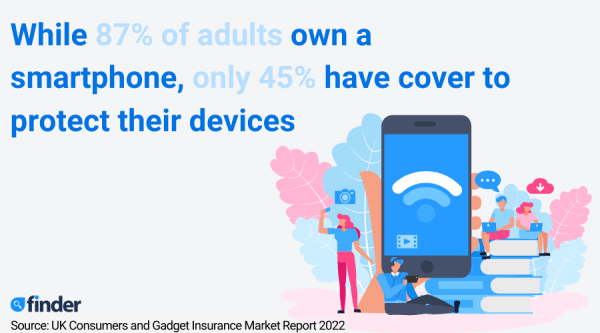
You’re pelting down the street in a mad rush to catch that bus that’s just pulling away from the stop and…disaster. Your brand new smartphone flies out of your pocket onto the pavement, the screen smashes, and attempts to turn it on end in failure. Gadget insurance is designed to minimise the financial pain of mishaps like this. Read on to find out how it works and the kinds of gadgets you can get cover for.
What is gadget insurance?
Gadget insurance provides protection against loss or damage to devices such as mobile phones, tablets, laptops, cameras, music players, ereaders, headphones, smartwatches and GPS devices such as sat navs.
These items can be expensive, so getting them insured makes them easier to replace if you drop yours in the bath or leave one on the train.
Gadget insurance jargon explained
Cosmetic damage. Scratches, scuffs or other minor damage that do not prevent your device from working as expected. Cosmetic damage is usually not covered under gadget insurance.
Mechanical failure/breakdown. If your device suddenly and unexpectedly stops working and cannot fulfil it’s primary purpose. For example, if a phone becomes unresponsive and no amount of turning it off and on again brings it back to life. Excludes wear and tear (for example, if your phone gradually slows down and becomes less responsive over time). Most gadget insurers only include mechanical failure cover once any manufacturer’s warranty has expired.
Reasonable precautions. The sensible steps you must take to reduce the risk of damage to or loss/theft of your phone. For example, you must not leave your phone unattended on restaurant table.
Unauthorised repair. Most insurers require you to put in a claim and get authorisation from them before you have your phone repaired, and may require you to use one of their panel of authorised repairers. If you don’t follow their requirements, your claim for repair costs may be turned down.
How to compare gadget insurance
Step 1: Decide which gadgets you want to insure. This will affect whether single gadget, multi-gadget or family cover is best, and which policy to go for as some may have low limits on the number of items they cover.
Step 2: Decide what level of cover you want. If you’re absent-minded, you might want to make sure cover for loss is included, for example. Or if you rely on your devices, you might want to pay extra for guaranteed speedy replacement.
Step 3: Check whether you already have enough cover. There’s no point in paying for standalone gadget insurance if you already have all of the cover you need as part of your contents insurance. Or, if you have a packaged bank account, it may include gadget insurance. In both of these cases, make sure that the insurance is comprehensive enough for all your gadgets, including any very valuable ones.
Step 4: Compare quotes. If you don’t already have the right cover, get cracking using a price comparison site such as Finder. The providers in the table at the top of this page are a good starting point. To get quotes, you’ll be asked when you purchased each device and to provide personal details. Bear in mind that, while you often get discounts for insuring multiple gadgets under the same policy, it doesn’t guarantee the lowest price – or the best cover. If you have anything that might benefit from specialist insurance with features tailored to a specific type of device, such as a high-end camera, you may want to insure this separately.
How can I save money on my gadget insurance?
Before we get started on ways to save, the first step is to decide if you need gadget insurance in the first place. Rather ironically, in an article about gadget insurance, the best way to save on gadget insurance is sometimes not to buy it. This might be because you already have sufficient cover for your gadgets, through a home insurance personal possessions add-on, or a packaged bank account. Or perhaps your gadgets aren’t that high-value. Or it may simply be because you’re neither accident-prone nor have a propensity for losing stuff, and decide that – on balance – gadget insurance isn’t worth it.
If, on the other hand, you have a pricey gadget that you rely on, and would struggle to afford to replace if it was lost, stolen or damaged, there are tactics you can use to keep the cost of insurance down.
- Shop around. Don’t just opt for the first provider that appears in Google’s search results. Compare policies among at least a few of the providers in our table, above, to make sure you’re getting the right cover for the right price.
- Consider multi-gadget or family gadget cover. If you’ve got a lot of pricey tech, or you and your family own a lot of gadgets between you, it may well be cheaper to insure several gadgets on one policy than to insure each one separately.
- Pay annually rather than monthly. Many insurers give you the choice of whether to pay up-front, or in monthly instalments. Typically, you’ll get a discount if you pay for a full year at the outset.
- Be prepared to be patient. If you need a replacement gadget, it can take a few days for your insurer to supply one. If you want guaranteed speedy replacement for a gadget, you’ll need to pay extra.

What types of gadget insurance are there?
There are a few main types of gadget insurance. The right option depends on how many gadgets you want to cover and whether you want to include more than one person on the policy.
- Single gadget insurance. If you’ve only got one expensive gadget that you want to protect, this could be the best option. You can either get cover with a general gadget insurance provider or from a provider that specialises in cover for that specific device and may offer specialist features. For example, specialist camera insurance might include cover for your lenses or tripods, while smartphone insurance might cover the cost of any bills that a thief runs up on your phone.
- Multi-gadget insurance. Got gadgets coming out of your ears? If you can’t leave the house without your mobile, laptop and smartwatch, then you’re probably best served by a policy that covers multiple devices. Many providers offer a discount for insuring more than one device with them.
- Family gadget insurance. This lets you cover multiple gadgets belonging to several family members living in the same household. Some policies extend cover to students that are away at university, too.
“If you’ve shelled out the best part of a cool grand on the latest must-have gadget, losing or breaking it can be a heart-stopping moment. Gadget insurance is designed to prevent exactly this kind of shock by providing financial protection for the cherished devices you’d find it hard to do without.
But it’s not the only way to protect your devices, and may not be worth it for less expensive gadgets, so consider all your options before you hit the buy button.
”
What does gadget insurance cover me for?
The exact spec of the policy will vary by provider and cover level, but gadget insurance tends to include the following benefits as standard:
- Accidental damage (including badly cracked screens)
- Theft
- Loss (in some cases this is an optional add-on)
- Unauthorised usage (for stolen phones and tablets, for example)
- Mechanical breakdown
- Water damage
Depending on the policy, you may also get international cover for taking your gadgets on holiday, guaranteed speedy replacement and cover for accessories (a tablet keyboard, for example). In some cases, these may be optional add-ons.
Is gadget insurance worth it?
That is really up to you, but consider whether you’ll be able to afford to replace your favourite devices if they’re damaged, lost or stolen. You might also want to consider how much you rely on these devices for things like work (or finding work), studies and social interactions. Think about how losing the use of your phone or laptop and not being able to replace it straight away might affect your life.
If you tend to go for the cheapest gadgets, you might be willing to take a punt on the basis that they won’t cost much to replace (and are less appealing to thieves). But if you’d wince at the prospect of having to shell out full price for a replacement, gadget insurance is well worth investigating. You can find some basic gadget insurance policies for only a few pounds each month, so shop around to find a deal that works for you.
One thing to be aware of is that your gadgets may already be protected – at least in part – under your home insurance policy, so check what cover you have before buying extra gadget insurance.
Pros and cons
Pros
- Provides peace of mine, particularly for the accident prone
- If a valuable gadget is lost, stolen or damaged beyond repair, the insurer will cover most of the cost of a replacement (less any excess)
- Many policies cover you if you take your gadgets overseas (with some policies this may cost extra).
Cons
- May not be worth it for cheap or rarely-used gadgets
- You may already be covered (or be able to get cheaper cover) via a packaged bank account or home contents insurance policy
- Exclusions and limitations can be restrictive. Plus, depending on the age of your device, you'll probably get a refurbished model if you need a replacement.
Frequently asked questions
Purchasing a policy
-
You name it, you can probably insure it. Gadget insurance is most commonly bought for small, portable devices such as phones, tablets, laptops and cameras, but you can also get cover for things like games consoles and desktop computers.
-
Possibly, depending on what you want cover for. The warranty usually only includes mechanical failure, not accidental damage, theft or loss.
-
If you want financial protection against gadget loss, theft or damage, there are a few alternatives to gadget insurance. If you only want to insure your smartphone, consider dedicated mobile phone insurance. Or, if you have contents insurance, check whether a personal possessions add-on would provide the cover you need. Many packaged bank accounts include gadget insurance cover, too.
The final alternative is to self-insure, by putting aside a certain amount of money each month (equivalent to the cost of gadget insurance) to cover the cost of lost or broken gadgets. The downside is that you may not have enough to cover the full cost of gadget replacement of you need it. But on the upside, if you don’t ever lose or break your gadgets, you’re quids in.
-
Most home contents insurance policies include cover for things like laptops, tablets and phones while they’re inside your home. There might be a limit on how much each item can be worth in order to be covered. More expensive gadgets, such as top-range iPhones and iPads, may not be fully covered or need to be declared separately.
You’ll also want to check the excess on your contents insurance policy. Home insurance excesses can be much higher than those on gadget insurance, which might mean it’s not worth claiming for a lower-cost gadget.
For cover while your items are away from your home, your contents insurance policy will need to include personal possessions cover. This is sometimes included as standard, but can also be a paid-for optional extra. Read your policy details or contact your insurer to double-check whether you have this type of cover.
If not, and you want to insure your gadgets, you can either add this as an optional extra to your home insurance policy or take out a standalone gadget insurance policy.
-
It depends on how old the device is. Most gadget insurance is designed to cover new devices. You may not be able to buy cover for devices that are more than a year old (or less, in some cases).
Even if you buy a policy while your gadgets are new, there may also be a limit on the maximum age of each device – 3 years, for example. So check this and keep an eye on the age of your gadgets, so that you don’t assume a device is covered when it isn’t.
-
As a rule, no. Most providers only cover items that have been purchased as new from a manufacturer, network provider or other high street or online store. A few providers may cover manufacturer-approved refurbished devices if they’ve been bought directly from the manufacturer or another mainstream retailer, but if you’ve picked up a bargain from eBay or Gumtree, you’re probably out of luck. Insurance for devices bought overseas can also be hard to come by.
-
As with what is covered, this varies by provider and cover level. The following are some common exclusions:
- Wear and tear. Gadget insurance is designed to cover unexpected events, not minor damage built up through regular use.
- Cosmetic damage. For example, a minor screen scratch on a phone or tablet may not be covered if it doesn’t prevent you from using it.
- Claims within the first 14 days after taking out a policy. This helps insurers reduce the risk of customers taking out insurance and making a claim for a gadget that was lost or damaged before they took out the policy.
- Loss or theft if you’ve been careless or negligent. Don’t leave your phone on a table while you nip to the loo or even on display in a locked car, for example (pop it in the glove box).
- Faults that are already covered by a manufacturer’s warranty. If your device suddenly stops working within the warranty period, you should contact your manufacturer.
- No proof of purchase. You need to be able to show that the gadget belonged to you in the first place, so hang on to receipts or email confirmations of orders.
Business use is also likely to be excluded from cover unless you take out a special business insurance policy. If you use your devices for work purposes, check with your insurer how this affects your cover.
-
The cost of insurance for a single gadget can be as little as £2 or £3 a month for a single, relatively inexpensive device. But it can be a fair bit higher, depending on:
- The value of each device. Brand new, high-end smartphones and laptops will make for higher premiums than a pair of wireless headphones, for example.
- The number of devices. Many gadget insurers will offer a discount for insuring multiple devices under the same policy. This doesn’t guarantee they’ll be the cheapest overall though, so it’s worth comparing the cost of insuring each device separately with different insurers (taking into account whether this is worth the extra hassle of maintaining multiple policies).
- Any optional extras. Guaranteed 48-hour replacement, for example, is likely to bump up costs.
Compare the cost of standalone insurance against adding personal possessions cover to your contents insurance, too. The latter might well be cheaper and is likely to cover unlimited devices. However, there may be caps on the maximum value of each item, and you might need to pay a higher excess in the event of a claim.
Adjusting your policy
-
Most insurers will let you contact them to make changes to the policy after you’ve taken it out. These might include changing your contact details, increasing the level of cover or adding a gadget. In some cases, the change may affect the premium you pay. Some insurers may also charge an admin fee.
Making a claim
-
The exact process will vary by insurer and the reason for your claim. Whatever the reason for the claim, you should contact your insurer as soon as possible. Always keep receipts or other evidence of ownership when you buy a new device since you will need proof of ownership for any successful claim.
Most insurers don’t limit the number of claims you can make on gadget insurance, but check the terms and conditions carefully for any exception to this rule.
-
If your gadget has been stolen, you will need to notify the police and get a crime reference number. Your insurer will ask for this when you make the claim.
-
For damage claims, taking photos of the device you wish to claim for might be helpful. Contact your insurer before undertaking any repairs to the device. A condition of your policy might be that the device has to be repaired by one of the insurance company’s approved repairers.
-
If your device is lost or stolen, then obviously a replacement is the only option. If it’s damaged, though, your policy may stipulate that the insurer will try to repair it first, which could leave you without a device for a while. If it’s beyond repair, you’ll get a replacement instead.
Bear in mind that most replacements, whether for stolen or damaged devices, will be on a like-for-like basis. Depending on the age of your gadget when it goes AWOL or kaput, you may well get a refurbished device rather than a brand new replacement. Plus, depending on availability, it may not be the same model.
-
It depends on the terms of your insurance and whether the insurer wants to attempt a repair for damaged gadgets first. Once it’s been established that a replacement is needed, 3-5 working days is typical.
Some insurers guarantee a replacement within a certain time frame after you contact them (48 hours for example). You may need to pay extra for this, so it might only be worth it if you can’t live without your gadget for a bit.
-
Finder writers are subject matter experts and use primary sources, in-depth research and interviews with other experts to ensure you're getting accurate, up-to-date information. Articles are fact checked in line with our editorial guidelines.
Ceri Stanaway is a researcher, writer and editor with more than 15 years’ experience, including a long stint at independent publisher Which?. She’s helped people find the best products and services, and avoid the pitfalls, across topics ranging from broadband to insurance. Outside of work, you can often find her sampling the fares in local cafes. See full bio
Read more on Gadget Insurance
-
NatWest mobile phone insurance
Read our NatWest mobile phone insurance review to find out what’s included in the cover, pros and cons of the service and how much it costs.
-
Nationwide mobile phone insurance
In our Nationwide mobile phone Insurance review, you’ll learn about the important elements of this policy, plus pros and cons of cover.
-
Compare mobile phone insurance
This guide features all you need to know about mobile phone insurance, what it covers and how it works.
-
Gadget Cover gadget insurance review
Find out all there is to know about Gadget Cover, the cover options available and how it compares.
-
Protect Your Bubble review
Find out about Protect Your Bubble gadget insurance, what cover options are available and whether or not we recommend it.